Archive 15.10.2005 - 31.10.2005

A Test Framework for Django

DjangoTesting is part of my DjangoStuff project and is the start of a testing framework for Django, modeled after the testing framework that Ruby on Rails provides. Currently only model tests are implemented, request/response tests are planned.

The testing framework is built solely on unittest and django, so you don't need additional modules (besides my DjangoStuff project, of course). It provides python-based fixture notations (fixtures are just python classes with attributes in a DATA subclass) and a basic command line utility to make use of those tests and fixtures.

Tests and fixtures are stored in applications and projects, so you can have application specific tests (especially usefull with generic applications) and project-level tests that will integrate stuff over several applications.

I think a good testing framework would really be important for Django applications, especially for applications that should be shared between projects. But I do think that a good testing framework needs some banging on, too - so I started it as a small subproject on my own. But if it grows into something useful, I will opt for inclusion into Django trunk.

Education and Prosperity - But Not for Everyone

Go together - education only for those who can afford it. The others should better stay stupid: Chances of inequality have grown further. And our state governments (on whose behalf education policy grows) will make sure that this remains the case. With certainty at least in the Union-governed countries, to which NRW unfortunately now also belongs.

For someone like me, who comes from a working-class family, this development is more than shocking. In my time, children from working-class families were not the majority in the classes at the grammar school, but there were some there. But with today's developments - school fees, teaching material fees, later tuition fees - the politicians make it very clear what they think of workers: nothing at all.

We are Germany? Up the arse. Money is Germany.

Müntes Departure?

I can't help but crack a small, nasty grin about Müntes' preferred candidate for General Secretary losing to Andrea Nahles. Guess that's nothing for Münte as the new Wehner, pulling the strings from behind and everyone dancing to his tune - he's been whistled off.

Selenium is a test automator for web applications. It runs directly in the browser and uses IFrames and JavaScript to hook into the page being tested.

Stoiber hesitating?

Still a scaredy-cat

Devil's grin

Case/When/Otherwise for Django

If you have any evil plans for a switch statement for Django (hia rjwittams! ), you might want to look into my TagLib. There is a case/when/otherwise statement in there. It's quite easy to use:

{% case variable %}
{% when "value1" %}
{% endwhen %}
{% when "value2" %}
{% endwhen %}
{% otherwise %}
{% endotherwise %}
{% endcase %}

The reason for the tag structure is that the django template parser only looks for parameterless block-closing tags in the parsefor function and so you can't just pull an easy one like this:

{% if condition %}
{% elif condition %}
{% else %}
{% endif %}

You would have to copy over much from the template parser to get a parsefor that looks for a token with a tag and parameters to close the current block.

So I opted for the scoped tags approach where the "case" tag only sets up a context variable "case" and populates it with a dictionary with "value" and "fired" - with the latter one a trigger that can be fired by any "when" tag to prevent other "when" tags or the "otherwise" tag to fire themselves. A bit ugly, but working.

Highly Stacked

Hochgestapelt

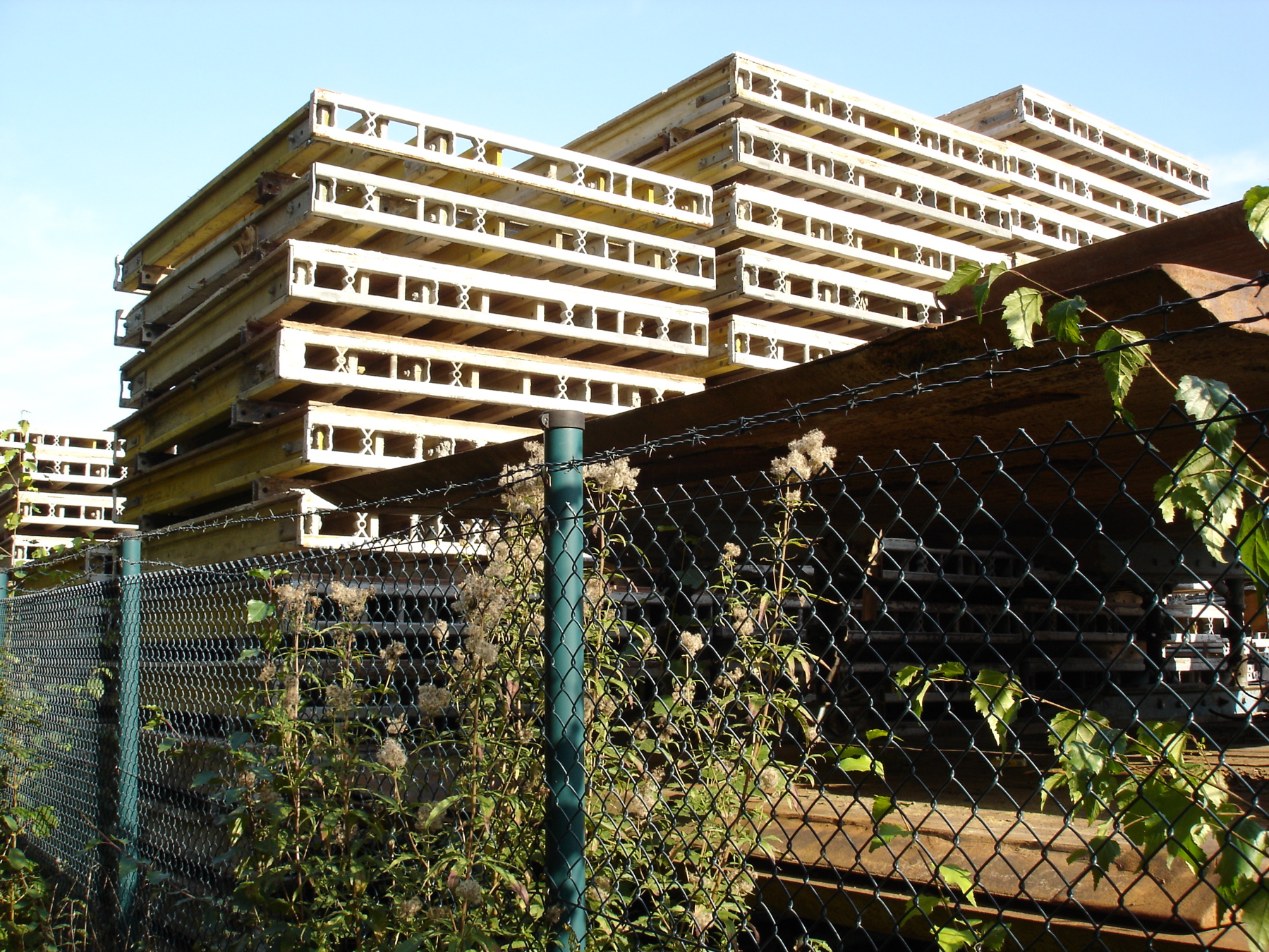
gestapelte Paletten

Stacked pallets at the Dobermann site at the canal in Münster.

Walk along the canal

Walking along the canal and captured a few impressions:

Drawbridge

Drawbridge

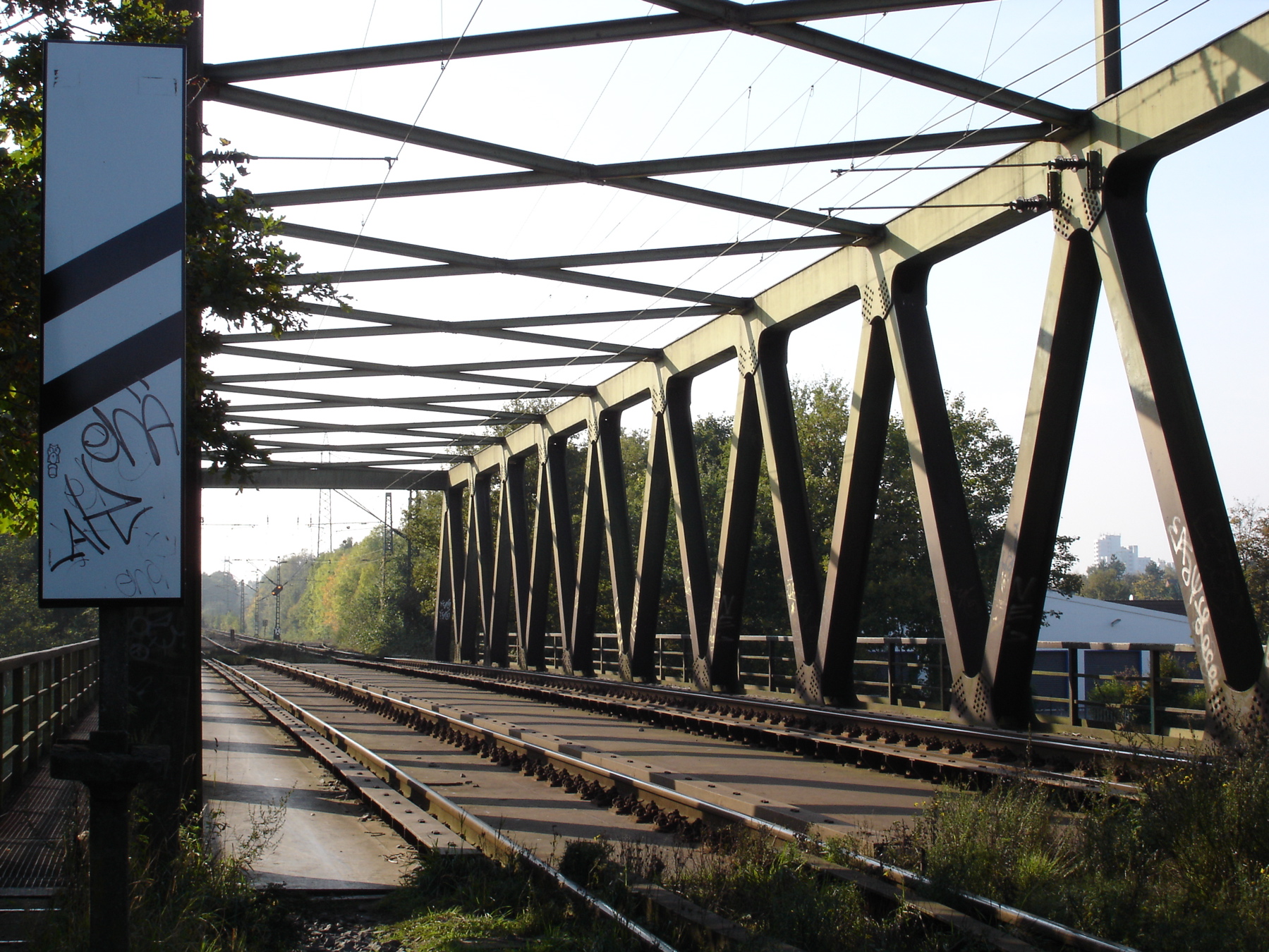
Railway bridge over the canal

A railway bridge over the Dortmund-Ems Canal.

Adhoc-Organization in CM-Systems

Adhoc organization is what I named the basic design decisions for my new content management system (blog system, personal wiki, digital image shoebox - whatever). It's coming along nicely, even though up to now I only used it as a sample application to make use of my little tools from the DjangoStuff pseudo-project. And it still is one of the best ways to see how tagging or searching or the new calendar tag or other stuff is used.

But it's coming along so good that I think I will be able to change over some sites in the near future. The basic design decisions are somewhat documented in the linked document in my trac-wiki. The main objective for me is to get something that I can use as easy for image presentation as for text presentation and that allows me to really integrate both parts. So that articles really can consist of a multitude of media and text.

It's quite fun to work on a project where you tear down the model and rebuild part of it from time to time, or make major refactoring decisions that leave you with a broken heap of python-bullshit for a while

Advertising Banners in 2005

Do site operators actually look at their own sites? If I need 30 seconds to close a page on Netzeitung because a crappy ad banner is blocking all resources, I don't find that funny anymore. I already thought it was stupid that you could barely scroll through the TV program on Yahoo because of all the Flash ads. But a newspaper that claims to understand the internet should perhaps take a look at its own pages and do some quality assurance on the ads it places ...

Aperture and Performance

From creativepro.com - Stripping Raw Naked - an interview with the maker of Aperture:

JS: It depends on what you do with Aperture. I mostly run it on my 15-inch PowerBook. That's not to say that I don't enjoy the refreshing wind-blowing-through-my-hair feeling when I sit down in front of a G5 running Aperture. But a PowerBook is fine for what a lot of photographers do in the field with their laptops: browse images quickly and step through the thumbnails. Maybe tag the images they like, maybe zoom in closely on one. The photo edit stage. For that, a PowerBook does take a speed hit, but it's totally usable.

This is where our scheme of loading a proxy image comes in -- the 1024 proxy is often all I need to see at this stage. Depending on how many megabytes each image is, Aperture on a G5 can load the full Raw image in less than a second. On my PowerBook, that same image may take three to four seconds to load fully.

For heavier duty image processing, faster GPUs and multiple processors are of huge benefit. Aperture does make extensive use of dual processors, but you do not need a Quad [a new model from Apple that has two dual-core processors].

That sounds more usable - if a 15" PowerBook is actually considered operable.

Bock: meet Gärtner

Shift of the Biotechnology Sector to the Ministry of Economic Affairs Feared - Within the Union, there is discussion about transferring responsibility for agricultural biotechnology from the Consumer Protection Ministry to the Ministry of Economic Affairs. - Umweltschutz-NEWS.de

And that with Scatman Ede as the economic miracle. Well, whether his underlings would have turned against him would be doubtful anyway. But certainly a great idea if those who are well greased by the industry are the ones to decide on the use of biotechnology ...

cucumber2 is a very interesting Object-Relational-Mapper for Python and PostgreSQL, which also supports table inheritance in PostgreSQL.

Django Project - a very nice web framework that I use here.

PostgreSQL 8.1

PostgreSQL 8.1 with Two-Phase-Commits and User Roles:

Transactions can now be prepared on multiple computers with PREPARE TRANSACTION and executed together later. If a machine fails after PREPARE, the transaction can be correctly completed with COMMIT after the restart.

Yes!

Eerie Alliance

When industry, union members, and the CDU join forces to prevent the nuclear phase-out.

XML under Patent Protection?

Patent nonsense in extra strength: XML under patent protection?. But patents are such a great innovation engine, so it's quite right when a company with a patent that it has never implemented in any form, suddenly makes itself a presence in an area that has been in practical application for many years.

Akismet - Centralized Anti-Spam Filter

Photomatt (from WordPress) has built a central anti-spam service called Akismet that can be used with WordPress via a plugin. Additionally, there is an API that allows other services to be integrated. Basically a good idea - even though I generally have an aversion to central services, unless I myself operate these central services.

What really bothers me, however, is this small excerpt from the FAQ:

Well without giving too much of the secret sauce away, we can safely say that it would be pretty difficult to poison Akismet.

So central service - okay. I don't like it, but it certainly makes sense for others who cannot or do not want to operate such a service themselves. But "secret sauce" - I should send my comments with the personal data of my commenters to a foreign system, where I can't even see the software running behind it? Sorry, no thanks.

"Fitting on" some framework

How do you know wether a framework fits your style of thinking? It's not as if you could just look into a mirror wether it suits you nicely, you need other ways to decide that. One way to decide it is productivity - how fast you get your project up and running.

But does that really tell you the whole story? What if the project would have been something completely different? Did you just hit the sweet spot of the framework? Where you just lucky?

One way to decide wether some framework, language or tool fits my style of working for me is to look at the basic abstractions this tool gives me. And to look how I can use them and how naturally they fit my thinking - do I stumble on problems, not immediately knowing what abstraction to use, what tool to pull? Or do things just fall in place?

I discovered quite early on that I am a bit uncommon in programming, in that I don't build my own abstractions and try to translate from them into what the language or framework gives me, but that I start to think directly in the abstractions and syntaxes given to me - but only if they match my way.

So that's for me the ultimate measurement of wether a framework really fits into my thinking: checking from time to time wether I try to do translations or wether stuff just flows. Reaching "the flow" is what it's all about for me nowadays.

So how does Django match up? Quite nicely. It really gives me what I need in most cases, there are only very few areas where "the flow" is broken, where I need to think around problems, start to do translations. One area is special behaviour of entry fields - this curently is done in Django with parameterized instances of predefined field classes. There is no really nice way to do subclassing, you end up copying code from other parts of the django source - definitely breaking "the flow".

But most other parts just fall into place: middleware for global management of the request-response span. Template loaders for - well - template loading (yes, it's not a big deal - but being able to write your own template loader really is helpfull). The urlpatterns -hey, that's really a cool idea, because of it's absolutely loose couplying you don't even try to model your urls after your code structure, but tend to design them. And that's how it should be.

Models just powerfull enough to really move the model-related functionality there (although the class MODULE stuff will make it even nicer, especially the kind of ugly module_globals thingy). It would be cool if model classes would support mixin classes, so that abstract apps could provide stuff that just would be referenced by users to add functionality. But you can solve many of those problems with generated classes - thanks to python introspection (although you need to know a bit about djangos model-magic).

Most complex stuff tends to go into template tags and generic views - my CMS project currently only has 3 view functions of it's own, the rest is abstracted away into generic views (for searching and tagging). Template tags could be a bit easier to write, especially the parser is too primitive - a library of helper functions for easy deconstructing the tag string would be good (hey, maybe I write one, the basics arealready in my SVN repository).

Template filters are a big of an ugly duckling - they don't see the request context, so they can't do much more than just take the incoming object and some constant parameters. I think they should get the context passed in, so that they could be a bit smarter, if needed (like allowing filters to resolve a parameter against the context).

Generic views are quite nice, too - even though I don't use the predefined ones that often. The main reason is that more often than not I end up in wrapping the generic views in some code that modifies their behaviour - and then it's quite often simpler to just roll my own. But they are great for first starts into areas, just tack them into your project and funcitonality is available. You can allways exchange them with your own view functions if you discover that you need to.

And the admin, the one thing that makes Django stand out in the crowd? In my first play-projects I loved it, in later ones I didn't use it (the Gallery doesn't need it), but with the CMS project I did the first one that makes really heavy use of it. And I have to say, I like it. It should get a bit more flexibility (the new_admin branch might help there, as it moves more stuff into templates, so they can be overridden), but overall it's really cool and usefull.

Two things, though, are definitely needed for the admin: full transaction support bound to request-response (ticket #9 in the django trac), because changing stuff and ending up with inconsistent tables is no fun. Like getting an exception because something broke in repr , so the log entry isn't written, but the object is written. Of course you don't notice it, go back, send again, end up with two objects and still no log message ...

The other thing that is needed: basic hooks for object-based authentication. Not a full blown ACL or anything like that, just some really simple hooks from the admin to the model that the user can define to tell the admin wether some object should be editable or should only be shown readonly. The main problem with the current solution is, it only handles full tables - you can't even tell the admin that some user can only work on the current site and can't change objects of other sites (my CMS project makes heavy use of the multi-site capability in Django - one admin server should manage multiple sites in one admin interface).

But all in all webapp building with Django is real fun. It's not only productive to me, it just feels natural to do things the Django way. So, yes, Django fits my thinking style. Seems to have hit home right on.

The JavaScript Interactive Interpreter is a nice toy: you can enter JavaScript expressions and see the results directly. So in principle a JavaScript shell - only it runs in the browser window, of course.

Markdown for Django

Django already includes a markdown filter (in contrib.markup), but I nonetheless rolled my own Markdown for Django mini-app. The main benefits are link integration with django models (by using generic model queries and get absolute url), a documentation generic view that handles language switching and a nice macro facility for markdown. Macros are a usefull way to extend markdown by writing Django template snippets that are called whenever the users calls the makro in his markdown source.

It was formerly part of the CMS project, but I think it's usefull in it's own and so much better put into the stuff pseudo-project.

Scatha and Glaurung are two chess programs written in OpenMCL, with Cocoa support from OpenMCL. Nice examples of how to build native OS X applications with OpenMCL - and they are also interesting to play, especially the hexagonal chess version.

Twisted Book is out

Those who can't easily squeeze their brains into the twisted world of Twisted might find help in Twisted Network Programming Essentials - a new book on what is probably the most powerful internet protocol platform for Python.

akaDAV - Lightweight WebDAV server and python module is a WebDAV module for Twisted. With it, you can build your own WebDAV server. Could be useful for me, because then I can run it under user rights, instead of under the rights of the web server ...

Google's Web Accelerator and Damager

Google at it again - Ian pretty much says everything there is to say about it. Google claims they don't want to be "evil." But they are infinitely stupid, as shown by the repeated launch of the Web Damager.

What does the Web Accelerator do, and why is it such a stupid piece of software? Well, it simply follows links. And it does so in advance, before the user does - so to speak, speculative web crawling, but privately for the user. That doesn't sound so bad at first, except that servers are bombarded with traffic they might never have otherwise - because every link is followed, even if the user doesn't go there. And that multiplied by the users who use this thing...

But the traffic is not the real problem - the real problem comes when you consider the context in which this thing runs. And that is, it runs on the user's private computer, between the browser and the network. Just a little proxy of its own. Which, for its work, remembers cookies and similar things and then sends requests to the pages that look as if they come from the user's browser. With their security headers. And cookies.

Apart from the fact that I wouldn't particularly like it if my headers with passwords or session cookies appeared anywhere other than in the browser and the target server - this approach also enables the Web Accelerator to look at areas that a central crawler would not see. For example, areas of pages that are behind logins. Content management systems, where additional links appear after login. Wikis, whose edit links then appear when someone starts a session. Webmail systems, where each mail is represented as a link.

All these systems have one thing in common: for changing actions, a form submission is not always necessary. Often, it is enough to click a link. The current version of a page in the wiki to delete quickly to remove wiki spam - a simple link, only visible to the logged-in user. The mail in the webmail inbox, which is automatically marked as read when called up. The publish link in the CMS, with which a page is put live.

Of course, responsible web application programmers try to put destructive actions behind forms (and thus POST requests) so that a simple link doesn't destroy anything. But this usually only happens in the publicly accessible areas, where otherwise the web robots of the various search engines and spam automata would cause chaos.

But precisely in the areas shielded by login, one normally does not expect automated clicks - and therefore builds comfort features, because one can be sure that a link is clicked consciously and intentionally.

Well, until the Google Web Accelerator came along. From the company that claims to understand the web. Thanks a lot, you assholes.

PS: and contrary to the first version, the new version no longer sends a header with which one could recognize the prefetch requests in order to block them in such critical areas.

python webdav server is another WebDAV server for Python - not updated since 2000, but if it works, it might be sufficient. Perhaps more understandable than Twisted code.

Spam Block List Ran Amok

Guess who that was? Exactly - SORBS. My favorite collection of technical incompetence and social stupidity. Couldn't someone initiate a UDP against the pipes?

Launch Box is a QuickSilver clone for Gnome. Seems a bit rough around the edges and the installation might be a bit hairy due to the hard dependencies.

Linux and RAW Digital Photography provides a lot of information about RAW formats and Linux.

Lphoto is a photo database for Linux, structured similarly to iPhoto for Mac.

generic search service for Django

If your Django application needs searching capabilities, you can roll your own. Or you can use my generic search view. This provides a parser for queries and a search machinery that is suiteable for moderate database sizes. It provides an extensible google-like syntax.

The main problem is that django doesn't support OR query combinations and that it doesn't support "icontainsnot" queries. So the search engine does multiple selects to get one query. It starts with the longest search word and goes down in size from that result set, restricting it from one step to the next. But since it needs to keep the last result set in memory (at least the list of IDs), if your database contains too much rows, this might pose problems to your server (especially if the users do silly queries that produce large resultsets).

Maybe in future this will learn some optimizations to make it work better with larger databases, but it's quite fine as a search engine for your blog or standard content management systems.

Ubuntu Breezy Badger

I pulled the Live+Installation DVD (hey, T-DSL 3000 rules!) and must say, I'm really surprised. Okay, there are a few issues: the keyboard layout is suggested as the default for the PC - but a Mac notebook can have different layouts (externally a PC keyboard, but internally always a Mac keyboard), so the selection should be a bit more clever. If you switch to the Macintosh keyboard in the selection, special characters like the pipe symbol and curly and square brackets and AT and such no longer work - with PC allocation, however, the labeling of the Mac keyboard does not match. And there is no allocation for the Mac special characters.

What also doesn't work is the second monitor - it is simply not detected and activated, not even initialized. Too bad, because Macs do have multi-monitor support by default, at least the PowerBooks and PowerMac models (the iBooks and iMacs only partially and then only with hacks). That should also be included in my opinion.

But otherwise - nice thing. That WLAN is not recognized is normal - or it is recognized, but not usable. Apple's WLAN chips are often not supported there. I also don't know where Bluetooth is configured - I probably need to install packages first. But that could also be done automatically in my opinion if a Bluetooth adapter is detected. Nevertheless, Ubuntu seems quite nice overall - it starts with usable defaults and already supports a lot of the computer. And the extensive translation of at least menus and dialogs in Gnome is very pleasant.

And that a Debian architecture is working underneath is of course particularly dear to me.

However, it is catastrophic that in the Live CD it seems that no terminal can be started anywhere ...

Nanomobil fährt auf Gold: The structure, which consists of carbon, oxygen, and hydrogen, is about three nanometers wide and two nanometers long. And let someone say again that Japanese cars are small ...

to flock - to gather

I don't know if the above is the right motto for me. Bookmarks in del.icio.us. Pictures in Flickr. Somehow, I prefer to have this stuff with me rather than with some central hosts.

What they do right: automatic indexing of page content, so you can find it again. If there were also an OS X version where the browser is really an OS X application (and not just an application that runs on OS X), that could really be appealing.

Version Control with SVK

Version Control with SVK is an online book about SVK - a distributed version system that works very well with SVN and CVS (among others). And it offers quite a relief especially for working with patches for upstream systems and for local forks of open source software.

The book is far from complete, but you can already find quite a lot of information in it.

very simple view functions

Sometimes you have a bunch of really simple view functions in your django project (yes, this is for your, bitprophet! ). View functions that are actually not more than just a render to response call - take a template, take some data from the request, stuff them in and render a response. It's rather boring to write them down and it breaks the DRY principle. So what to do? Write your own generic view.

from django.core.extensions \
 import render_to_response

def simple_view(request, template, **kwargs):
 return render_to_response(
 template, kwargs)

That's all. A simple and nice view function that just does that - render a template. It even can be fed with context variables from the urlpattern. Use it like this in your urlconf:

urlpatterns = patterns('',
(r'^page/(?P<arg>.*)/$', 'cool.simple_view',
 {'template': 'app/mytemplate'}),
)

That way a /page/foo/ view would be routed to the 'app/mytemplate' template with a context that just includes the variable 'arg' with the value 'foo'. And you never will need to write those simple_view functions again. For extra spices you could throw in a context_instance = DjangoContext(request) into the render to response call to even get the authenticated user and stuff like that from the request.

Mannesmann trial this time without victory for Ackermann?

Anyway, that sounds like when judges express doubts about Mannesmann acquittals:

On the first day of the trial yesterday, judges had already expressed doubts about the acquittals of Deutsche Bank CEO Josef Ackermann, former Mannesmann CEO Klaus Esser, former IG Metall chairman Klaus Zwickel, and other defendants.

Module Hacking for Django

Django itself constructs model modules dynamically from your model classes. That's what I used in my first take at the abstract tagging application. Now I found a better way in the current version - I can modify the dynamic module myself quite easily, generate a dynamic model class and push that into the model module. What it actually does is just mimicking what happens when Python defines a class - most stuff is done by the meta.ModelBase metaclass in Django, anyway. I only had to add some module hacking stuff. Python introspection rules!

What this gives you is a much cleaner interface to create the tagrelation class for your model - just a function call, no silly subclassing or superfluous assignment. Everything happens as by magic.

It is magic.

Twisted Names I should take a look at - a DNS server in Python based on Twisted. I could rewrite it for database usage as an alternative to PowerDNS.

AgfaPhoto goodbye

Unfortunately, but Agfa is probably history now: AgfaPhoto cannot be saved. Even if someone buys the name now, it won't be Agfa anymore. No more APX. It's kind of a strange feeling.

Aperture

It's been announced, and now it's here - Aperture. By Apple. The video about it is nice, and it looks very useful, what they've done. And I would even let myself be persuaded to pay the almost 500 Euros - okay, Photoshop updates would be cheaper for me, but Aperture is built with a focus on RAW and Photoshop only has a RAW importer. But what really bothers me: the hardware requirements. The programmers have lost their marbles.

Yes, photo editing needs memory - after all, it's a lot of data. And you need decently powerful hardware for using filters. And yes, a fast graphics card is useful. But the minimum requirements for Aperture are already partly beyond belief - especially since we know how these minimum requirements will work - probably as well as Mac OS X with 256 MB of memory ...

Sorry, but photo editing is not rocket science and not weather simulation - what is this completely exaggerated resource demand of the software? Have today's programmers completely forgotten how to optimize?

Man, I scanned and processed an entire film with Photoshop 5 on an Apple with 128 MB of RAM and a 275 MHz 603e CPU not so long ago. Of course, RAW images are larger - but why should a photo editing program require a dual G5? Ridiculous. Delusions of grandeur.

So I'll probably just continue working with Photoshop 7, even if the Open Dialog still crashes under Tiger. At least it works decently on my nice, old 12" Powerbook (yes, the one with 867 MHz and only 640 MB of memory). It's enough for my purposes, I don't want to shell out several thousand Euros just to be able to start the photo editing program ...

Tuckesburg in Münster

Tuckesburg in Münster

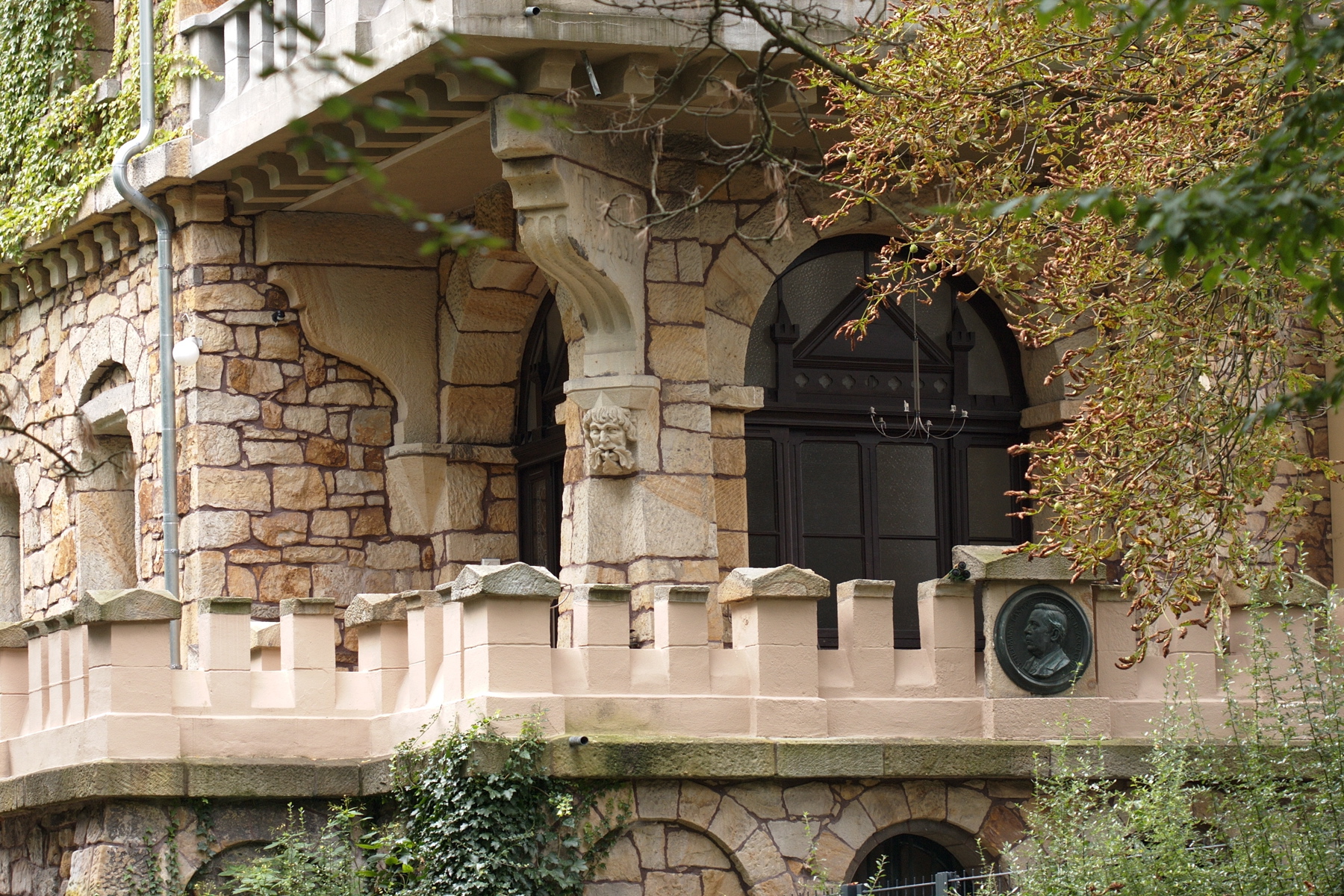
Image of Tuckesburg in Münster

The Tuckesburg was the retirement home of Professor Landois. In the Middle Ages, it was the workplace of the executioner, where, among others, wealthy citizens and nobles were executed.

Tagging with Django

Since the question about how to do tagging with Django shows up quite often, I have written a small solution to this problem: AbstractTagging. This is a generic application and generic views that give you a very simple solution to add tagging to any model you have in your django apps. It's currently used by me in my CMS project. The source is in the stuff project.

It was a bit weird to build, because I had to dynamically construct a base class you can subclass in your models - this is because of the magic in django.core.meta, where model classes are turned into modules. But the result is quite nice, I think.

Dooh!

What should the name be

Dooh!

The RFC 1437 is - as anyone who has read the introductory text will probably already suspect - one of the April RFCs. But somehow, this April RFC appealed to me more than any other - even if it is technically rather weak (the RFC with the carrier pigeons - RFC 1149 - is much better).

The idea of transporting intelligent life forms is not new - almost every science fiction has a variation of it. However, there is already the transport of intelligent life forms today - at least if you use a suitable definition. Of course, there is no physical transport by beaming. But what makes intelligent life forms?

For me, the central component of intelligent life forms is communication. And not just purpose-bound communication - there is also such a thing among pack animals during hunting, for example. But rather, communication for its own sake, communication for the sake of communication. Representation of ideas and thoughts, just to convey them to others, without there being a specific reason to do so.

I have been indulging in this communication for many years in various forms. For some time now, again intensified on the Internet in the form of photo albums (e.g. leicaesk and hugoesk (shut down)) or weblogs (e.g. Hugos House of Weblog Horror). Furthermore, software has always been a central means of communication for me (e.g. PyDS - a weblog and news aggregator software, or the software of this server).

This site is intended to be a supplement. Here, various media should be brought together and used jointly. No idea where this will take me, no idea if anything more than just a few test pages and general blabla will ever be created, but if you never set off, you will never be able to go on a journey.

Of course, the whole thing did not come to me immediately as a great revelation. For example, I used the domain rfc1437.de for a long time simply as a funny mail domain - mail as the idea of virtual beaming. But mail alone is a very narrow medium. Many ways of expressing myself can only be poorly transported by mail.

Moreover, it annoyed me that people kept pointing out to me that my domain was broken, just because no web server was set up ...

No idea if it's really The Coolest DHTML / JavaScript Calendar, but it looks quite nice. And it has a few quite important features - such as the ability to move it.

call of the noodle

Someone is writing a Lisp compiler for Python bytecode - very interesting, as you could use the Python libraries under a Lisp dialect. Let's see what the Lisp dialect will look like when the first release comes out and what features it will cover. With support for Lisp macros, it would be very interesting.

Using Django as a CMS

I am currently reworking one of my sites - Content-type: matter-transport/sentient-life-form. It was a Apache::MiniWiki based site before and is now in the transition to being a Django based site. The idea of the code for that site is to build a CMS based on Django that fully uses the Django admin. So the users should be able to do all management only in the admin, while the site itself behaves a bit like a Wiki. Autolinking, Autoediting of missing pages, Editlinks, Versioning (currently missing in the source) - all that should be done based on tools the Django admin provides.

This isn't for a full-blown site, though - the linked site is allmost empty, I never put much up there. It's more a project to dig deeper into the Django admin to see what it's like to work in it - so I know about that stuff when I start to build real projects.

The code itself is freely available - and there is already a nice thing in it. It's a template loader who pulls stuff from the database instead from the filesystem or from python eggs. It's "ticketed" at Django under #633, so it might make it into django.contrib some day.

Dismantling the Alleged Savior

Nice when a corporate bigwig is taken down. I've always wondered why the SPD lets an HR manager from the automotive industry reform unemployment insurance (keywords Bock and Gärtner and so on - and yes, I am aware of the auto chancellor). Will his name ever be separated from this absurd unemployment policy, or will politicians in the future still be proud of the name Hartz?