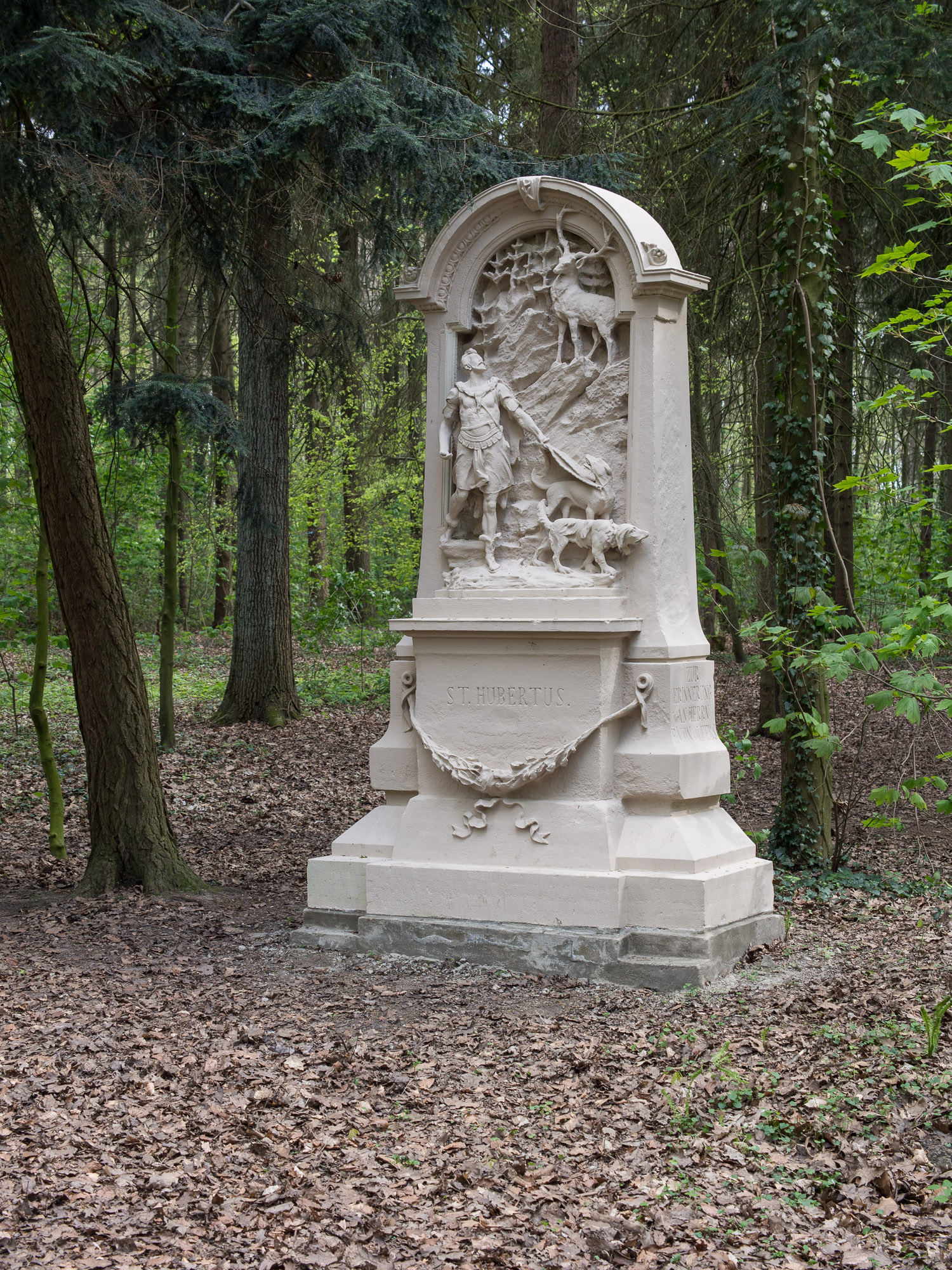
Here are some articles I found worth reading this week, collected and uncommented:
Archive 11.10.2013 - 25.5.2014
click - Just stumbled upon this, this finally looks like a real time saver - many other libraries for command line integration were so cumbersome that I couldn't see many advantages over the standard library provided stuff. But this already seems quite compact.
Here's what I found worth reading this week, collected and uncommented:
- Sony: Cyber-shot RX100 III mit Sucher und besserem Objektiv
- Niv-Mizzet: Homebrewing From Scratch
- NASA braucht Transport: Russen spielen Trumpfkarte Sojus
- Ex-NSA-Direktor: Binney fordert Amtsenthebung Obamas wegen Überwachung
- Introducing the WebKit FTL JIT
- Vince Knight: Wizards, Giants, Linear Programming and Sage
Photos from four days of short vacation in Leiden. Yes, just vacation photos. Hey, I'm just a snapper, you can't expect more. Just click on the link and scroll through, or click on a photo for a large view. And yes, I revived Koken. At the moment it seems to be working quite well.
Here's what I found worth reading this week, collected and uncommented:
Tails - About Tails. Hmm, maybe set up a USB stick with the system, for on the go and as needed.
What I consider worth reading over the course of the week and did not want to link separately, collected here and uncommented. (Yes, it's a bit thin here, most of it ends up on Google+ these days)
Lock, Dyckburg and Handorf
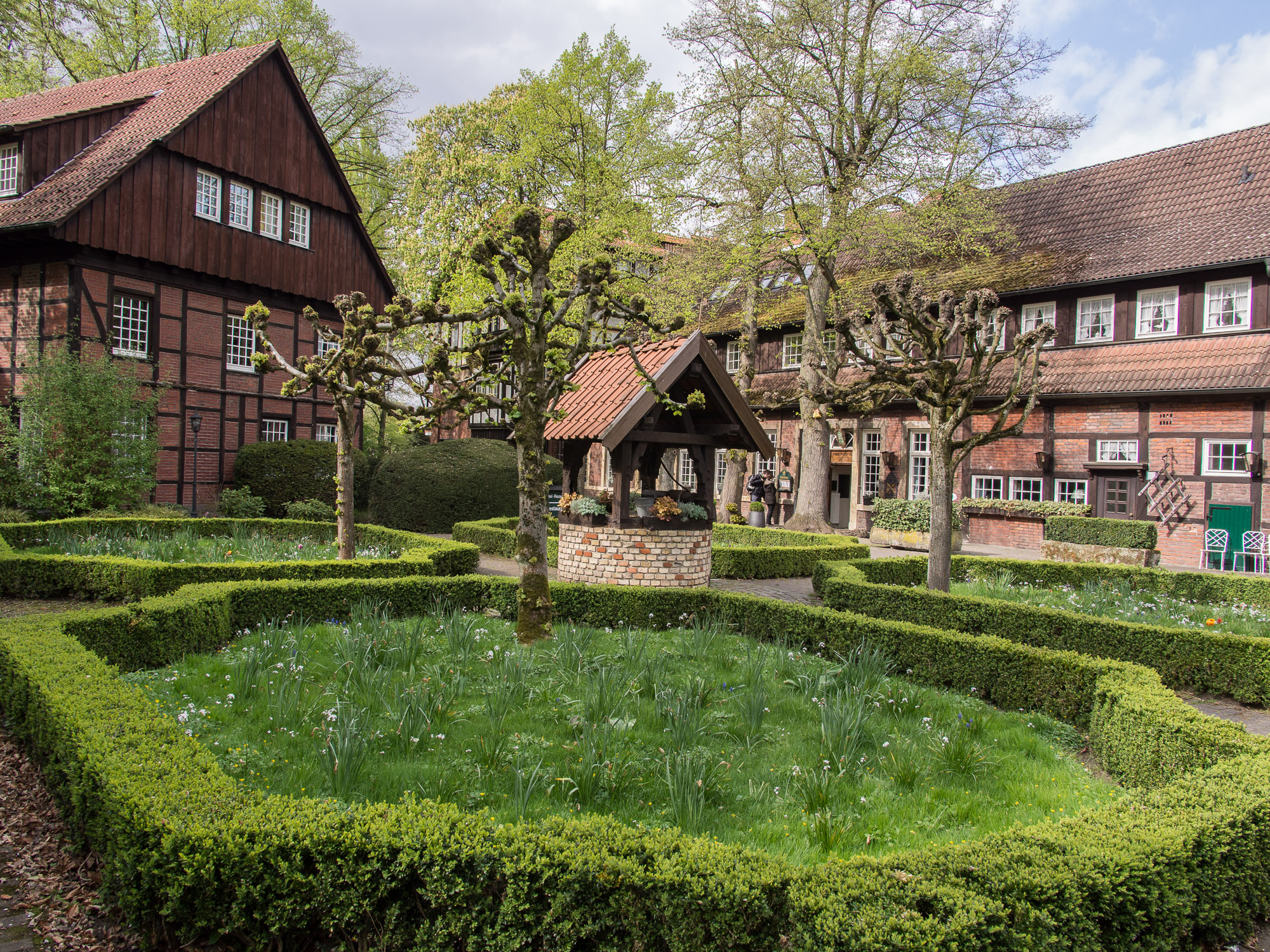
Walk from the lock to Handorf. Very nice forest area, even I still discover corners of Münster whose existence I was only vaguely aware of.
Market Visit

Just took the camera along to the market. It was quite nice, even though there were a bit too many clouds in between.
Recently on the Internet

I have uploaded new pictures to Google+ and/or Flickr. Here they are - unsorted and uncommented.
.NET Compiler Platform "Roslyn" - Documentation. C# and VB.Net Compiler. Directly from Microsoft. In C#. And Basic. Under Apache 2.0 License. So honestly? I think it's great.
2.0 Series — IPython 2.0.0 documentation. Very cool. This is slowly getting closer to the surface of Mathematica. Unfortunately, the strong focus on the browser - I can understand why, but I'm not really enthusiastic about it. I would prefer it to be a more integrated solution in the normal GUI. HTML as a rendering engine is fine, but the browser as a user interface is still quite clunky compared to an optimized native environment. But still, really cool what's happening here.
reclaim hugo | Collected stuff from social networks - since the Reclaim Social project has now delivered the WordPress plugin in a first version, I have finally set up a site where I now collect my G+, Twitter, Facebook, Flickr, Github and YouTube activities. It already looks quite neat. By the way, I am using the Shprink One theme, which works very well with the formats and has a few nice features. And it is especially clean. And it works with different screen sizes, including mobile. Let's see how this thing behaves in continuous operation.
TheKolWiki. Of course there's a Wiki for KoL. You are in a maze of twisty little pages, all alike and all insane.
The Kingdom of Loathing. Muahahahaa. Ahem. There's nothing that doesn't exist on the internet. And some things are very, very strange. And very, very old. And not only did I miss this very strange MMORPG (haha, no, seriously!) for ages, I also missed the Kickstarter for their CCG. And it all fits the color scheme of my blog.
British intelligence service: #GCHQ #stasi #harassment - Golem.de. Some Stasi employees will probably quietly cry while reading about what the NSA and GCHQ and their friends are up to. Out of envy. It's absurd what undemocratic and partly almost fascist activities the affected intelligence services are pursuing. Where do "Western" democracies actually get their legitimacy in moral discussions with the "Axis of Evil"? It's only good that in Germany, due to our funny hobby intelligence services, we probably belong to the "Axis of the Stupid." Is the NPD or the Federal Office for the Protection of the Constitution now suing the Federal President for defamation before the Federal Constitutional Court?
OpenBuilds OX CNC Machine | OpenBuilds. Cool - the next step after 3D printers, now the CNC machine for DIY and sharing.
Microsoft opens .NET source code. Ok, it would have been even better if it had been an open source license right away (and with GPL they could have even protected themselves), but hey, this variant is not uncool either - co-licensing of patents for the reference sources is already a good move. And Mono has gained a bit more security.
Cool idea: Decks for every Ravnica Guild. And each deck led by the Guild Leader. Probably not the best decks for the respective guild, but with many on-flavor cards.
Welcome to RISC OS Pi in Documentation. Ok, quite cute - RISC OS now as a system for the Raspberry Pi. On the other hand, it probably has better performance than the old Acorn machines had back then.
The Julia Language. Had I already mentioned that? Doesn't matter, it's worth repeating, especially since there's now also a small compact IDE for Julia.
Here's what I found worth reading over the course of the week and didn't want to link separately, collected and uncommented.
Here's what I found worth reading this week, collected and uncommented:
kachayev/fn.py · GitHub. Various small tools to program more functionally in Python. Interesting for me mainly the persistent data structures, I have come to appreciate these with Clojure.
OpenCamera. Blogged about it because a) it's cool and b) it might interest me to build. 3D printer is coming eventually and Arduino is already here and photography is just so much on my line.
Will You Fight the Hand that Feeds? : Daily MTG : Magic: The Gathering. Hmm, God of Ramp. That sounds like a nice card in a Blinking Rhino (Roon) deck. Specifically because you can downgrade the Goddess back to an enchantment by blinking creatures if someone comes with creature removal. And since she is legendary, she could also fit wonderfully in Captain Sisay - I still have a Full-Art Alter from her that also calls for its own deck ...
Mogis, God of Slaughter by Jarvis Yu. I don't care about Standard - I want him as a finally usable BR General in EDH. So evil. T4 indestructible Enchantment that makes opponents sacrifice their creatures. Oh so evil. Could definitely replace Purphoros as my favorite EDH god.
Port 32764: Cisco confirms backdoor in routers. Ok, they confirm the existence - but where is the explanation, where it comes from? Why is it there and why hasn't Cisco removed it long ago? Does anyone seriously want to tell me that Cisco would never run a port scan on their own routers?
Google will Hausgeräte-Markt erobern. "Hey Google, is my home on fire?"
TeleHash / JSON + UDP + DHT = Freedom. Discovered via git-annex: a distributed messaging technique with interesting properties. Strongly P2P-oriented, strongly focused on encryption, and designed from the outset as middleware rather than primarily as a human-to-human protocol like XMPP. Definitely worth watching what comes out of this.
Self Mallard 4.5.0 released | Self. It's still alive. It's still one of the coolest systems to emerge from Smalltalk - very exotic, very different. From some aspects, systems can still learn today - the implementation of prototypical inheritance in the graphical development environment is really cool and still looks modern even today. The GUI framework itself has already found its way into Squeak some time ago, but outside the Squeak+Self world, hardly anyone knows it. Which is a shame. And the compiler is still one of the better ones in the field of bytecode languages. Especially when you compare how JavaScript presents itself today and what Self has been able to do for ages, you can get quite sad.
Ori File System. Hmm - not a real server, implemented as a real file system, sounds good. However, not available for Windows and therefore only conditionally suitable for my device mix. Might still be worth a look.
Magic for Fun
I myself enjoy playing Magic the Gathering - mainly EDH, as it usually allows for a nice game in a nice group, and is not so much focused on tournament and winning. At least in the right group. But then comes the problem - I can actually only play on MTGO (online), as I rarely make it to the local game meetup on time. Of course, you can just play with a few buddies, but then you need decks. But then there is the problem that several people play with foreign, unknown decks - and EDH decks do have a thematic or mechanical alignment that you need to know to use them meaningfully and well. This then favors the person who built and knows the decks.
Therefore, I have recently dealt with a few multiplayer variants of Magic that can be well set up as a spontaneous game round, but also satisfy my second passion - deck building.
There is of course the best known and probably most widespread - the Cube. Here, someone builds a large stack of cards into a Cube, from which drafts are drawn. There are several problems with this, however. The first problem: the Cube must be very well balanced, as you are doing a draft - i.e. randomly assembling cards into booster packs from which the players then build their decks. Essentially, you are putting the design into the Cube that you would also put into a Magic set. This can be a lot of fun, but it does require a lot of effort. Of course, you can get net lists of Cubes and get the cards - but usually you want your own Cube. The second, more serious problem for me: you are doing one of the Limited formats, Draft or Sealed. So mix the whole Cube (Problem 3 - how do you mix 500 cards?), pay attention to rarity (not necessarily identical to the original rarity, but rather a weighting in A/B/C cards), then assemble and prepare "Boosters" from it, then you can start with the game. Sorry, no, first comes the draft. And then the deck building. Oops - then you quickly lose the beginners, because casual players can maybe quickly learn how to play, but how to draft or build a deck, that's a bit more involved. So Cube is out for me.
Then I stumbled across the Stack Format and was immediately enthusiastic. I don't really want to design my own set - I just want to play with cool cards and do it in such a way that you can also include casual players after the latest open round (i.e. a round where all decks are open, so you can explain things and help each other). The design aspect is there - I can think about the cards that should be included, as much or as little as I want - and the setup when you want to play is also low. And through the automatic mana fixing in the format, beginners also have fun, because they usually get something to play that also has an impact. There are actually only two problems left: on the one hand, you have to mix 500 cards again and then draw extracts from which you then don't know how the game with the community deck will turn out, and on the other hand, despite mana fixing, there are problems in creating a consistent game - it is simply much more random. Deck design is almost non-existent, there is not even a preliminary selection of colors.
Another casual format from the Stack family is Big Box Magic (or Commie Box Magic as it is now called). There is also a common library, but divided by colors. And the player builds his color identity through the selection of his 12 lands beforehand. What I like about this: I can at least give a rough alignment, because the colors do play quite differently. And through the land selection, I already have a rough idea of how I want to play - unfortunately, this can quickly come into conflict with the reality of the drawn cards. I bet on blue-white with green splashes, but get only 3-green fat guys at green, it quickly becomes sad.
In addition, both formats also have a problem: it is not even remotely something like Commander. Yes, they are Singleton formats (at least if the Stack/Cube designer wants that), but there are no Commanders. And that led me to design my own variant, a mix of Commander and the two Stack formats. My attempt to build a common basis from the ideas with which you can play Magic more as a social game spontaneously, without much setup, with design options for the players and with deck building options for me. And without having to mix 500 cards (at least at once).
The basic idea is a common library like in Commie Box Magic (i.e. the 5 colors as their own stacks - and in my case really only monochromatic cards) and a common graveyard. The graveyard is divided by colors just like the library, and there is a 6th stack with artifacts and non-standard lands and a corresponding graveyard. All libraries and graveyards are common property - but always filtered according to the color identity of the player concerned. I decided to select 70 cards per color and lay out 30 standard lands for each color. With many players, you should probably lay out a larger land stack, otherwise it is too quickly empty.
Color identity is derived from the selection of the Commander by the players. I have a set of dragons - the Shard and enemy color dragons, of which the two with the same primary color are always bundled. That's enough for up to 5 players - each can choose a primary color and then their command dragon. If you want more than 5 players, I have a set of Guild Commanders, two per Guild. That goes up to 10 players, should be completely sufficient for my purposes. The Guild Commanders are also suitable if several players want the same primary colors and there is no agreement on the distribution of the dragons. Or if you just want to play with two instead of three colors - this does limit a bit, but has the advantage that players can develop a feel for the two colors in focus faster, simply because the number of cards is smaller. The dragon variant is also ideal for 2HG game variants - the two players of a team take the dragons with the same primary color, the team covers all 5 colors with this, but still has synergies. With this, up to 5 teams of two can be set up.
The game is then first designed from the selection and distribution of the commanders. Then each player draws his hand from the library - of course only from the color-matched stacks. To do this, each player can draw 3 or 4 cards from the actual card stacks and then fill his hand to 7 from the lands. Drawing is done in turn, since the library stacks are used jointly - so player one draws the first card, player two the first, until everyone has the first - then the round for the second card and so on. This way, each player can steer which color (or whether he needs artifacts) he wants to draw and also when and how many lands and which lands he wants. This should give everyone a playable starting hand, without major mulligan rules.
The game itself is designed just like normal EDH - you start with 40 life, there is commander damage from 21, poison counters from 10 and so on. Everything as usual. Special features only when drawing cards, with all cards that reference the library and with all cards that reference the graveyard. There is one more special feature with the commander - there is no tuck. The commander always goes to the command zone, never to the library - otherwise someone else could draw my commander and not be able to play it due to lack of matching mana.
Card drawing comes in two variants: the standard drawing of cards and the drawing of cards triggered by cards or abilities. With normal drawing in the card drawing phase, the player can choose from which part of the library he wants to draw. Here, all colors of his color identity and the artifact stack are available. A player can either draw a card in his color identity, a land in his identity, or a colorless card. Additional drawing of cards happens the same way, except that the artifact stack is not available. The reason is simple: all players share the artifact stack and it would simply be too quickly empty if you could always draw from it, artifacts are after all often the "jokers" in Magic. If a stack is empty, you can no longer draw from it - since each player has at least 300 cards to draw from through his colors (two color stacks, two standard land stacks and the artifact stack in the Guild variant, 400 cards in the Dragon variant), you should always be able to draw something. Whoever can no longer draw anything first also loses as in normal EDH.
What about cards that refer to the library? For example, with tutors (I myself avoid them in my stack) or those that go to the top cards of the library? These behave just like additional drawing of cards, but without lands - so directly to the colored stacks of your own color identity. In addition, the player must choose a color of the color identity before triggering the action - Scry 3 therefore only looks into the stack of one color (because only non-lands are in the stack in question, distributing over several stacks would then be too powerful). The stack designer should avoid cards that, for example, refer to lands or non-lands - in a selected stack there are always only non-lands. Some cards are therefore simply not compatible with this format. What about the opponent's library? The same - only a color of the opponent's color identity is chosen. And yes, your own library and an opponent's library can overlap. Top manipulation therefore often has more the character of "taking something away from an opponent" than the character of "preparing something for the next turn" - Hellsight is therefore rather an offensive tool. After all, every opponent with overlapping color identity comes into the potential "enjoyment" of my prepared card. This opens up completely new political strategies!
And the graveyard? Everything is in there together. Simple solution: the graveyard is sorted by colors just like the library. Cards that go to the graveyard are placed on the stack of their color. My graveyard is then all graveyard stacks from my color identity - and in addition the artifact graveyard. An opponent's graveyard is all stacks in his color identity - and in addition the artifact graveyard. Reanimation can therefore without further ado bring back cards that originally belonged to someone else! Even if the number of creatures in the graveyards of your opponents is asked - simply take the common color identity of the opponents and then count the creatures in the matching graveyard stacks and in the artifact stack. Yes, the Stare from the 6th district can thus turn out to be quite monstrous!
The designer of the stack should of course design according to the format - for example, mill phrases like the Archive Trap make absolutely no sense, as it is not clear whose cards you are milling away due to the divided libraries. Small mill effects are ok, but they don't really make sense either - it's more that you accept them because you want the card in there for other reasons. In general, you should avoid them. The same goes for cards that talk about owners in graveyards or libraries or exiles (which is also divided, but since you don't often access it, that part is rather irrelevant) - "bring all creatures in graveyards under the control of their owners into play" is pretty stupid here, because who is the owner of jointly used graveyard stacks? So when designing, always pay attention that the cards can also be played here without conflicts or too much head scratching.
In general, I have set the motto "Good-Stuff-Deck with Theros-God as an idea" as a basis for each color stack. This gives the color stacks a bit of character and the players can decide through the color choice in which direction their game should go. For the artifacts, I focused on the colorless helper lands and otherwise of course a lot on equipment and helper artifacts with low costs. Also because of the above rule with access to the artifact library only at the time of the primary card drawing - otherwise a Nin-player quickly grabs all the weapons ...
A drawback of the format is the poor support for gold cards - so far only as commanders, otherwise only monochromatic cards. An idea would be to give the commander - at least in the Guild version - a private library of gold cards, which is then only controlled by this one player. This makes it a bit more complicated, but also offers the opportunity to design a real Guild identity and thus give the Commander choice even more meaning. However, you quickly get into the situation from above that casual players are overwhelmed with the evaluation of the private libraries and more experienced players are clearly favored. I'll have to test a bit first before I decide on that - best first without this Guild library. Also saves time and cards if I do that first.
The nice thing about the format: the setup is as simple/complex as with one of the more complicated social games like Settlers - 5 boxes with 70 cards and 30 lands, one box per color. Separate the lands and lay them down, mix 70 cards and lay them down. Then mix the 100-box with the artifacts and colorless lands and lay them down. Commanders on the table for selection, and then you can go.
Magic plays its advantage here that cards can often be well understood when you just read the text - I have therefore also paid attention to only use German cards. Maybe I will also go through the selection again and sort out overly complicated cards (or cards with keyword properties without explanatory text) and replace them with simpler cards. Even if I then have to sacrifice some beloved cards. I have already only one Planeswalker per color in there, for example.
Whether the format works will of course only be shown by game tests. I will report whether top or flop.
Commie Box Magic is another variant with a central library. The rules are further expanded and, in my opinion, more complex than in the Stack. I would probably prefer it. Especially because the simpler mana fixing in the Stack makes gold cards playable - you have the right mana ready in a few rounds, even if you currently don't have any of the colors of the gold card.
The Stack and Back : Daily MTG : Magic: The Gathering - hmm, the format sounds very interesting to do something meaningful with the large card collection. Could also be very fun as a Pauper variant, or in a version with a correspondingly weighted mix by rarity. The deck building is eliminated, which makes it easier to get people involved who are new to MTG - you can simply play what is written on the cards. There is no mana screw, because you can simply take a suitable land card in the draw. The game should become much more reactive as a result - few opportunities to pre-plan, since even if you know the stack, you don't know which card someone else might get. And the advantage: deck imbalance is purely a function of chance. Magic becomes even more similar to a board game. I think this is a project for my collection.
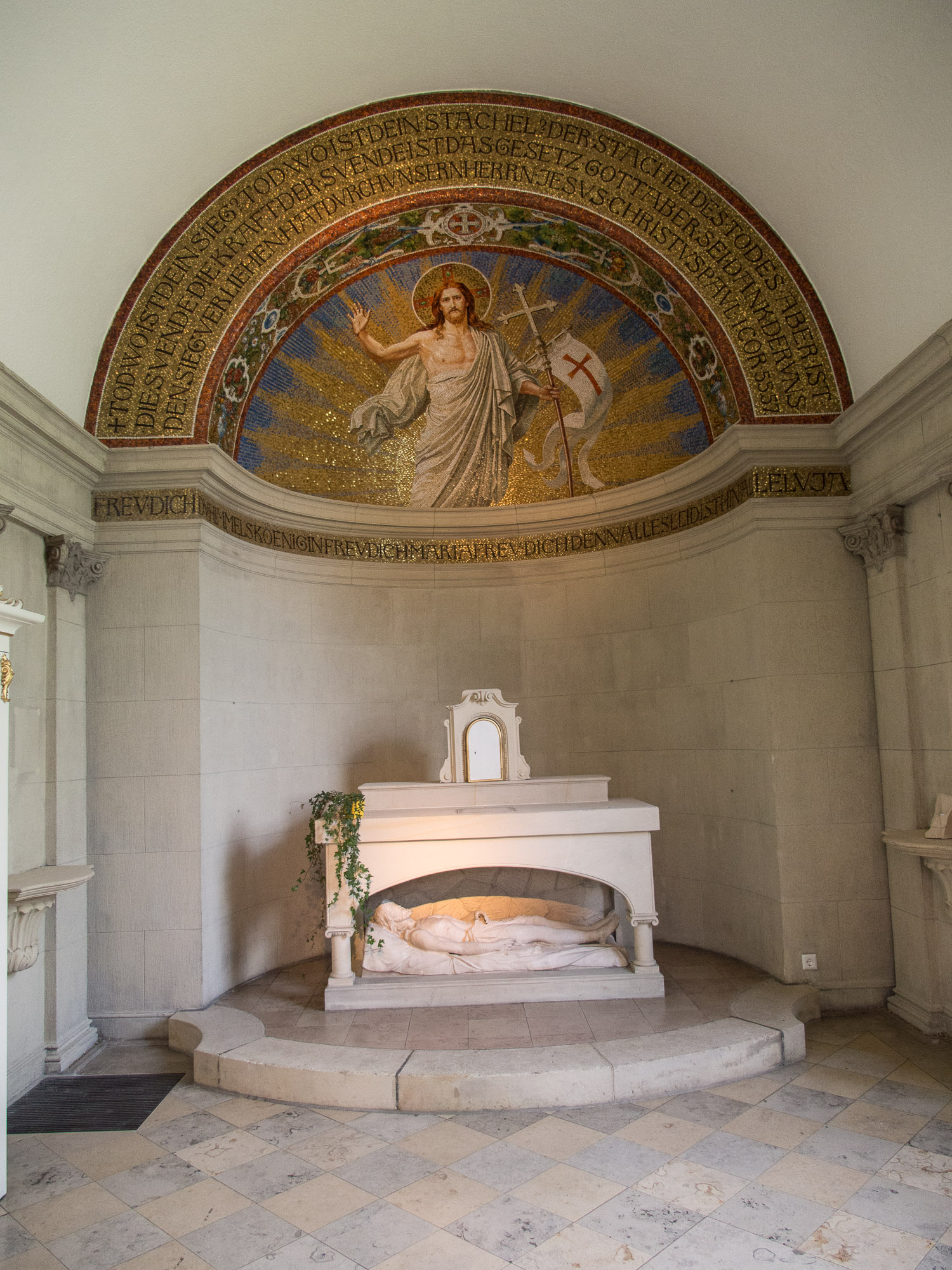
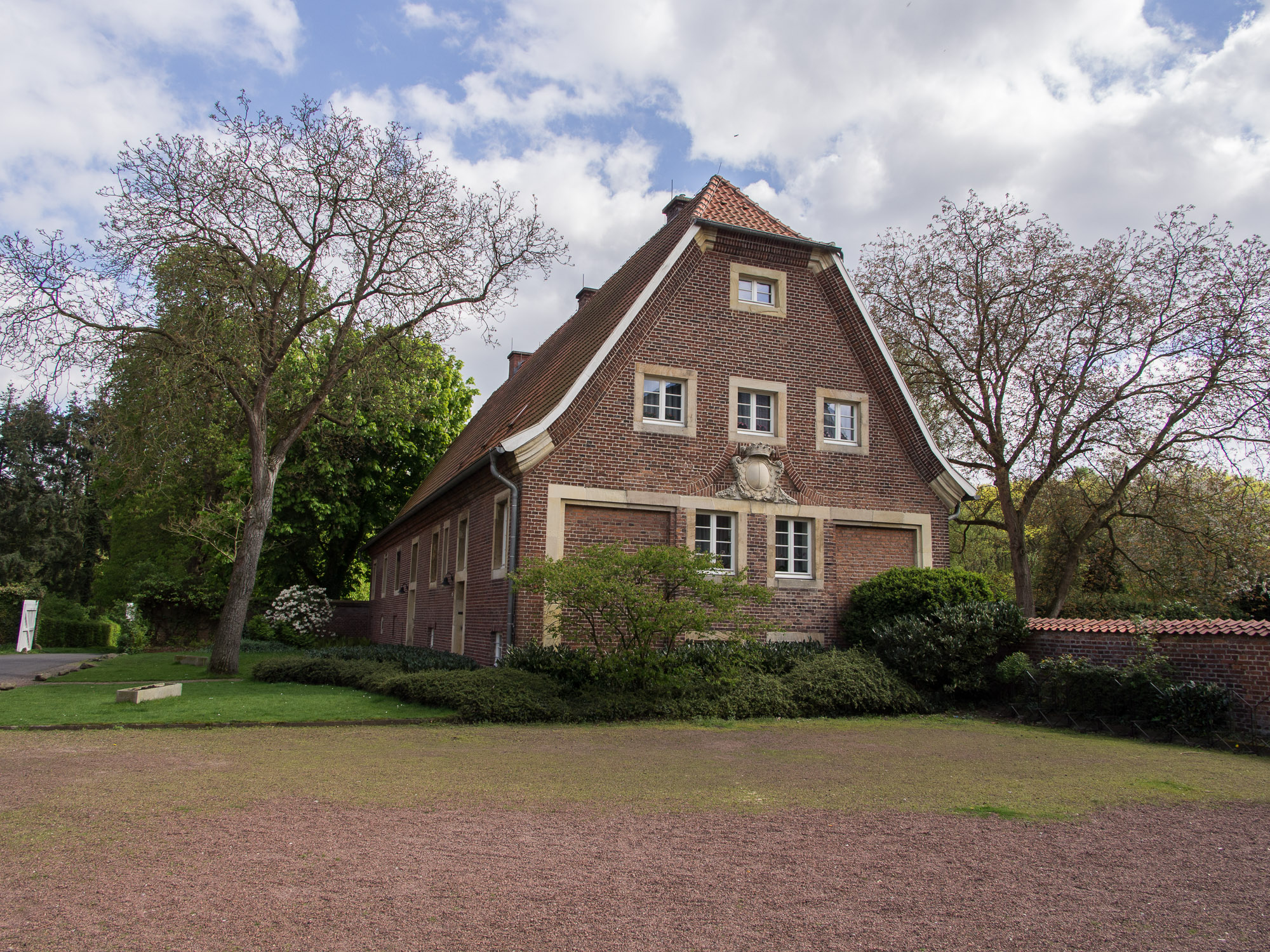
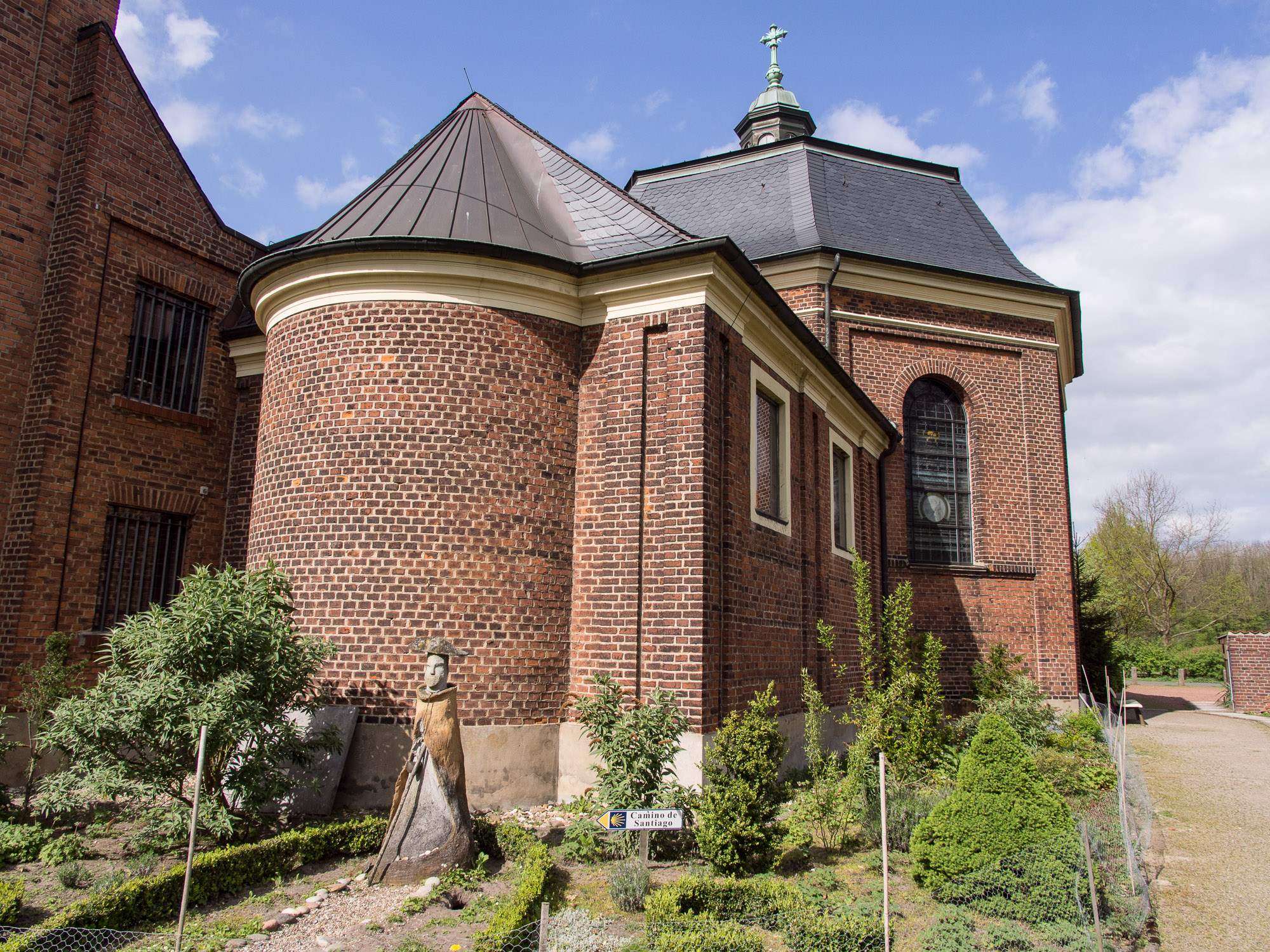
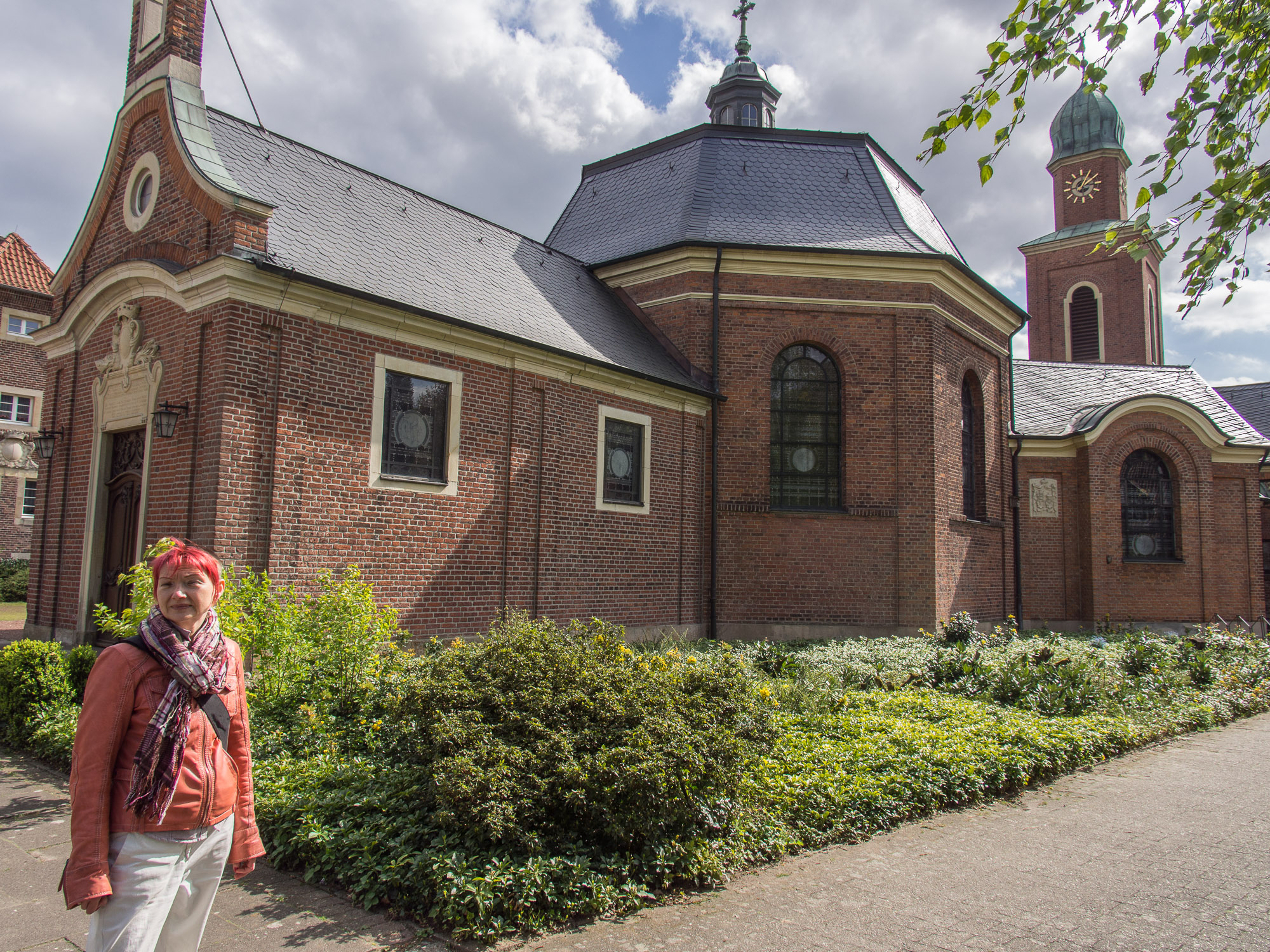
Hiltenfingen and Landsberg
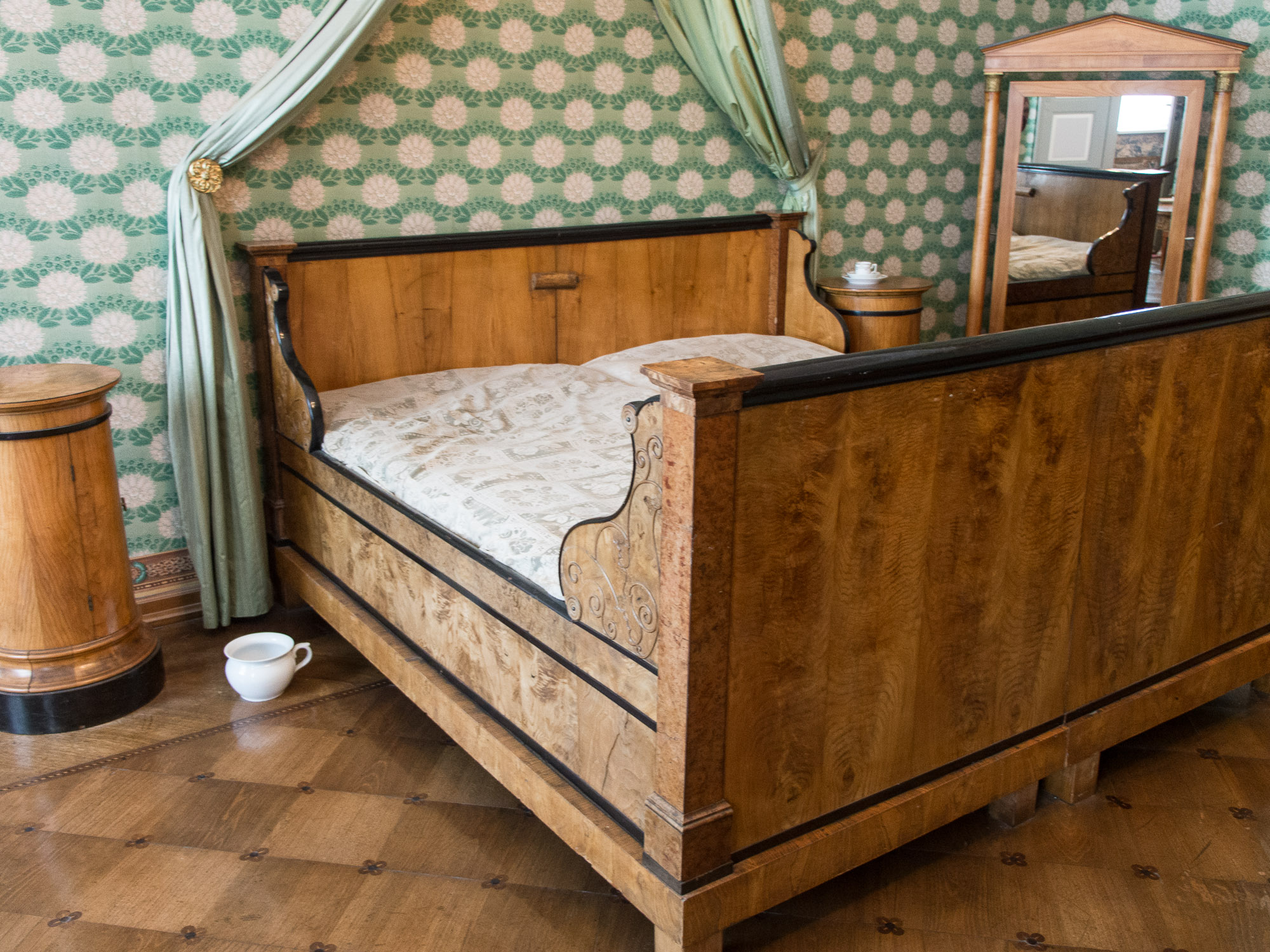
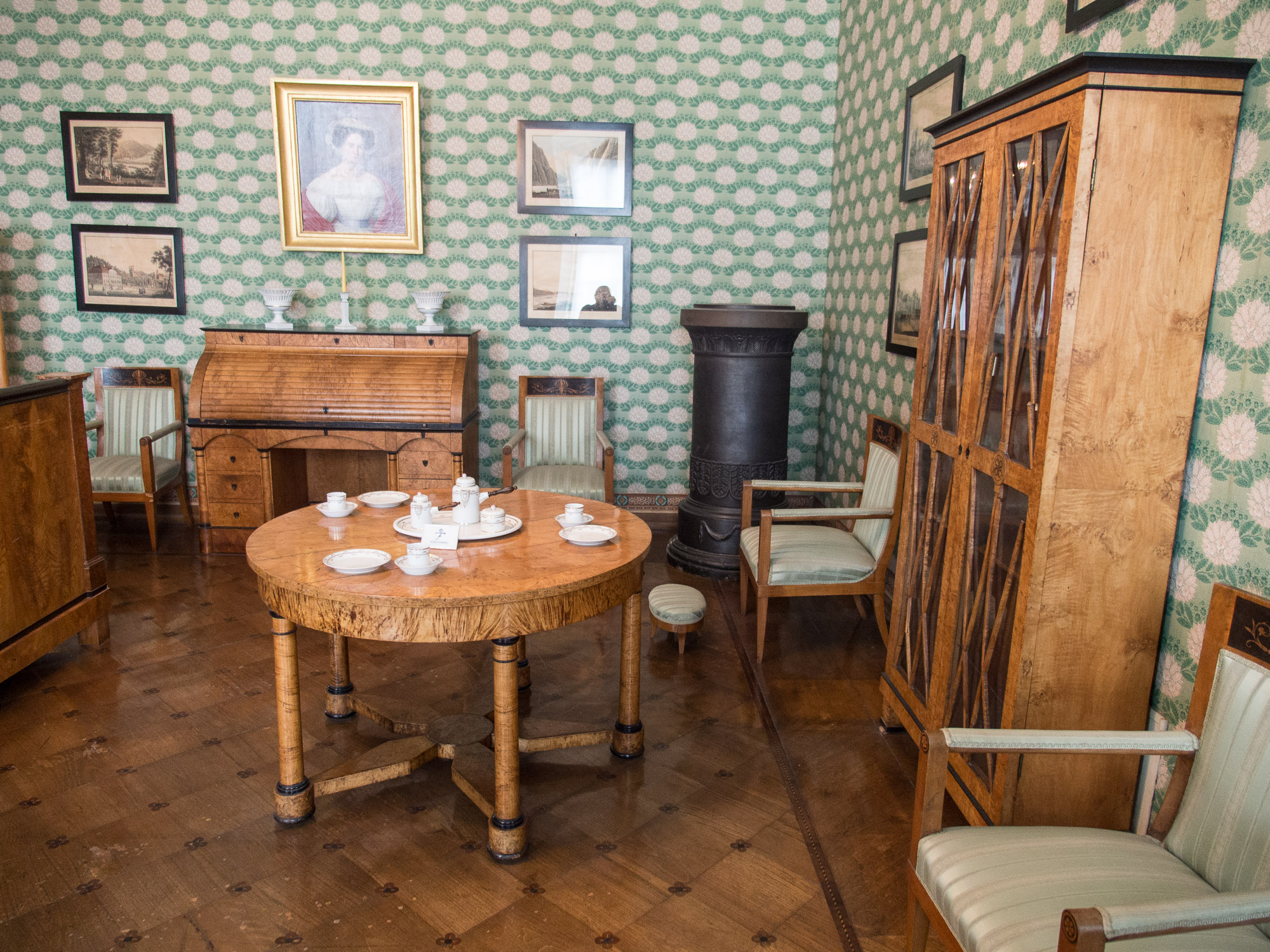
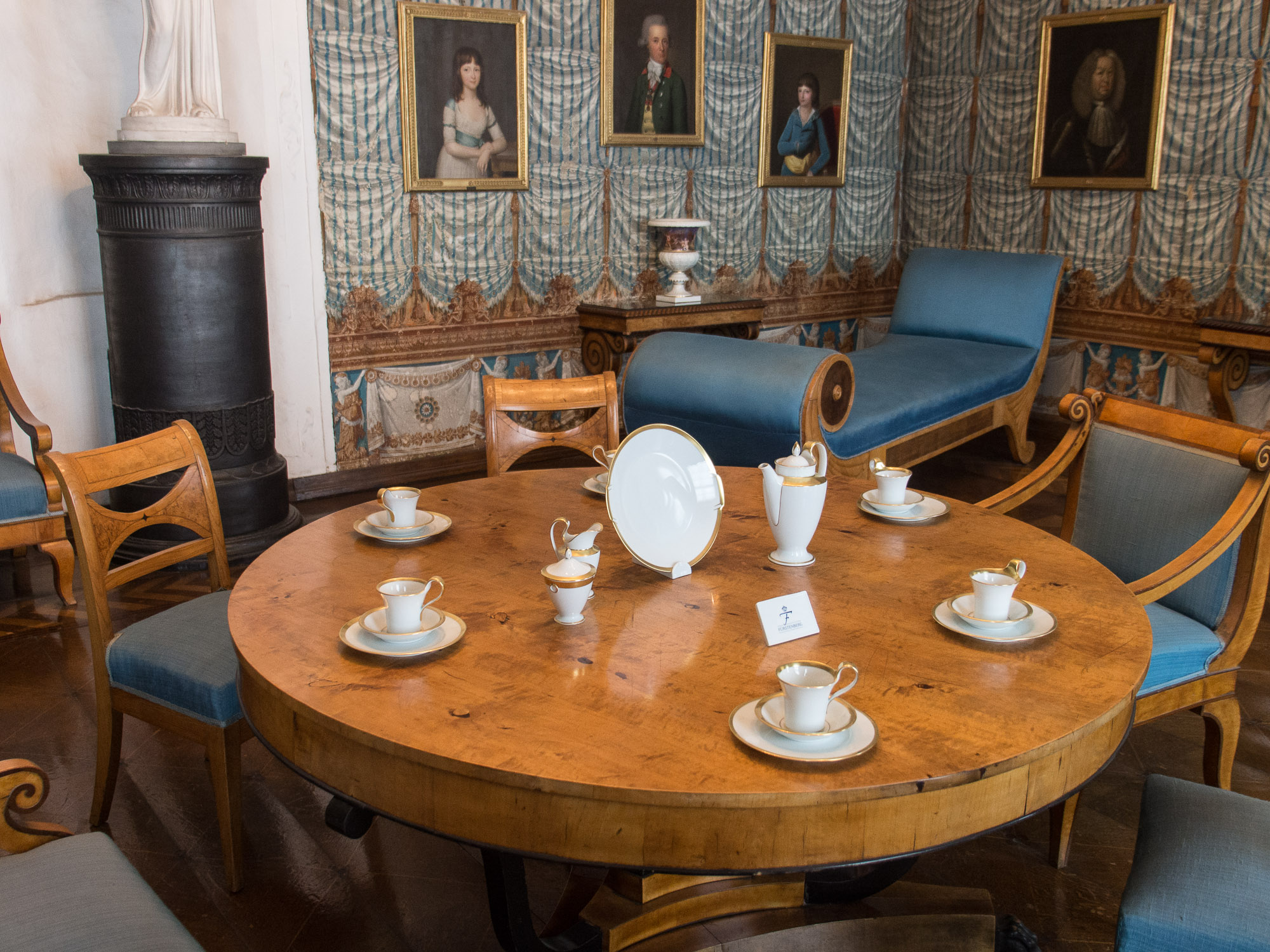
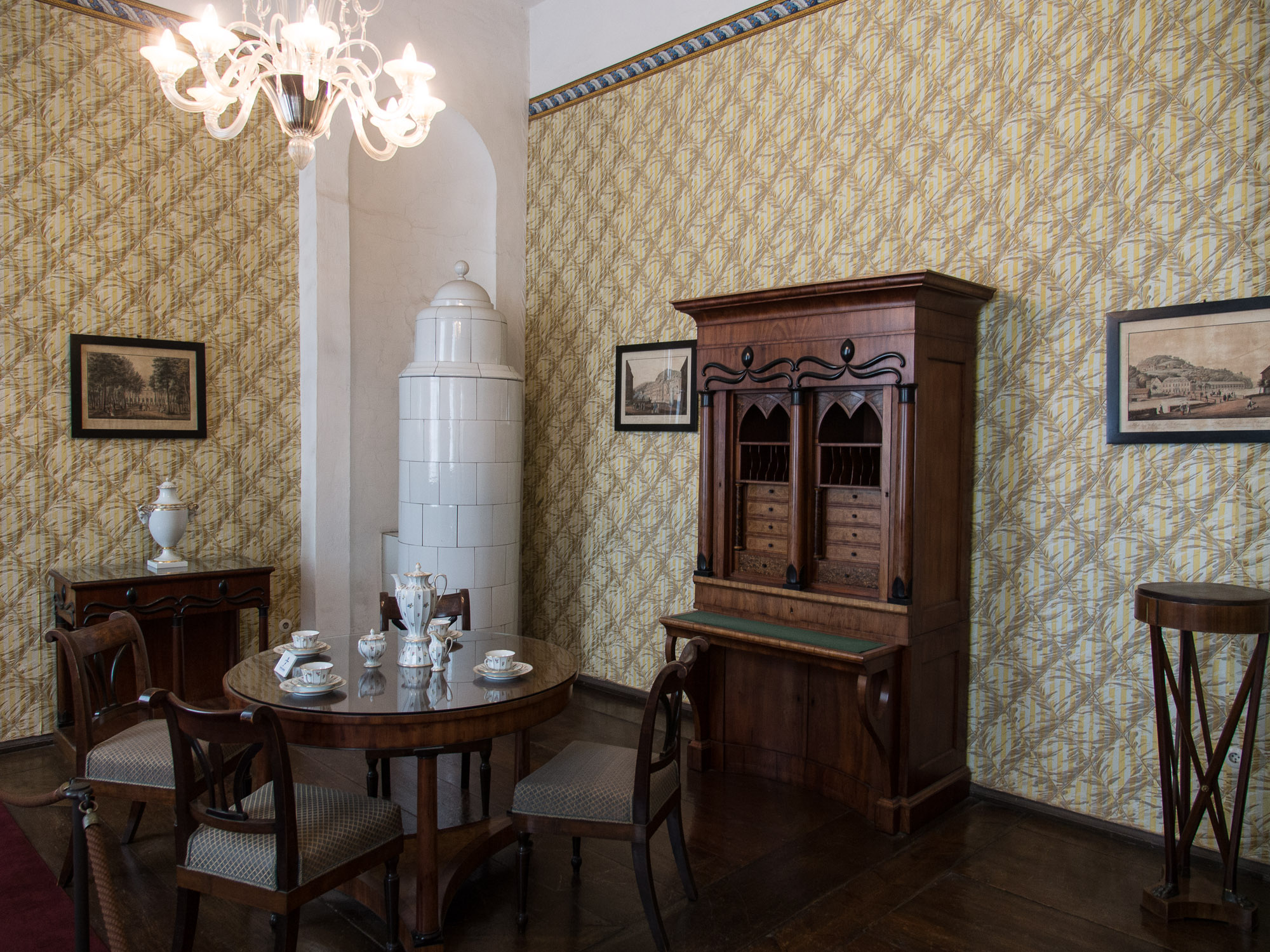
Visiting friends in Bavaria. Yep, just boring vacation photos again! We're turning into total tourists!
print("Hello, World!")
Un peu de math...: Installing and using Sage just got even easier.. - and that's it, just a git pull and a make. Ok, and large amounts of coffee while waiting for the build. Way cool. If you don't know Sage: a mathematics package with similar complexity and focus as Mathematica, which is entirely based on open source projects that are all integrated with Python as the "glue" language.
Hands on Sailfish OS: Intelligent building kit for tinkering and porting - Golem.de. Hmm - not really as open as one might have hoped, but more open than one might have feared. Sounds like a good hacking basis for tinkering projects anyway. Especially the combination of a "real" Linux and an Android environment for apps is pretty cool because it avoids technical isolation.
WordPress › WordPress 3.8 “Parker”. It's been a while since an update that actually appeals to me visually - and I like the new default theme so much that I'm seriously considering switching from my current one (which is still based on 2010, with minor adjustments). I found the 2011/2012/2013 themes rather meh. Especially 2013 was just plain irritating with its color scheme. 2014 will need a few patches, but that mainly refers to the design of gallery posts and asides - although I could almost live with the asides, maybe just tuck them into a sidebar or something. Hmm, let's see if I'll go through with it - the advantage would be that I could get rid of a lot of my own tinkered code and thus have less work with potential new versions that would require adjustments (although my adjustments have proven surprisingly stable, so far I haven't had to touch anything). What I do find really strange, though: the "Press This" bookmarklet has been almost unchanged in design for ages. Could also use some sprucing up!
Plug-ins for Adobe Photoshop Lightroom | Adobe Labs. I should check this out, there are a few situations where this would probably be very helpful (e.g. with Sony and Leica lenses).
Vacation on Madeira
We wanted some more sun and warmth - and landscape. Lots of it. Well, we got the landscape, the rain was warm too, but the sun was a bit of a letdown. Well, here are the results, just thrown together and presented in a very unceremonious manner (thanks to the smoking of the Koken publishing service, as written in the previous rant). Enjoy!
Nice on the outside, nasty on the inside
It seems to be the motto of Koken, which I once praised quite a bit here. It is still one of the best-looking gallery systems with a really sleek admin interface. But all that sleekness cannot hide the fact that the code underneath is probably not as sleek as the layout after some problems that were almost not debuggable. To this day, the login form has problems with Chrome and Safari - and they haven't solved the problem. From the reactions, it's not even clear if they care at all. How stupid is it when a login form doesn't work because of some JavaScript hacks under Chrome? It's a simple form with username and password, what's so big about JavaScript there?
The crown was the Lightroom plugin again today. I used Koken because my old blog workflow - thanks to the stupid decision of the WP programmers to scrap the entire Atom publishing and let it rot instead of fixing it - went down the drain. I don't want anything complicated - just a simple way to upload a stack of pictures online with one click directly from Lightroom. It also works if the target is Flickr or Picasa or one of the other supported online services. But I want to control my pictures myself - and host them myself. Well, if a plugin just creates an empty album but doesn't upload a single picture (even though it fiddles around for hours and pretends to be active), then it's all just for the worse. If there are no logs or debugging possibilities or messages anywhere that help in the analysis, then it's all just for the trash.
So, for the time being, pictures will probably end up here again, currently with Dossier de Presse, a plugin for Lightroom that publishes via XMLRPC to WordPress. Which is not optimal, but the only thing currently available that works with current WordPress, current Lightroom, and at all. Since no metadata is transferred via XMLRPC in WordPress, such as image titles, I will probably have to remove this from my gallery layout somehow, otherwise only strange technical image names will appear there. Titling pictures is stupid anyway.
Computers could be so much more fun if software wasn't programmed by amateurs and blockheads 90% of the time ...
Bublcam: 360º Camera Technology for Everyone by Bubl Technology Inc. — Kickstarter. This is quite a funny Kickstarter - and the prototype looks quite decent. Ok, it's basically "just" an action cam, and not even really action - throwing is probably not a good idea - but it's still cool.
Fishing in Modern: Top 64 at Grand Prix Antwerp by Raphael Levy. Very nice report about a good (and especially affordable) Modern Fish Deck. I'm considering getting it - I already have some of the cards, many are not so expensive, and with Modern as an eternal format, you can play it problem-free for more than a year. Moreover, Merfolk is right up my alley - on MTGO I play a Heroic Deck that works with buffs, sometimes also with a Sliver Deck (which works similarly to Merfolk). And in paper, my Standard Deck is a Nivix Cyclops Deck - which also works with buffs, albeit rather temporary ones.
Sony A7R Hands-On. Sounds very good. Only the price ... (and the fact that it's another new system for which you need new optics, which are then made by Zeiss ...)
Google Apps Script — Google Developers. Interesting - JavaScript scripting for Google Apps like GMail or GDocs and so. Doesn't look so uncool and now also has an Eclipse plugin to be able to edit the scripts offline.
Roundcube - Free and Open Source Webmail Software. Thanks to NSA, one starts to think again whether one does not want to handle mail oneself. Ok, one really does not want to, because sorting spam is no fun, but well, if one does want to, this might be a somewhat more modern variant of webmail solutions. In addition, one can integrate it into Owncloud via an app. Although this is really just an iframe integration - so do not expect to be able to use your address book together or something like that. Personally, I will probably stick with pushing my mail through Google and letting the NSA sort my spam. But contacts and calendars could soon end up on my owncloud. Even the file sync has become really good in the latest versions.
Drawing Attention : Daily MTG : Magic: The Gathering. Great article about what card draw in Magic the Gathering actually is and how to deal with it. Why is the game structured the way it is, what influence do the different colors have on card draw and how important are cards compared to other resources such as life points?
Scala Implicits - Not to be feared. Nice slide deck explaining what Scala Implicits are used for and why they make sense. Since Implicits are a feature that is often misunderstood outside the Scala community, it might be well worth taking a look.