kochen

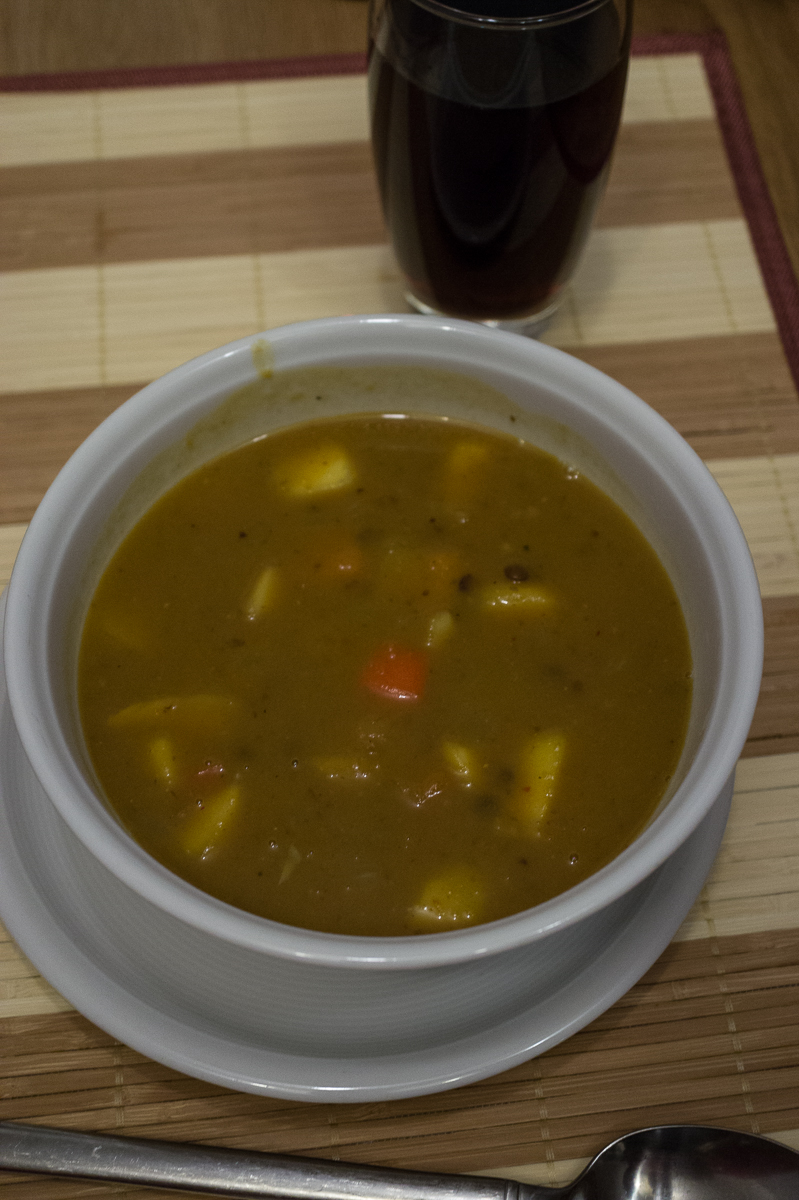
Sweet Potato Lentil Coconut Milk Soup

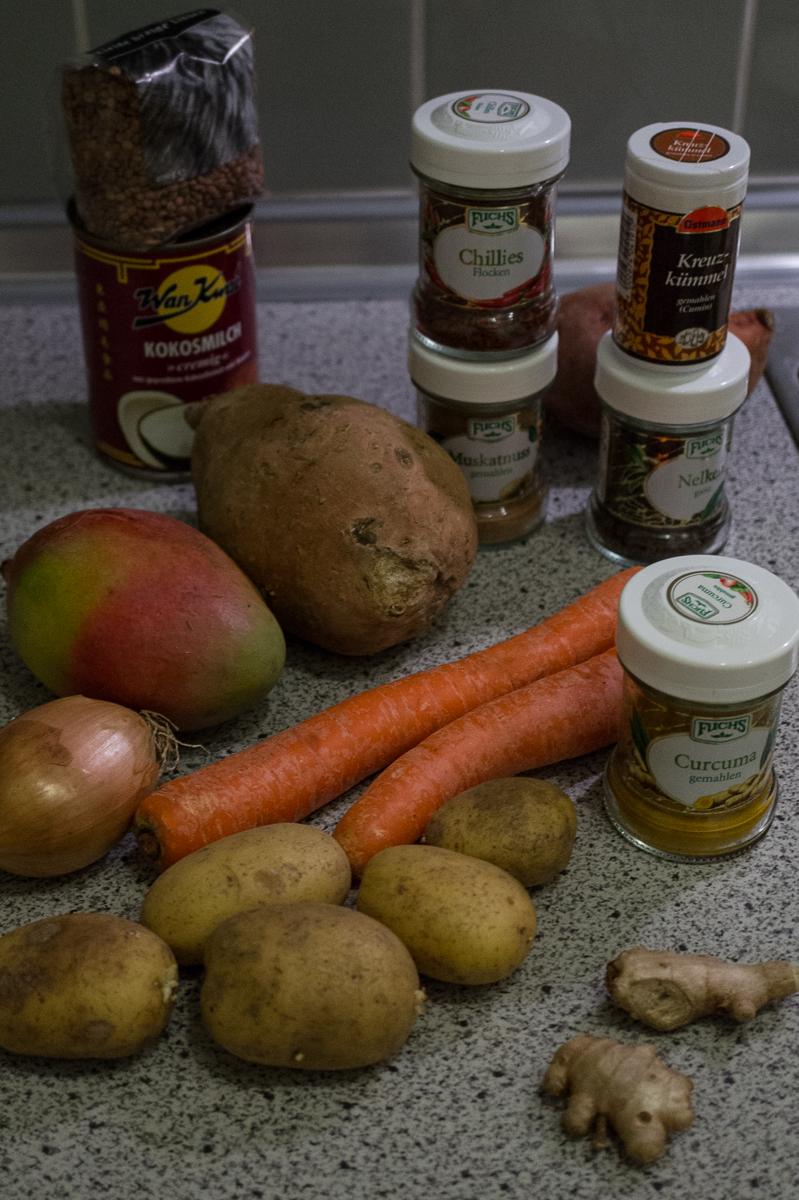
Today we were in the mood for soup again. Yesterday I was looking for something and came across this Asian lentil/potato soup, and we decided to try it. It wasn't that difficult and was very delicious. Here's what goes into it (you can also see this in the first picture):

  • Sweet potatoes (we had about 750g)
  • Regular potatoes (we had 5 small ones, that had to suffice)
  • Two carrots
  • One mango
  • Fresh ginger (we had two small pieces, could have been more)
  • Lentils (we had brown lentils, about 200g)
  • Vegetable broth (about 1.5 liters)
  • One can of coconut milk (400ml)
  • Spices (pepper, salt, turmeric, cumin, chili flakes, nutmeg, cloves)

Preparation is also quite simple, it's just a soup:

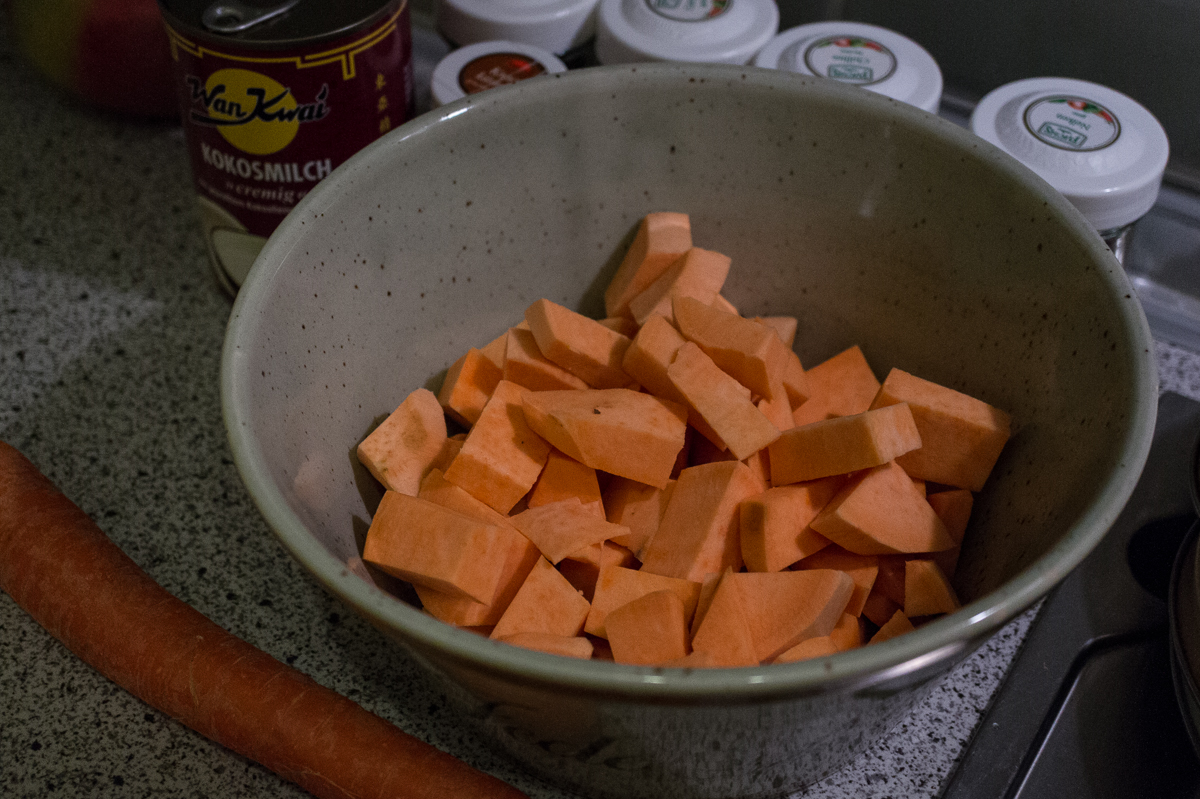
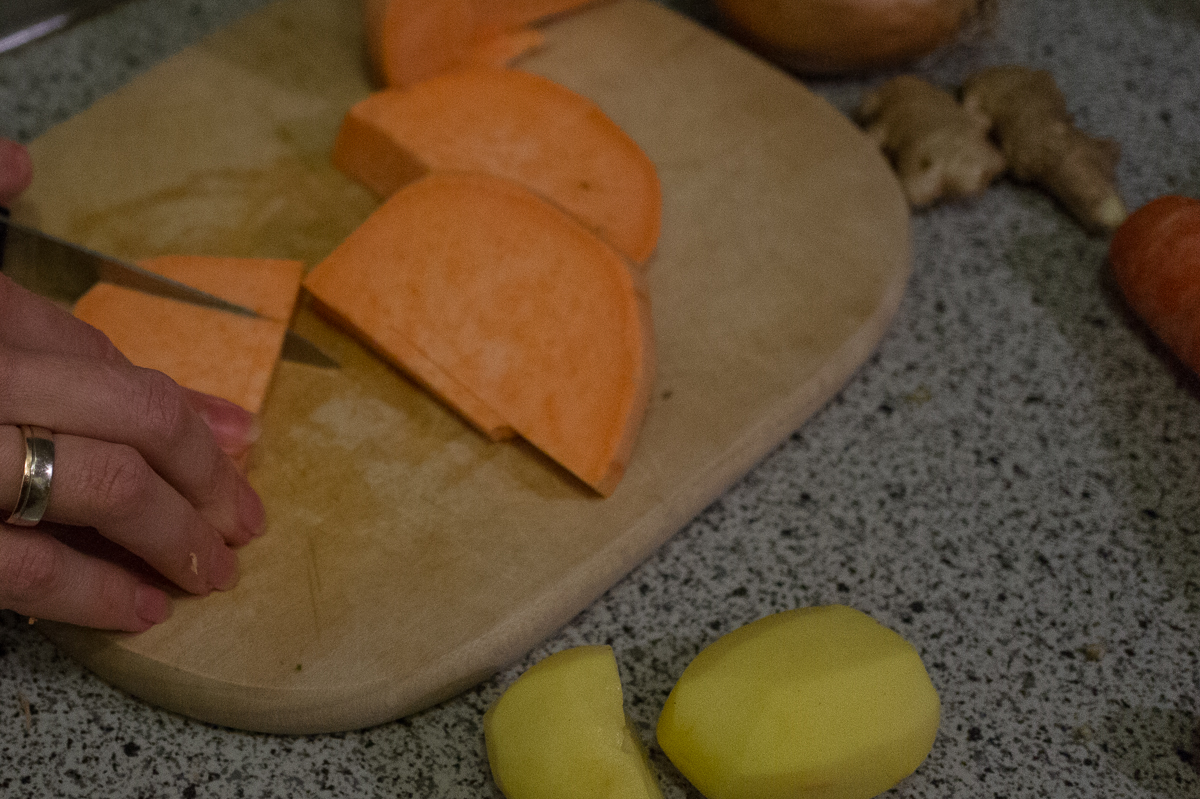
  1. Cube both types of potatoes, the sweet potatoes about twice as large as the regular potatoes (sweet potatoes cook faster and otherwise become mushy)
  2. Chop the carrots
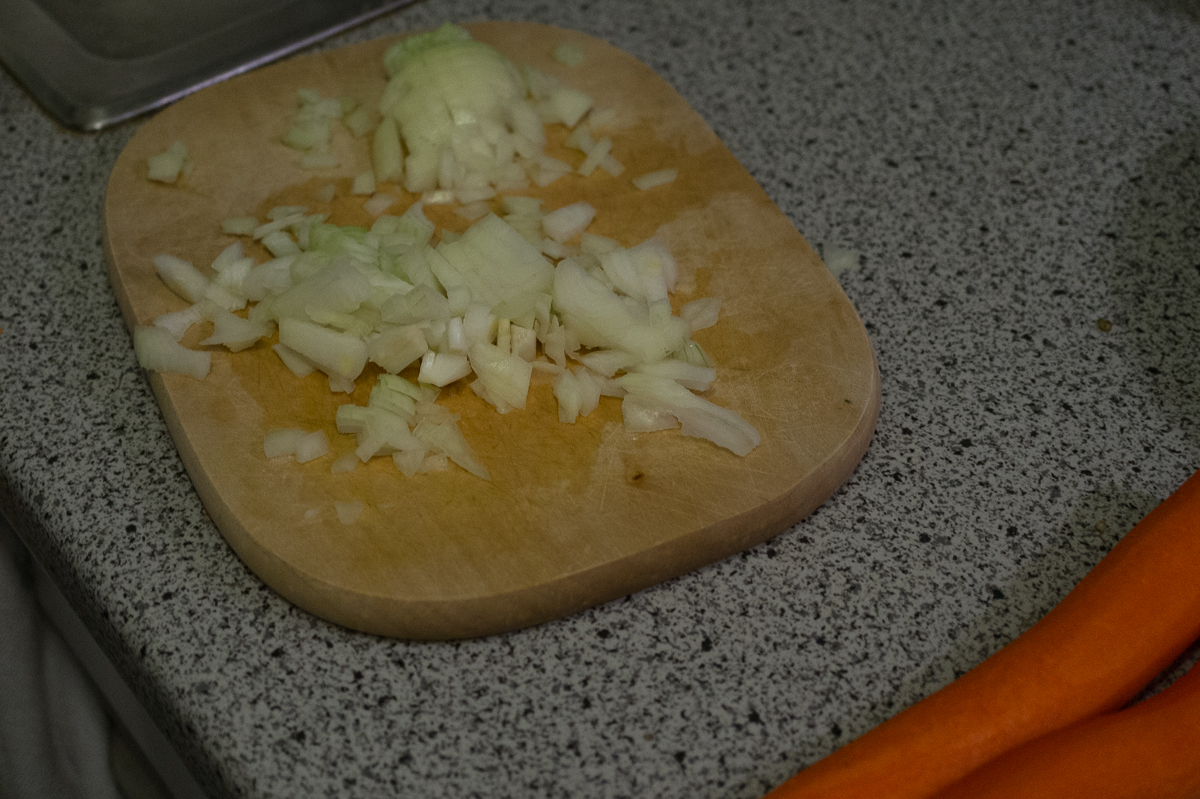
  3. Chop the onions
  4. Peel the ginger
  5. Sauté the onions in oil until translucent
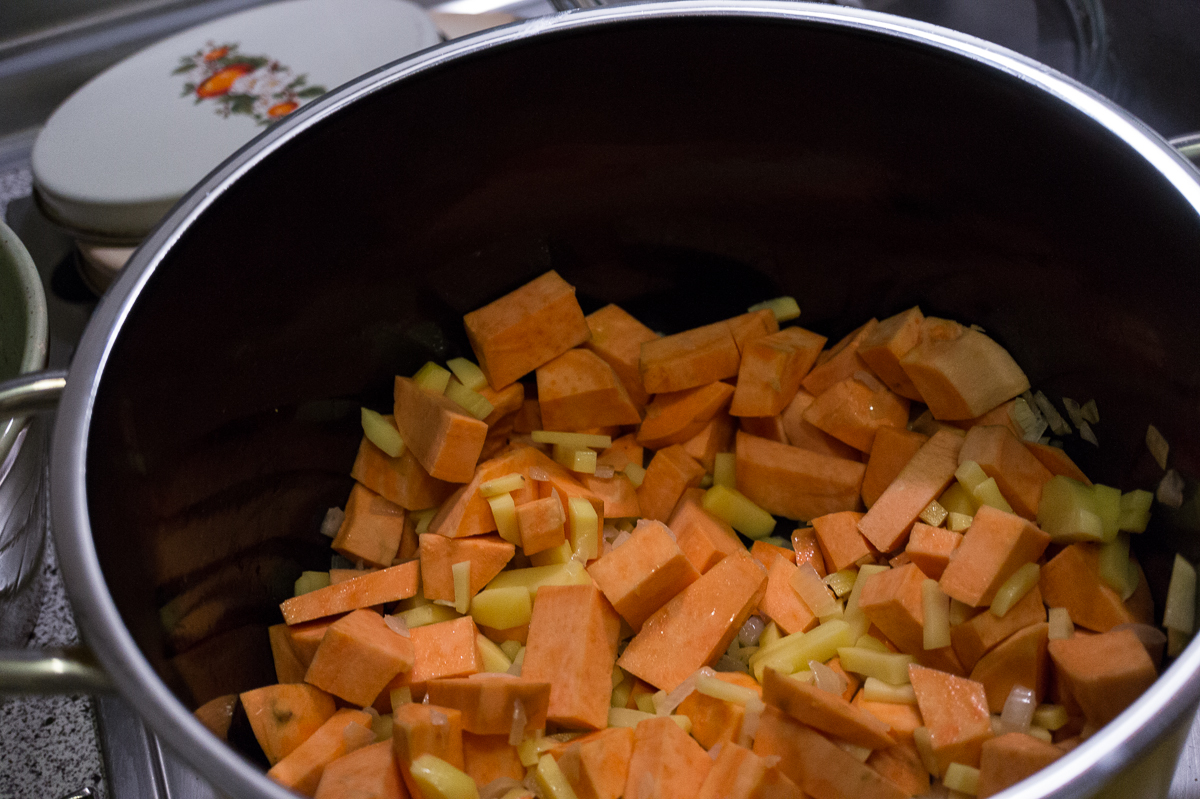
  6. Add both types of potatoes and sweat them (let them sit for a while until they release moisture)
  7. Pour the vegetable broth over
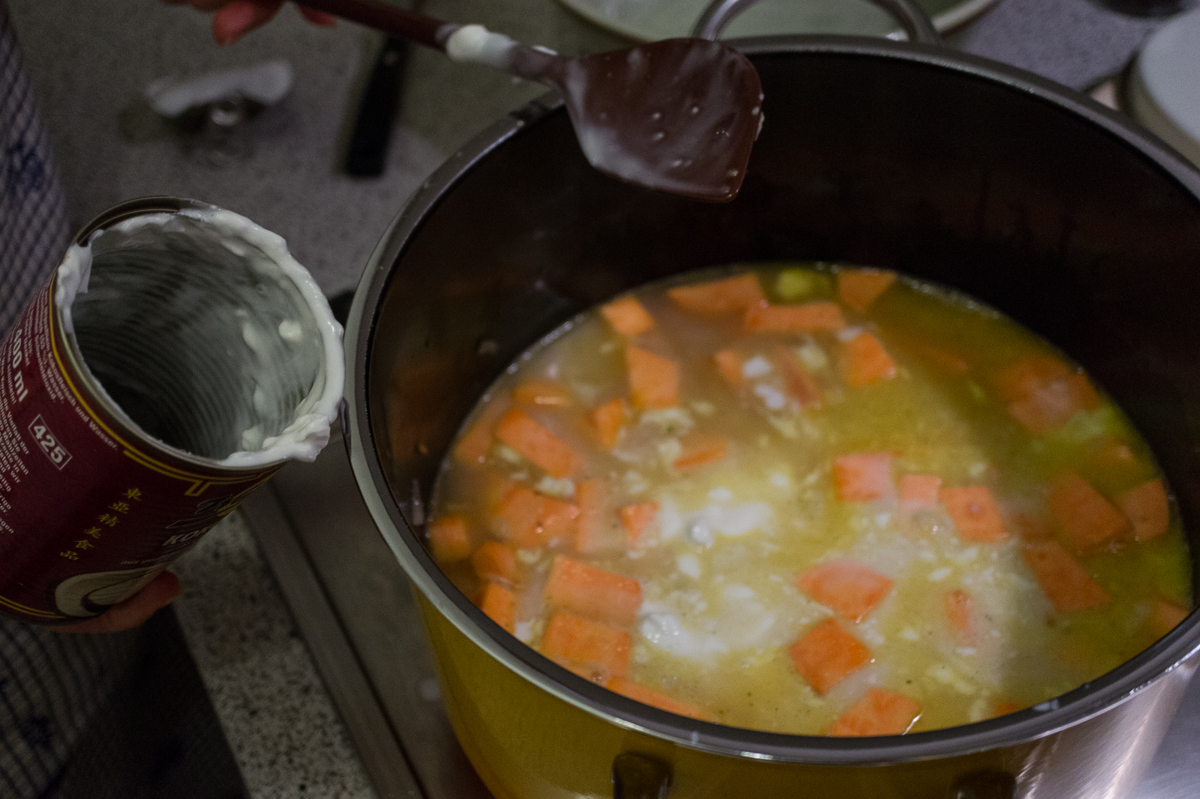
  8. Stir in the coconut milk (don't be surprised, it's partly quite solid)
  9. Add the carrots
  10. Add the lentils (if they are very hard and need to cook for a long time - pre-cook the lentils, ours were still quite hard)
  11. Grate the ginger over the soup (a cheese grater works well for this)
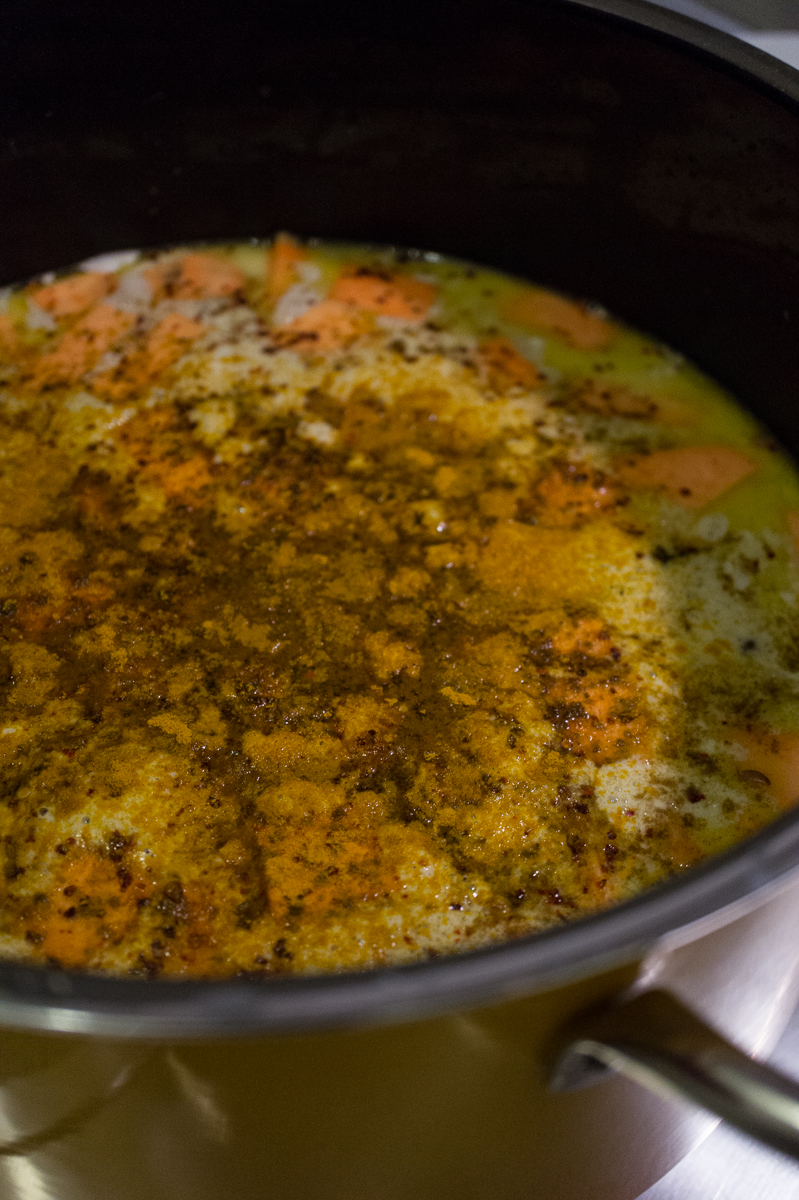
  12. Add all the spices to taste
  13. Let the whole thing simmer for about 20-25 minutes
  14. Remove some of the soup (especially sweet potatoes and regular potatoes) - about 1/2 liter - and puree and mix back in. This makes it nicely creamy.
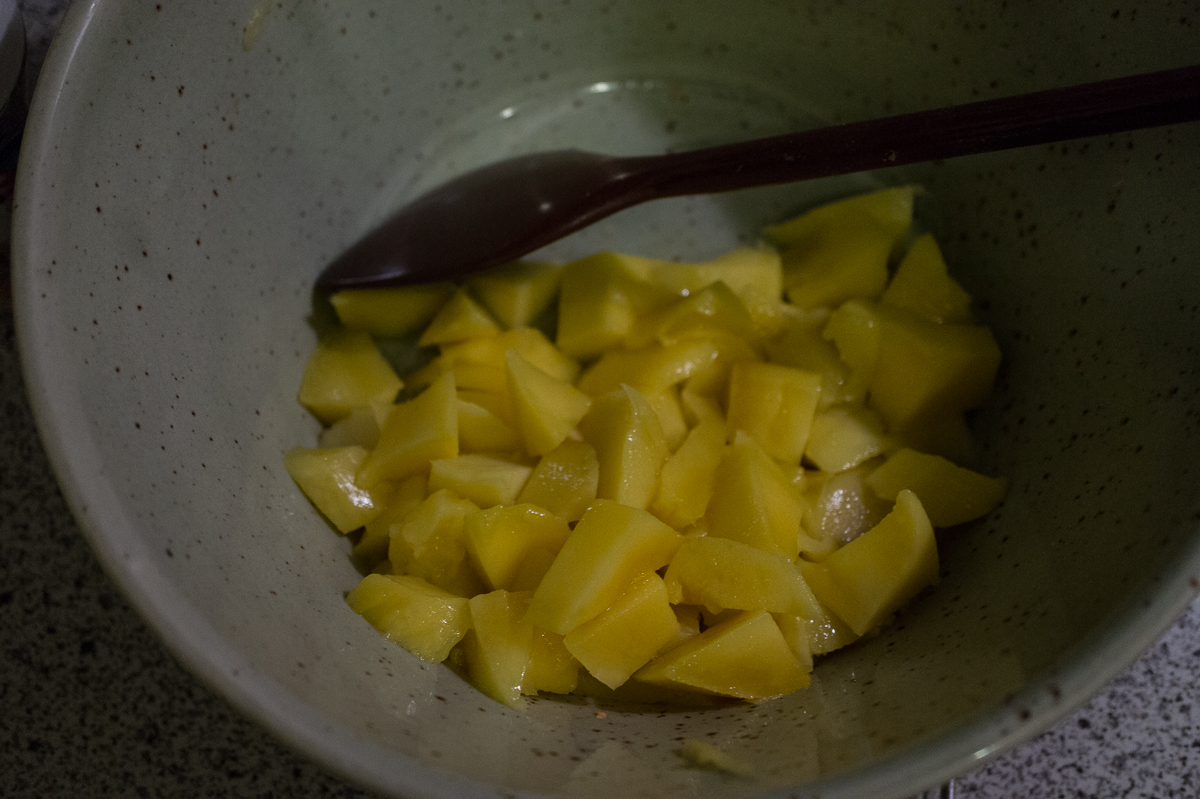
  15. Peel the mango, cut it into small pieces, and add it to the soup
  16. Sprinkle nutmeg over the soup
  17. Let it simmer for another 5 minutes
  18. Serve (we had Scottish spiced bread with it)

The whole thing was very filling and very delicious. Quite spicy for our standards because of the chili flakes. But a very interesting flavor combination.

Pumpkin Soup

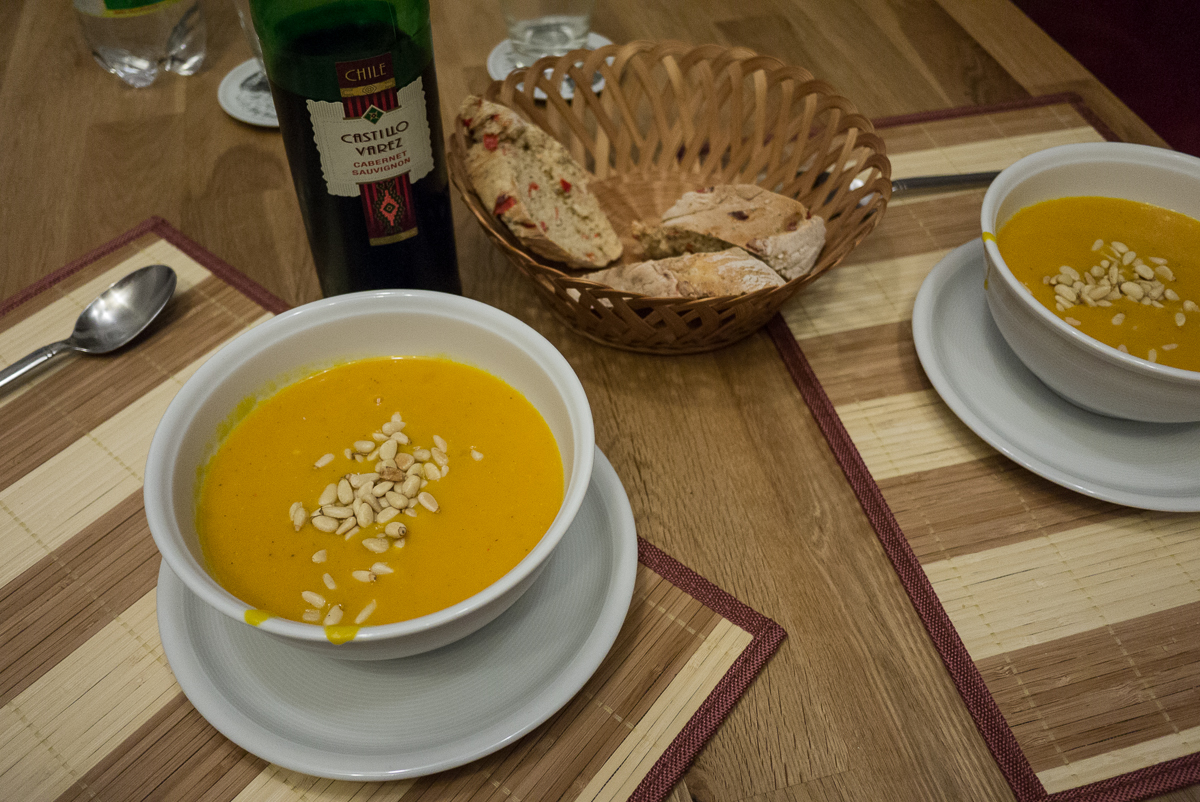
Somehow we came up with the idea for pumpkin. Pumpkin - that fits the season. And why not make a proper pumpkin soup? So off to the market to get what we needed (especially the pumpkin) and off we went. What goes in:

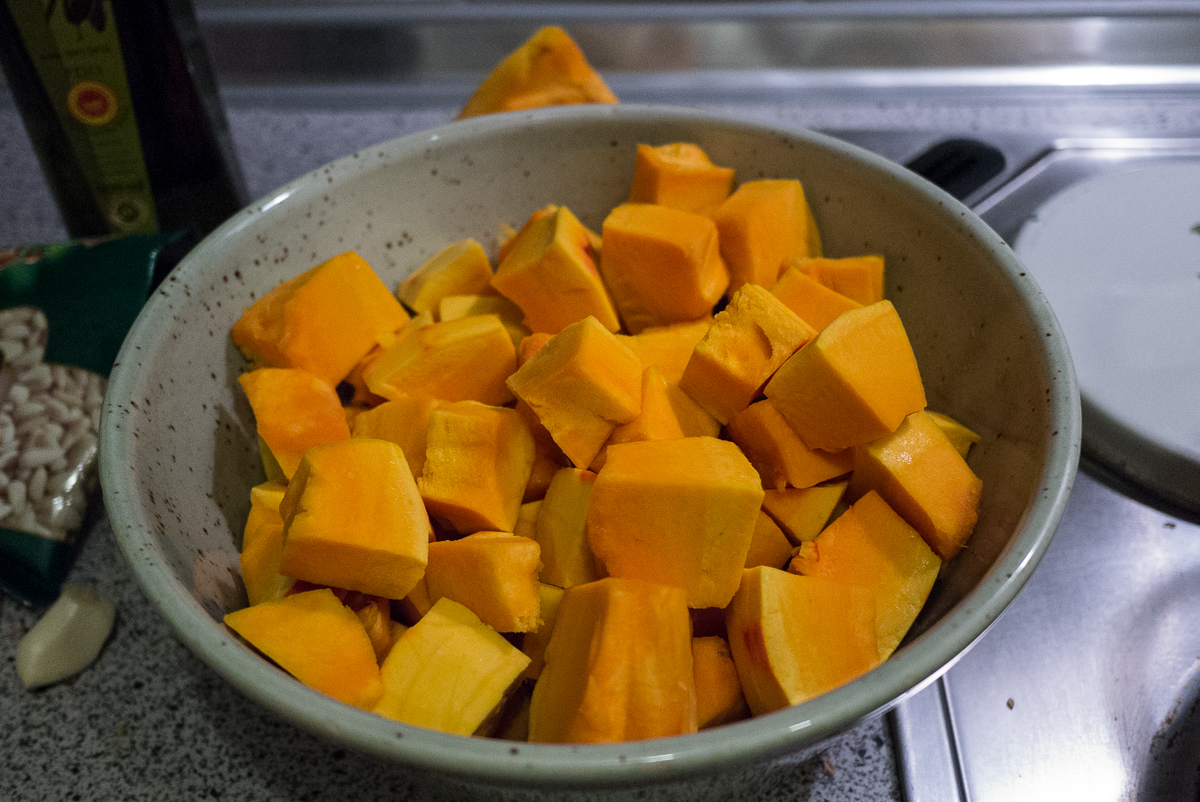
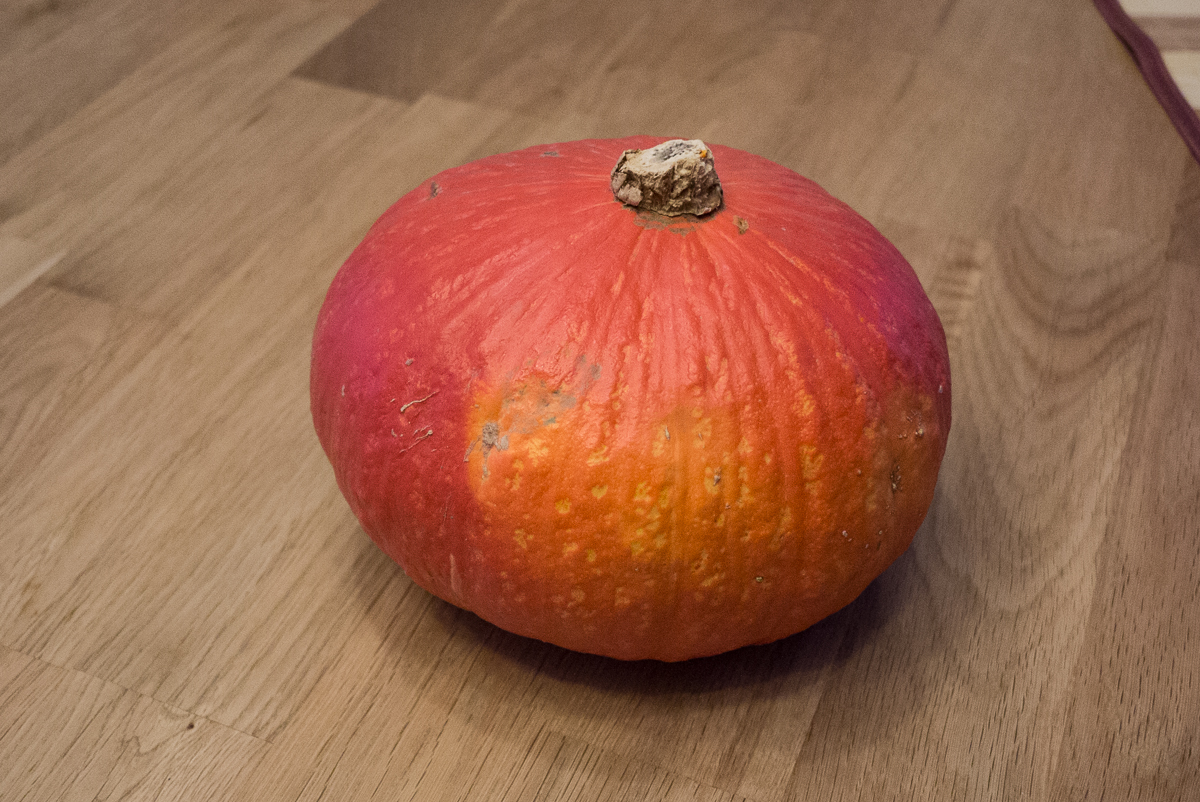
  • a small Hokkaido pumpkin. Ok, in our case it was 3/4 of a small one, so with medium-sized pumpkins probably about half will suffice. Ours weighed about 1.6 kg.
  • 3-4 potatoes
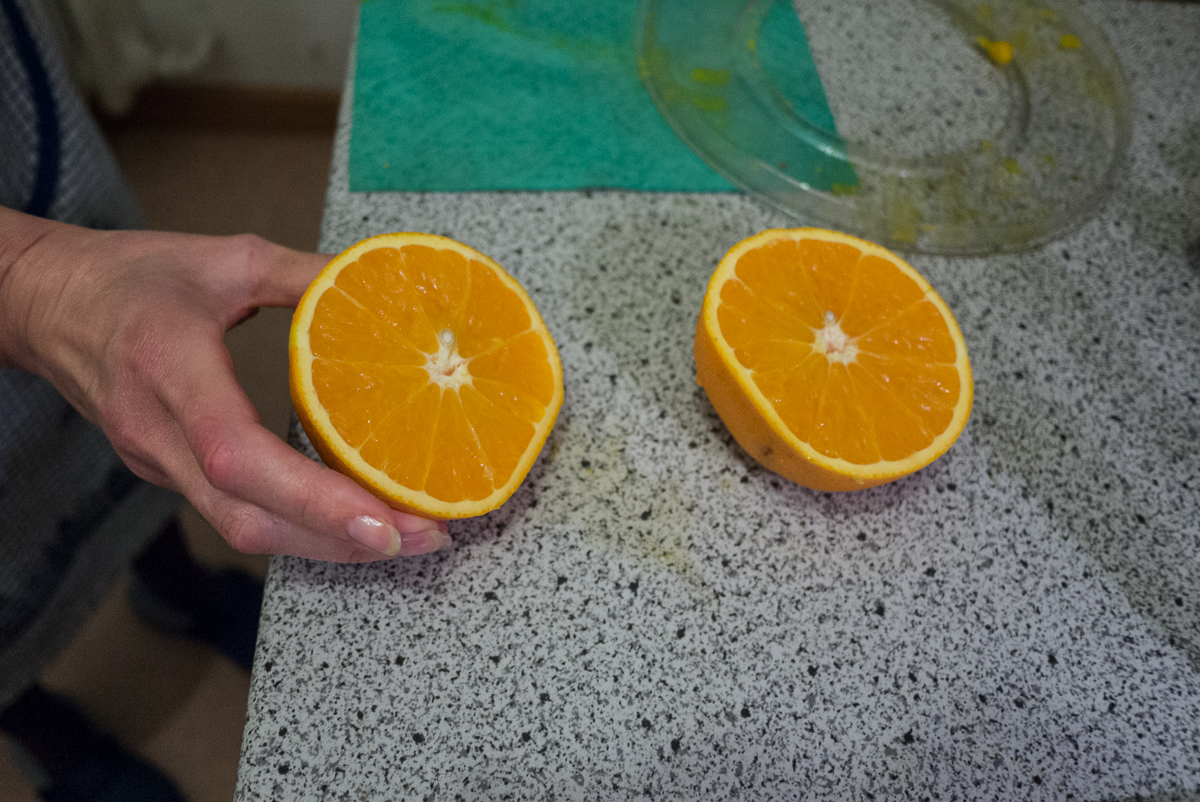
  • half an orange (squeeze out the juice, that goes in)
  • cooking cream
  • 2-3 cloves of garlic
  • olive oil to sauté the pumpkin
  • 1 liter of vegetable broth
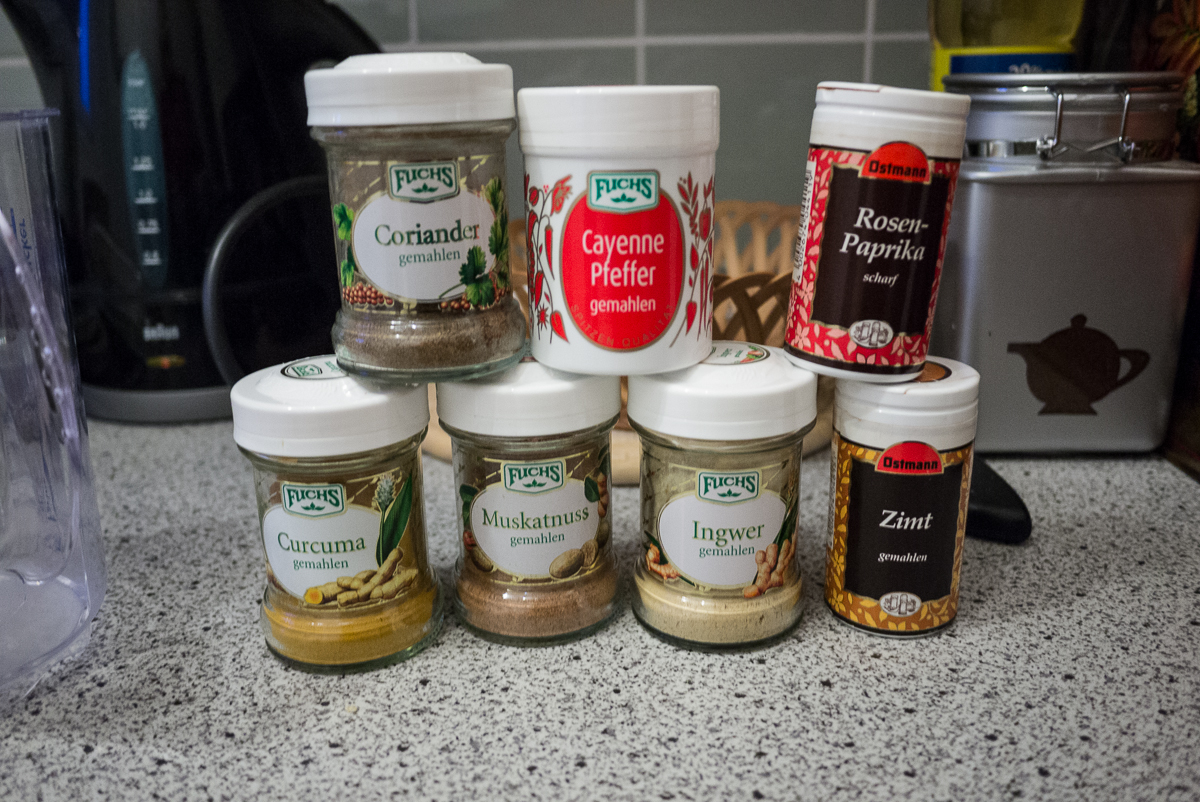
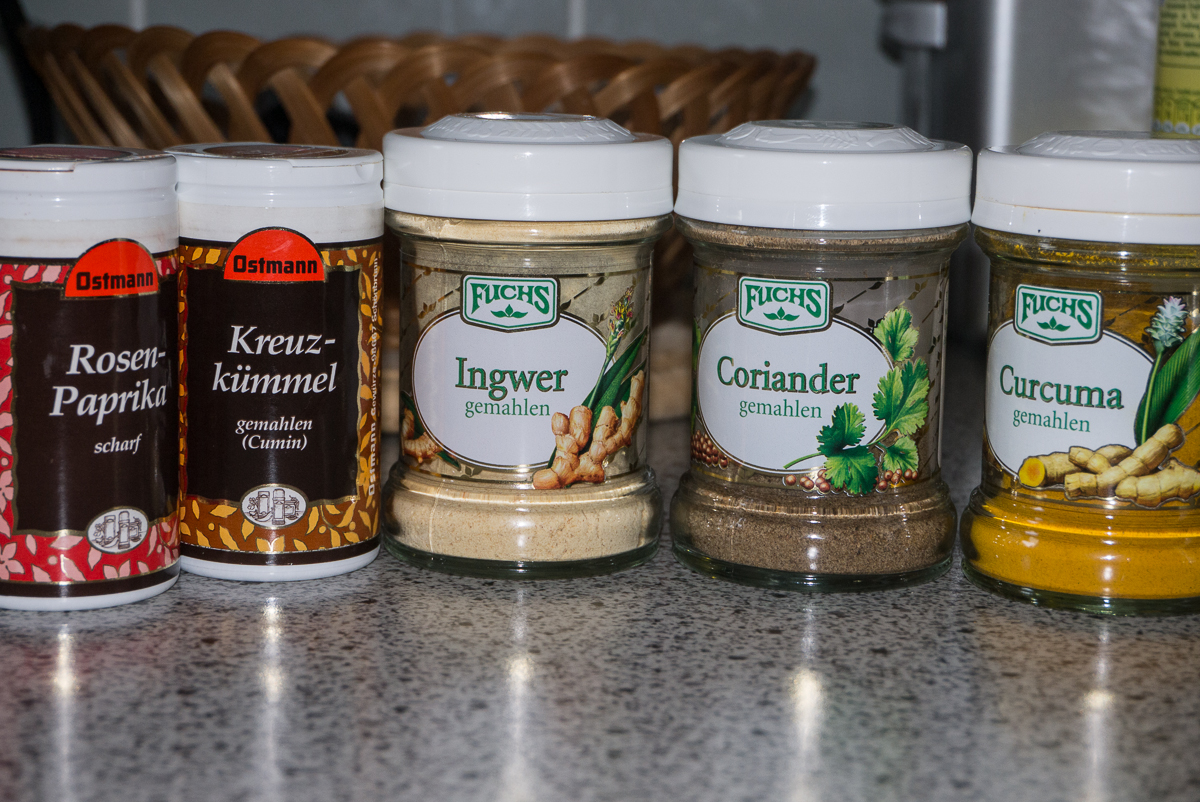
  • spices (ginger, coriander, cayenne pepper, hot paprika powder, nutmeg, cinnamon, the turmeric from the picture was not used)
  • pine nuts (toasted later over the soup)

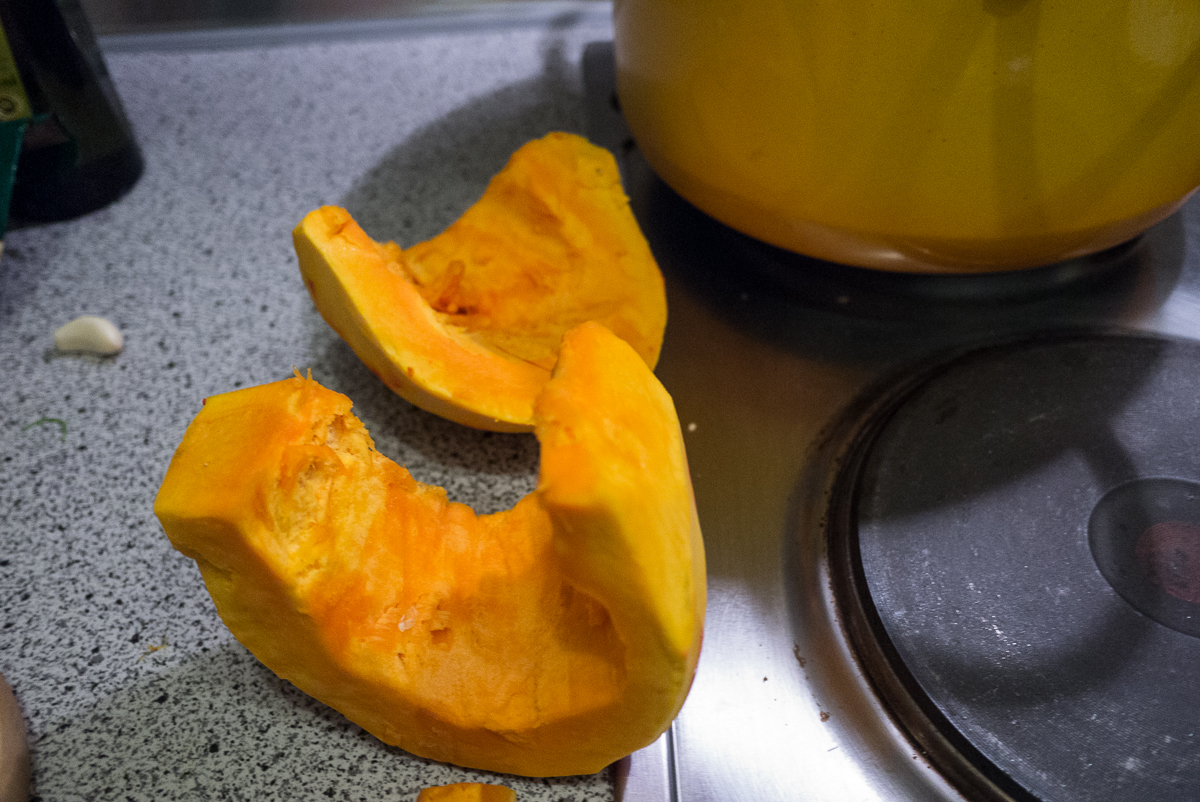
The most labor-intensive part of the whole dish was butchering the pumpkin. They are hard! That's work! Nevertheless, you have to get through it. This was the procedure:

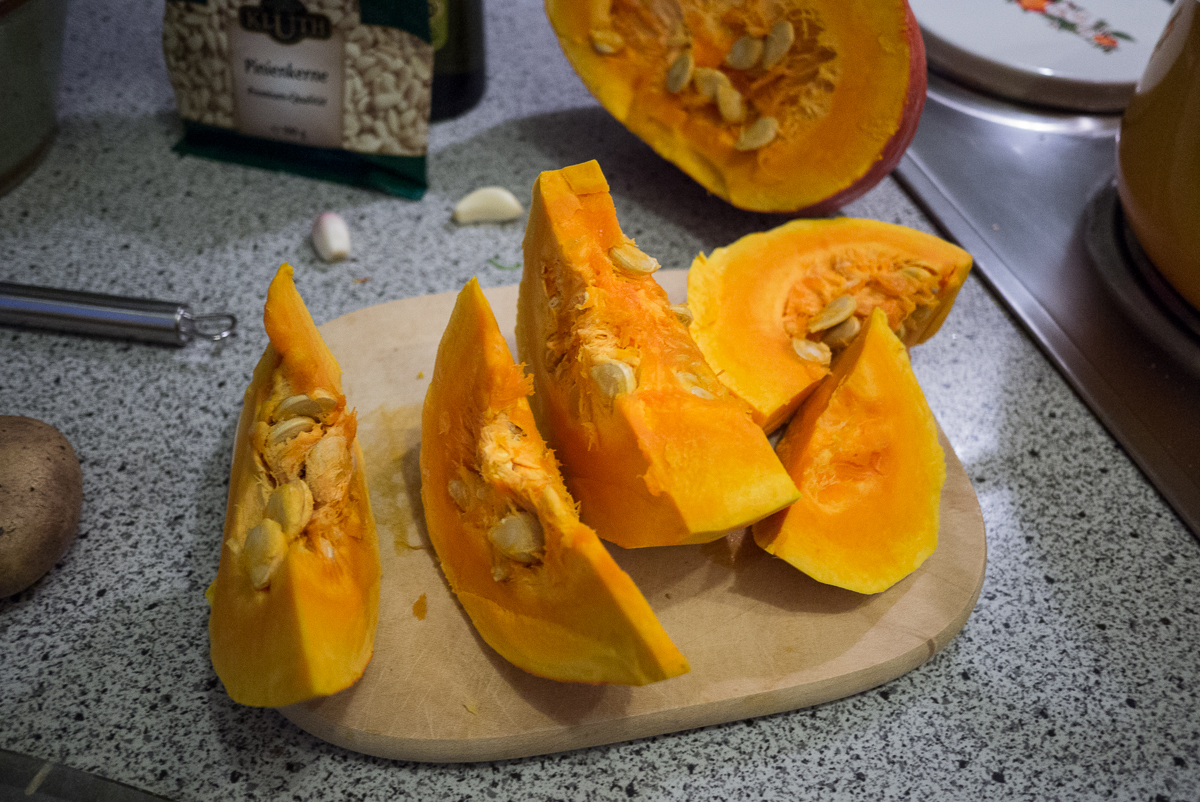
  1. cut the pumpkin into columns. Caution, this is really work, they are hard. I also peeled the pumpkin. Yes, I know, with Hokkaido you can eat the skin. But you can - you don't have to. And with a vegetable peeler it goes quickly.
  2. then empty the columns - remove all the core.
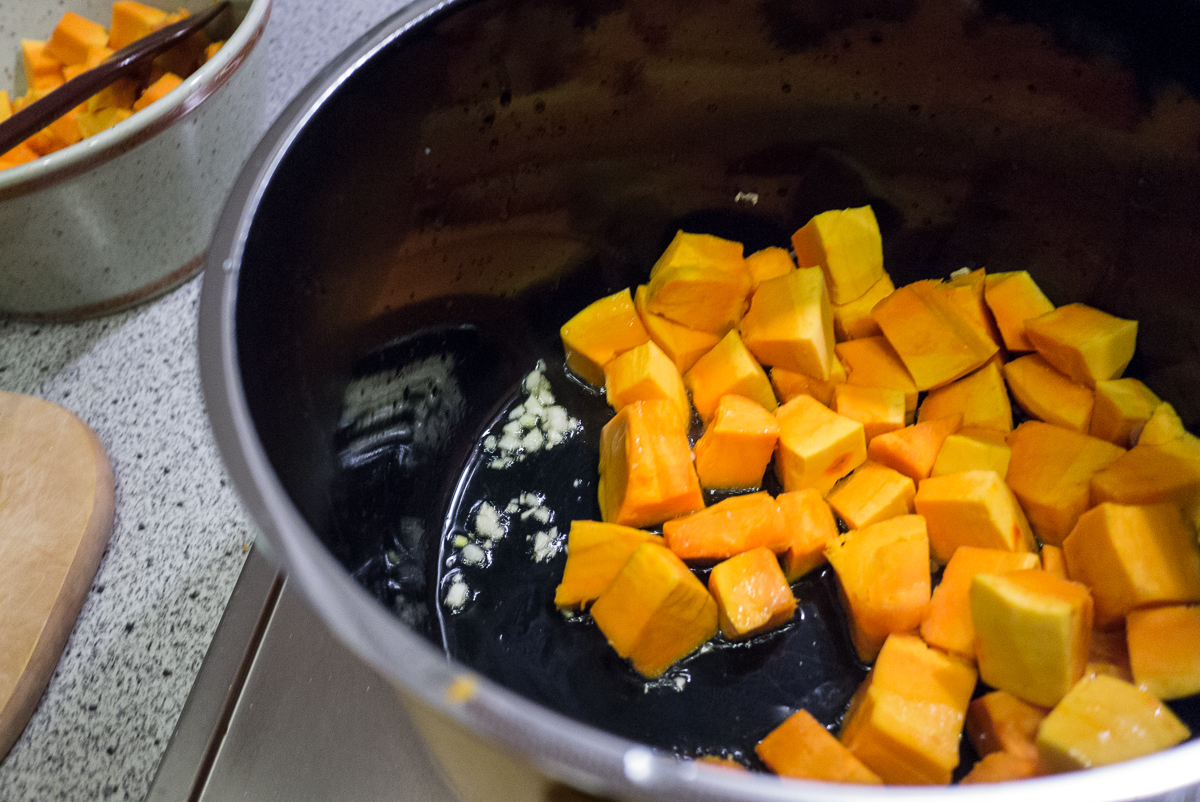
  3. then cut the columns into cubes
  4. sauté the cubes with garlic together in oil
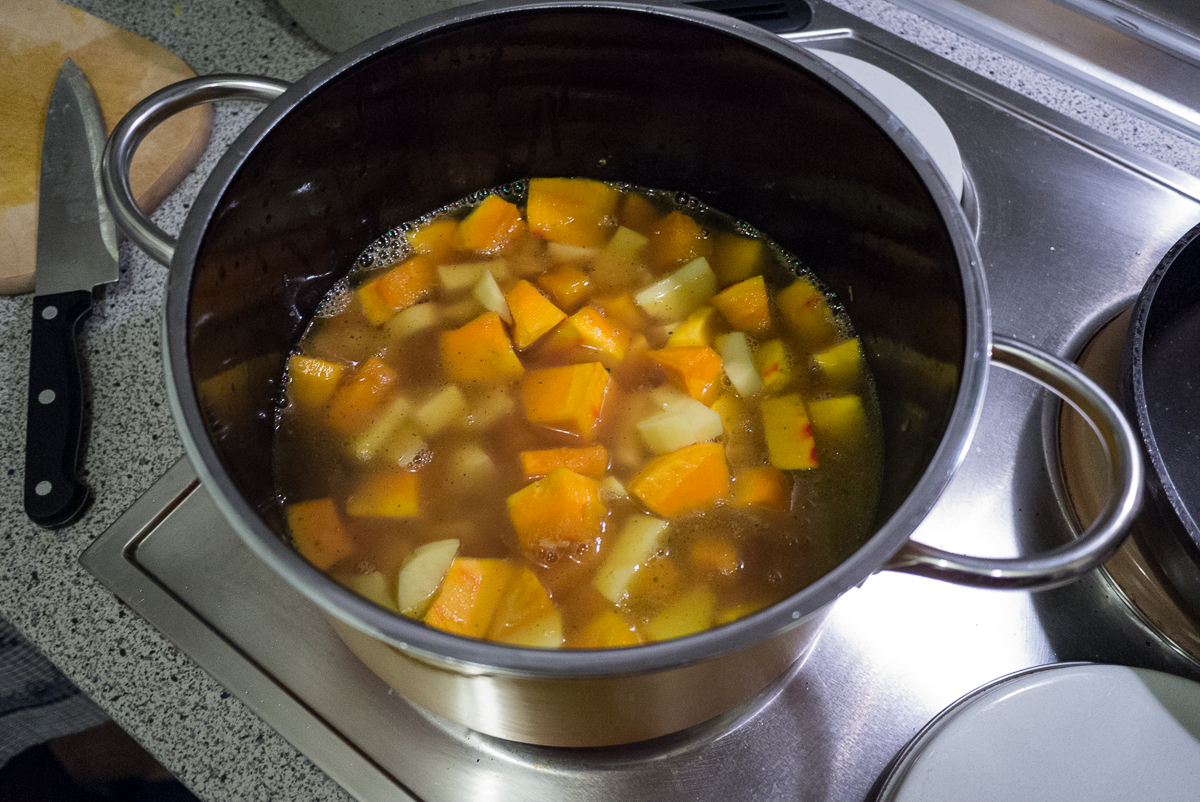
  5. cook potatoes in cubes together with the pumpkin and the vegetable broth (20-25 minutes)
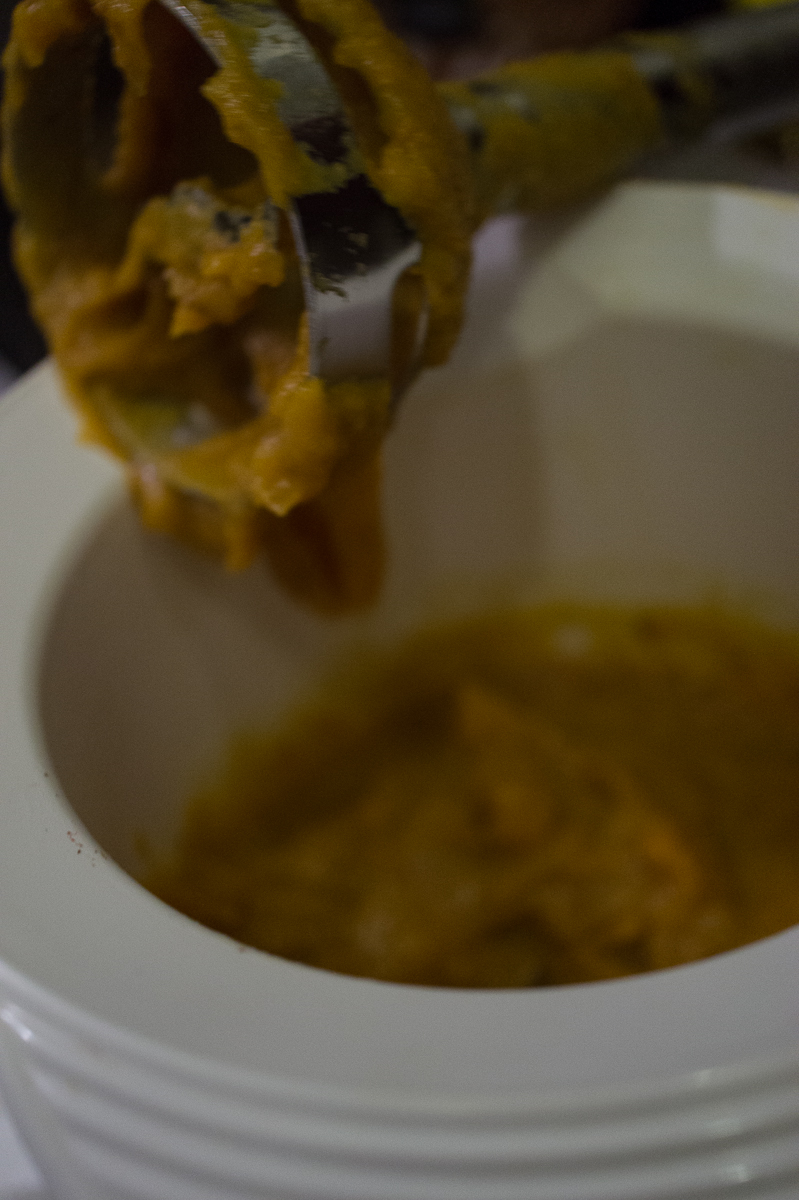
  6. blend the whole thing with the hand blender.
  7. add the first round of spices (generous amount of ginger and coriander, be a bit careful with hot paprika and cayenne pepper, of course pepper and salt and a little cinnamon) and stir in
  8. stir in the cooking cream and the orange juice
  9. add nutmeg and stir in and let it simmer lightly
  10. toast pine nuts in the pan, when the pine nuts are done, the soup is also ready

We had a delicious French country bread with paprika and wine spritzer to go with it. It was absolutely delicious, the whole thing! By the way, the quantity was rather for 4 people, we like to cook a little more than just for one meal when it comes to soup.

Rainbow Trout with Parsnips

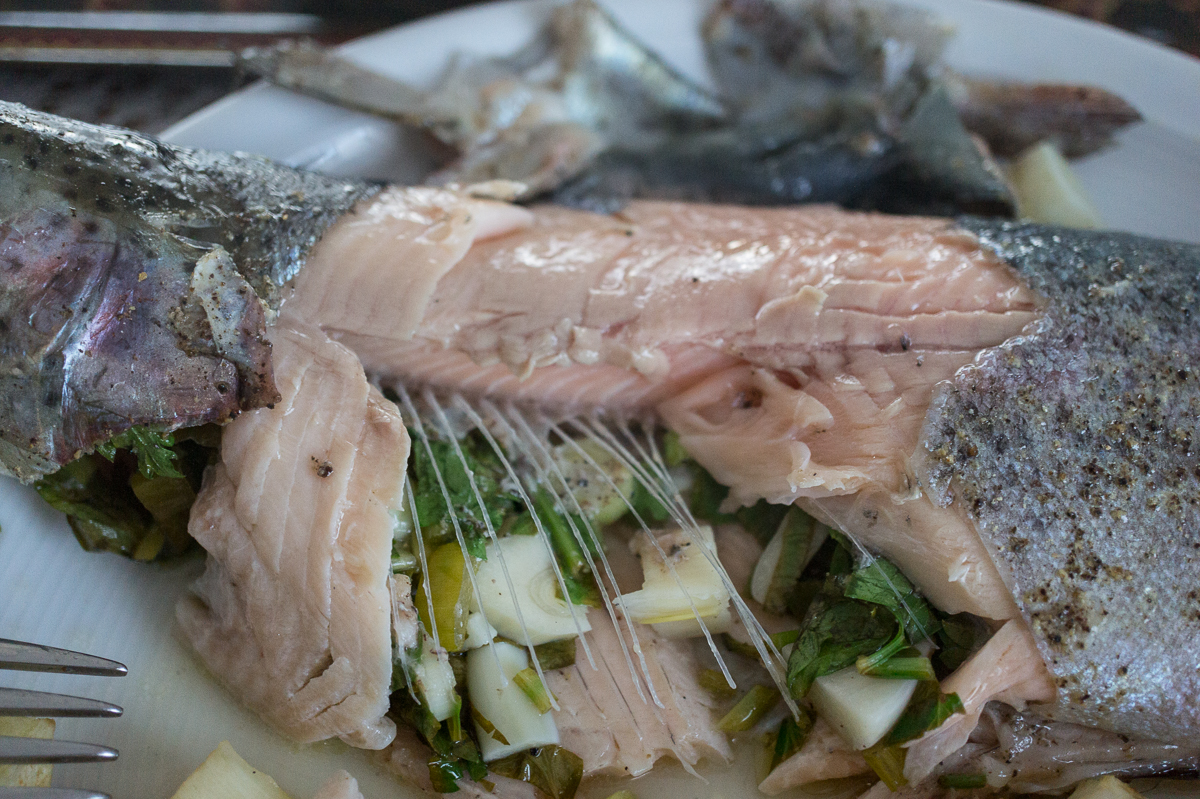
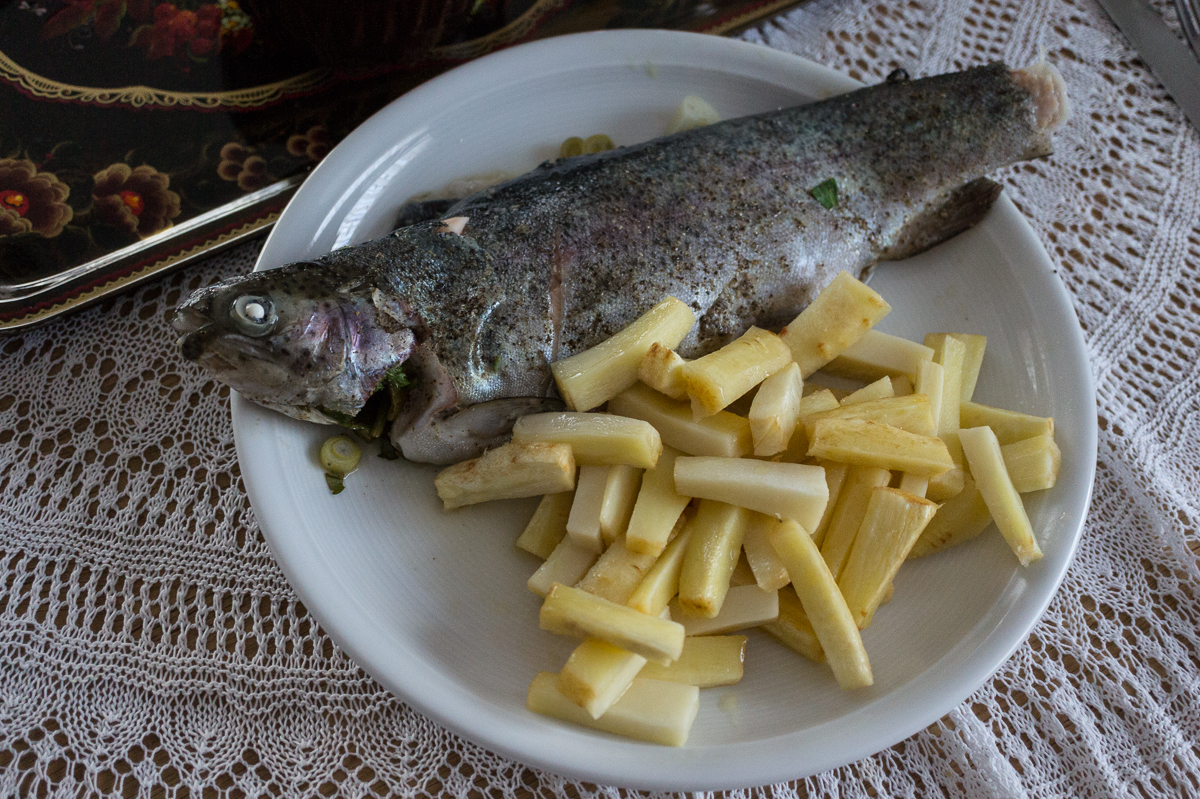
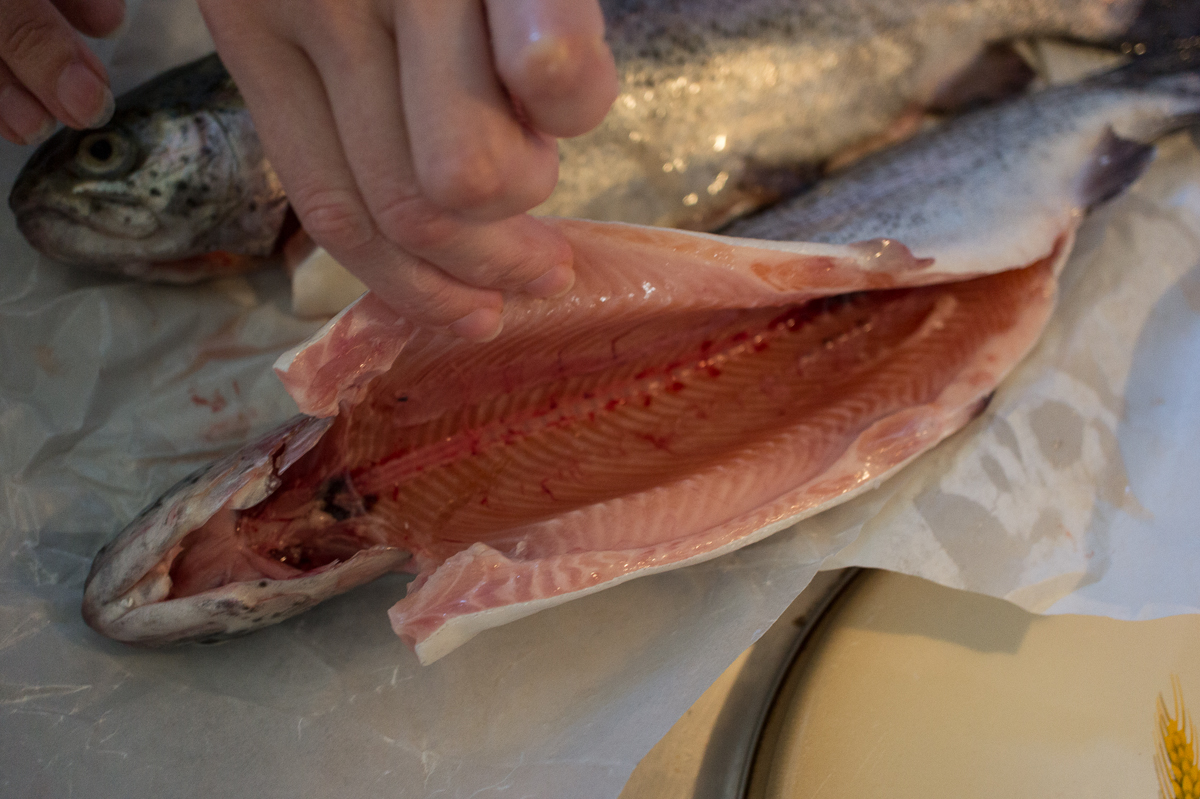
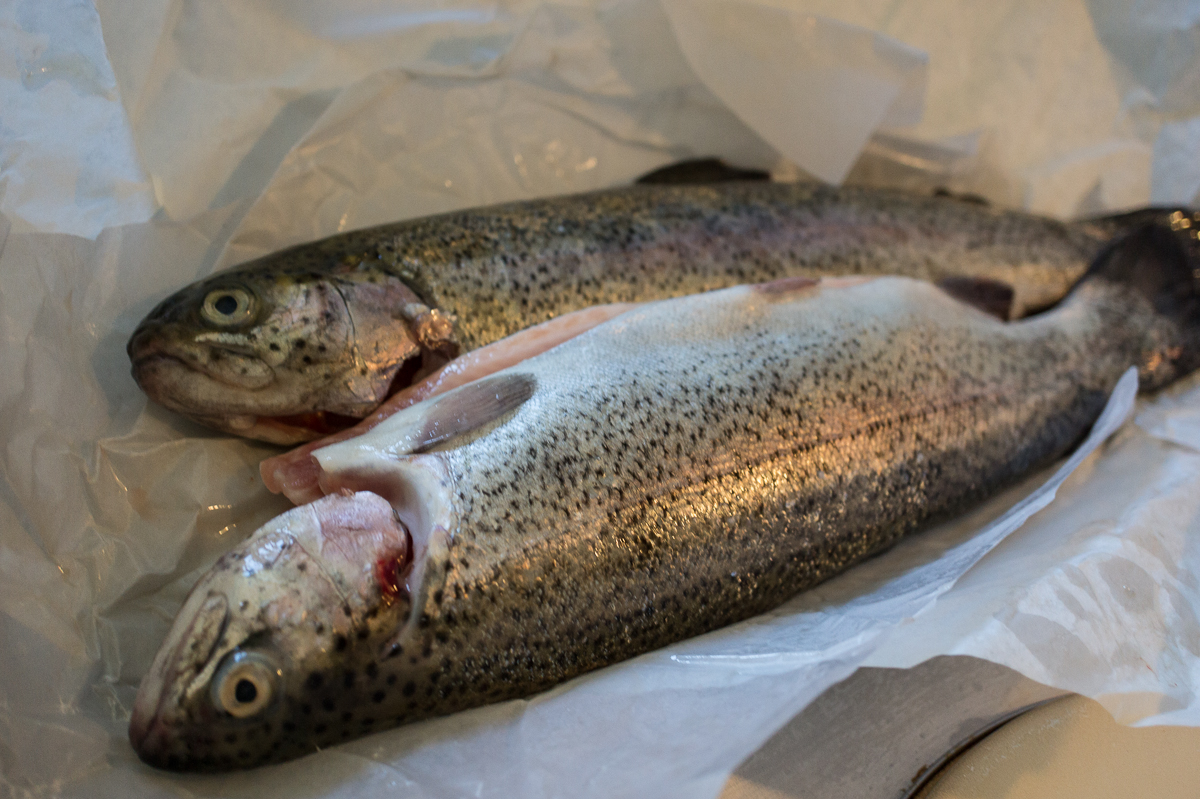
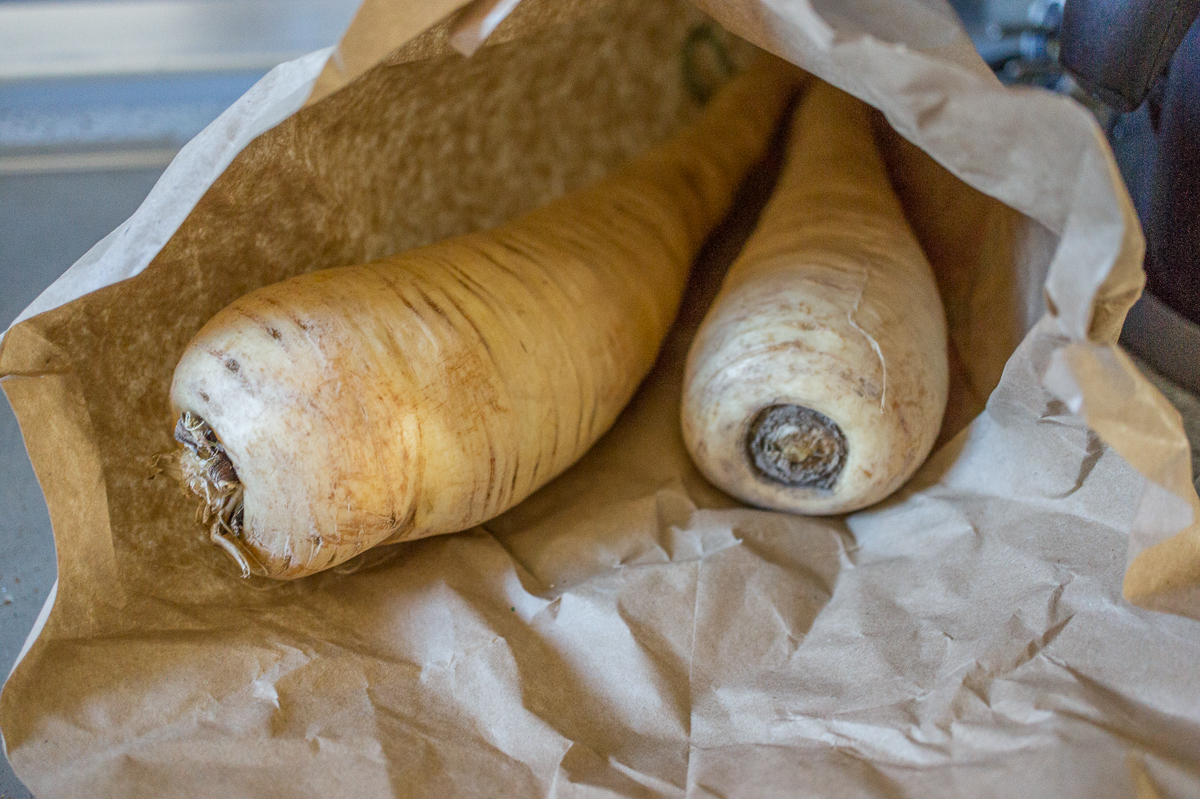
... and without the baked potatoes (they didn't turn out right and were demoted to salad). Somehow, Juliana and I got the idea to make fish, and I thought, a nice trout, that would be something. So, we bought it at the market and got trout and parsnips. These were the ingredients:

  • two trout (each 400g)
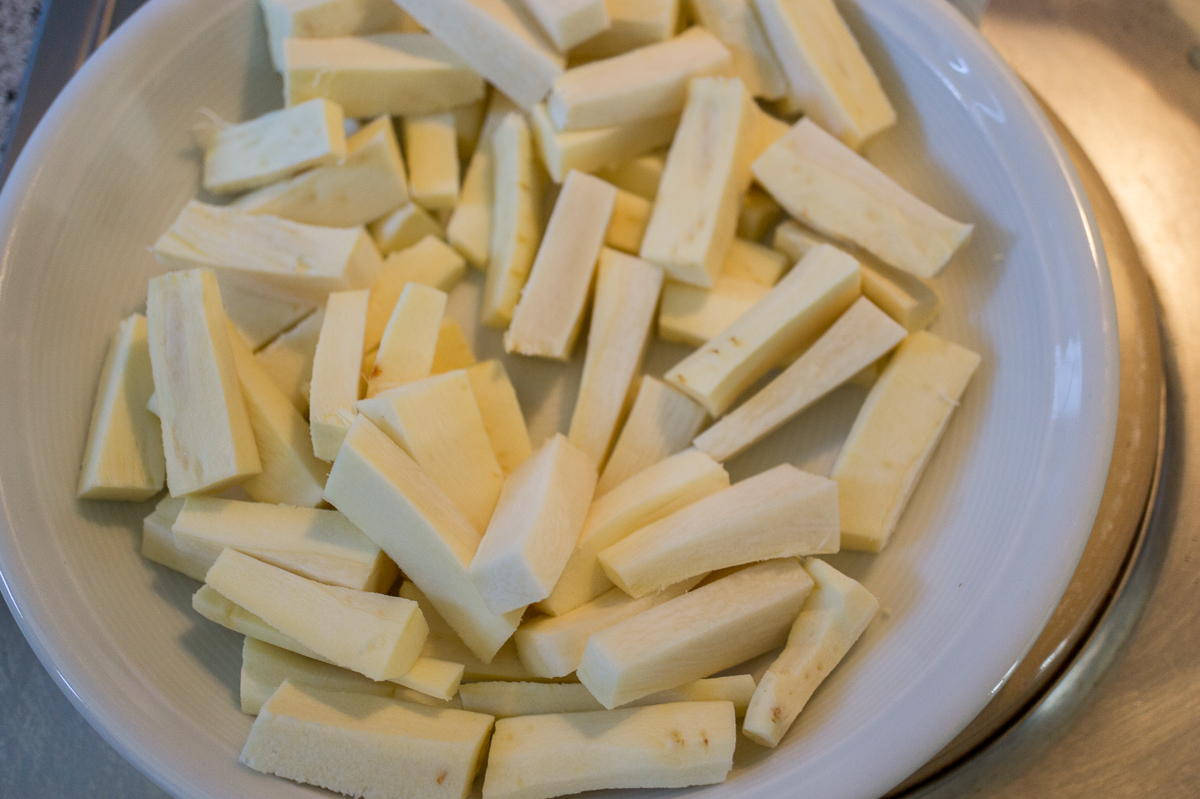
  • parsnips for two servings
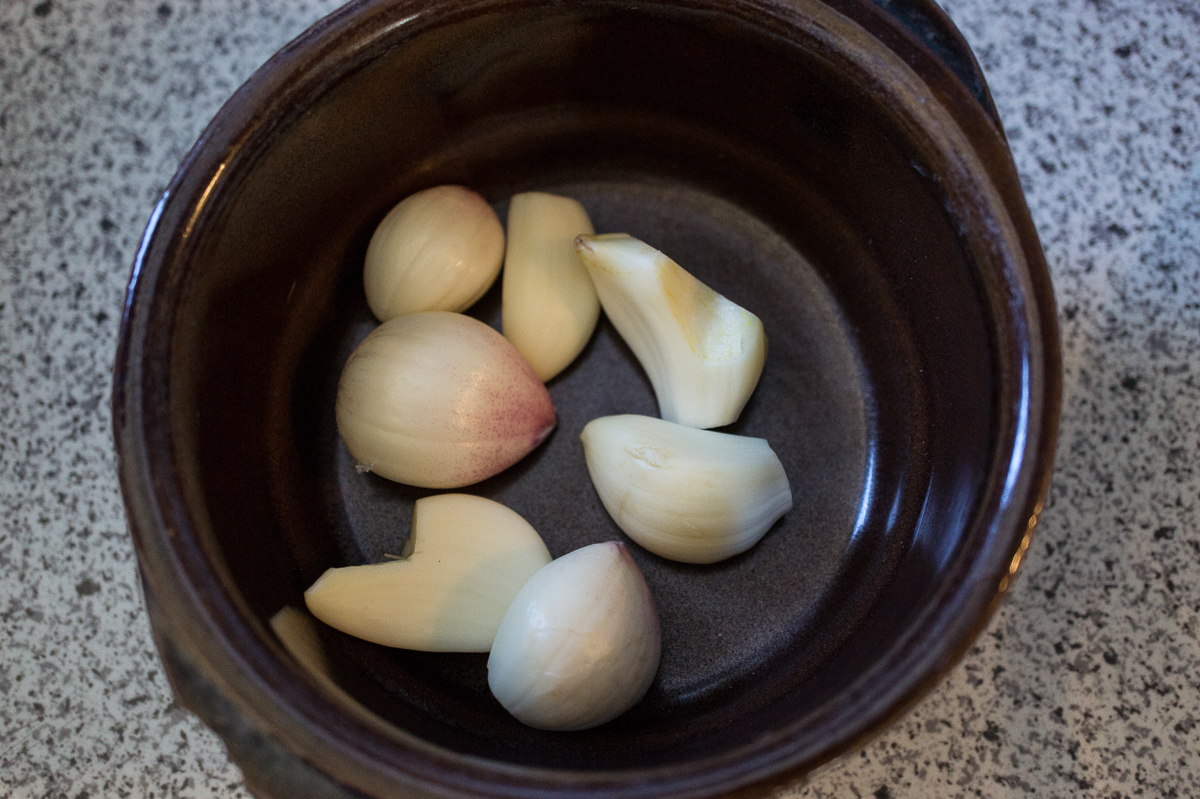
  • garlic (6-8 cloves)
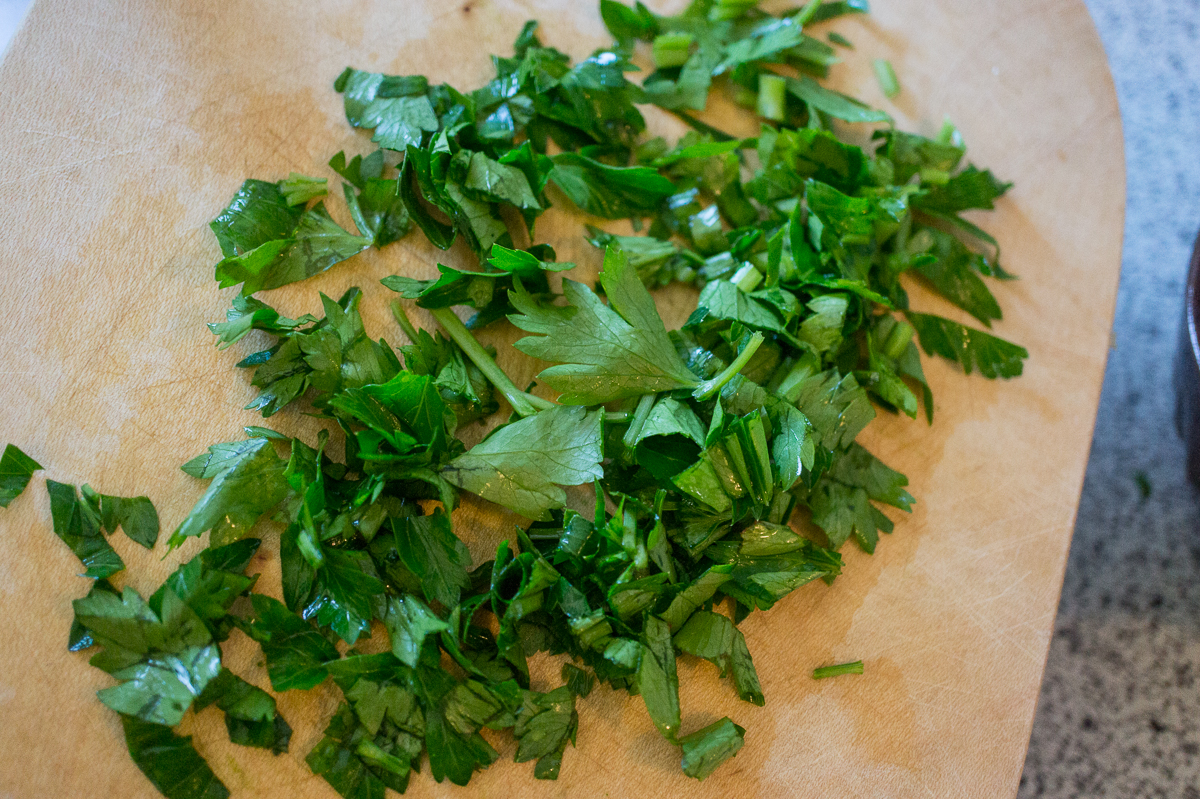
  • parsley
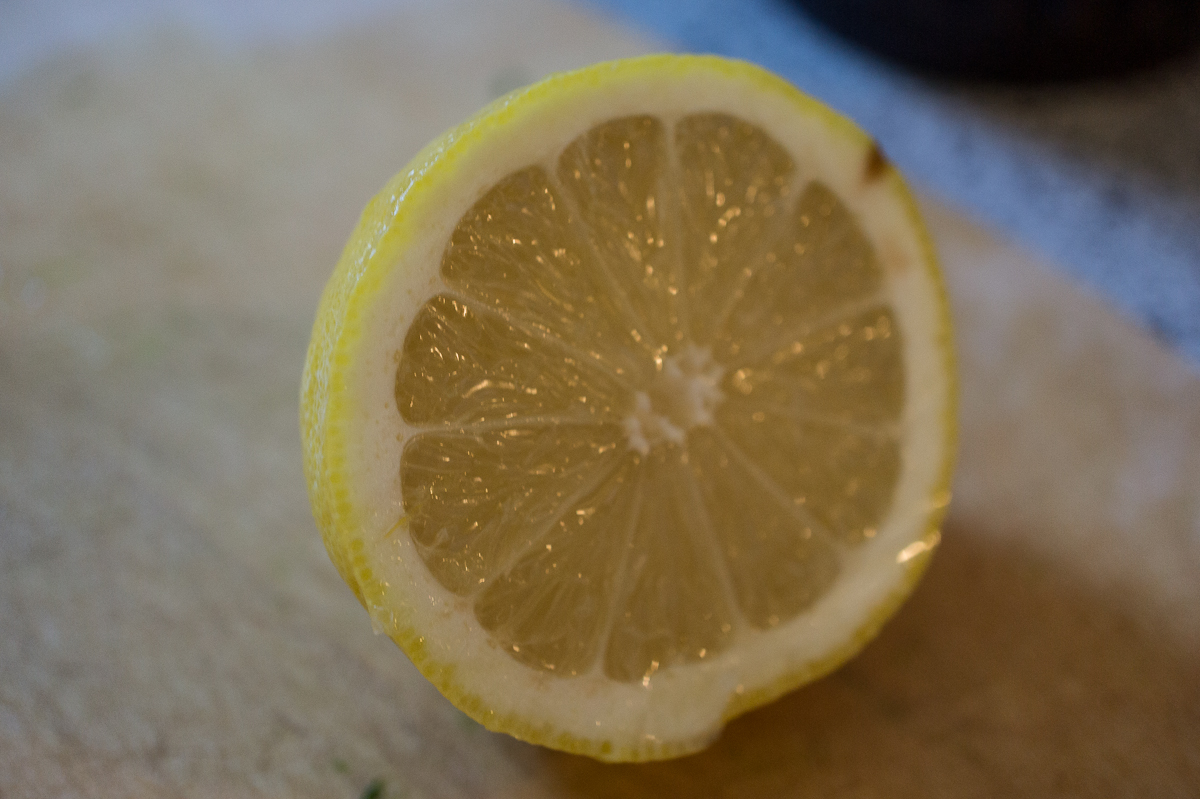
  • lemon (for the juice)
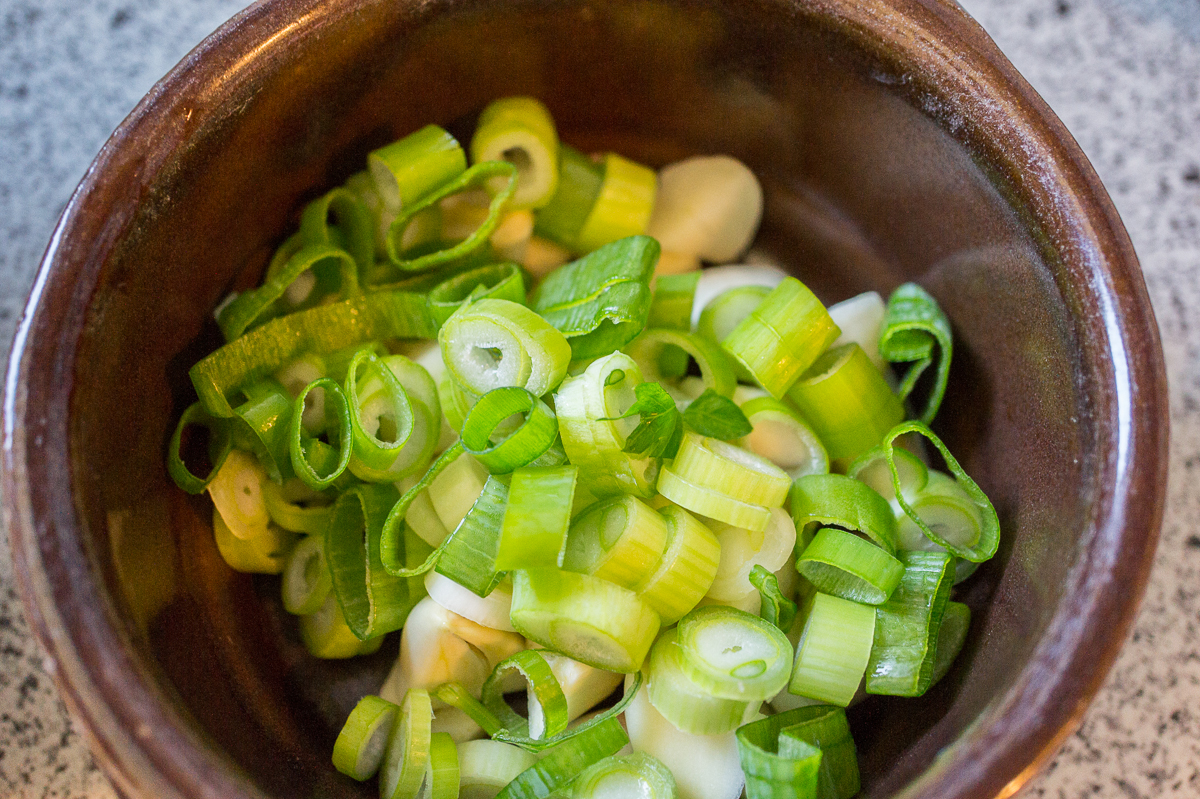
  • green onion
  • olive oil, pepper, salt

Preparation wasn't really complicated, and it didn't take very long until everything was ready.

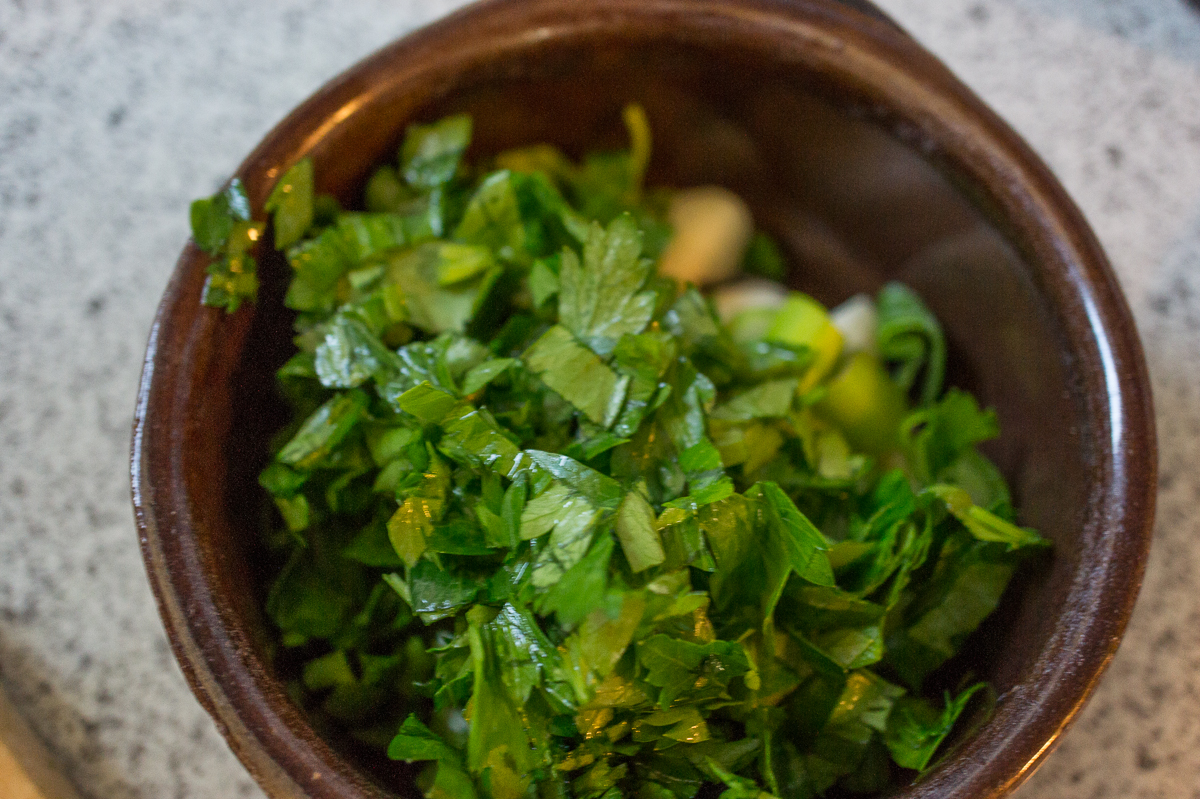
  1. Juliana chopped the garlic, green onion, and parsley
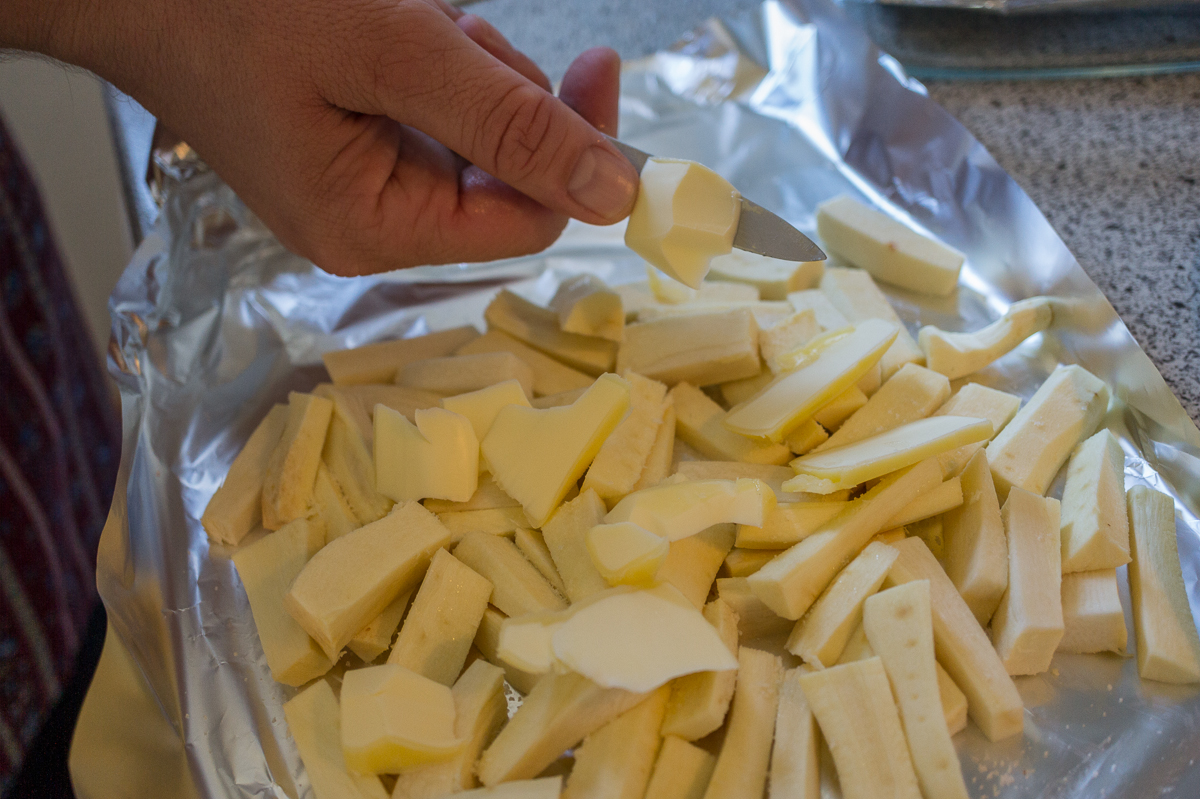
  2. I cut the parsnips into sticks
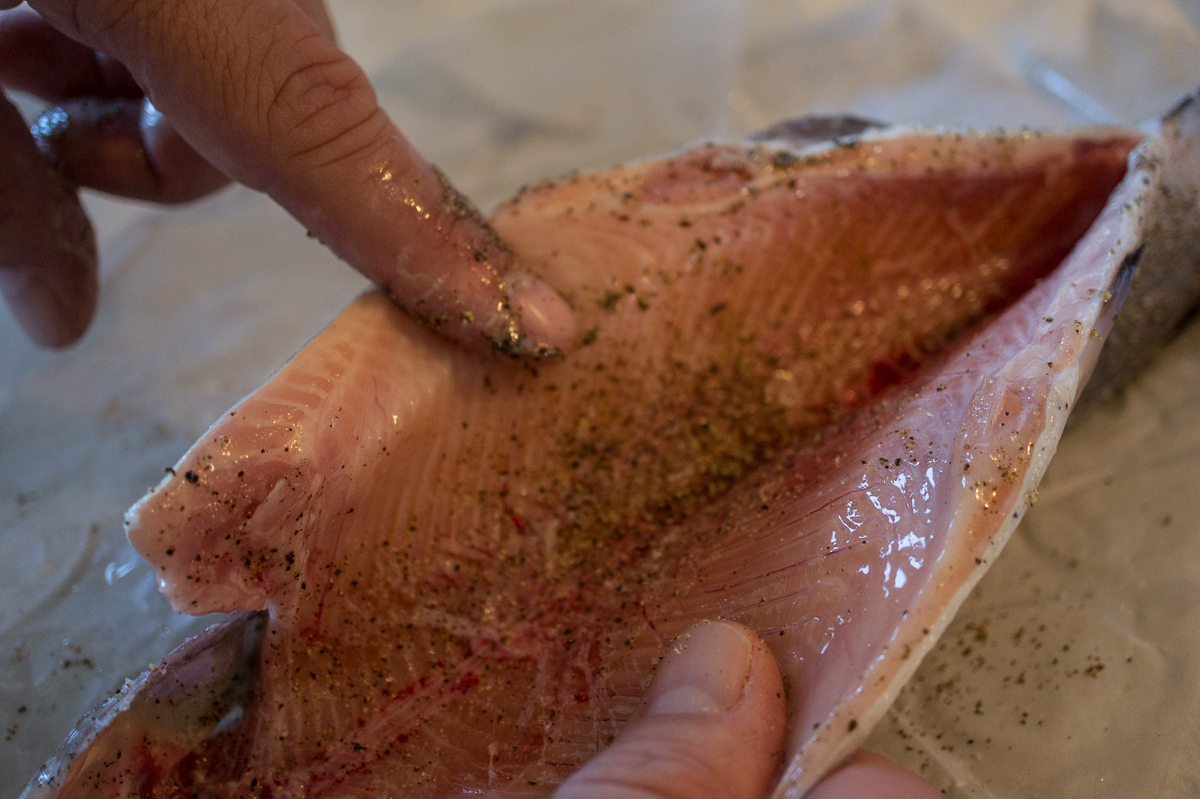
  3. then we rubbed the trout inside and out with pepper and salt (don't be stingy)
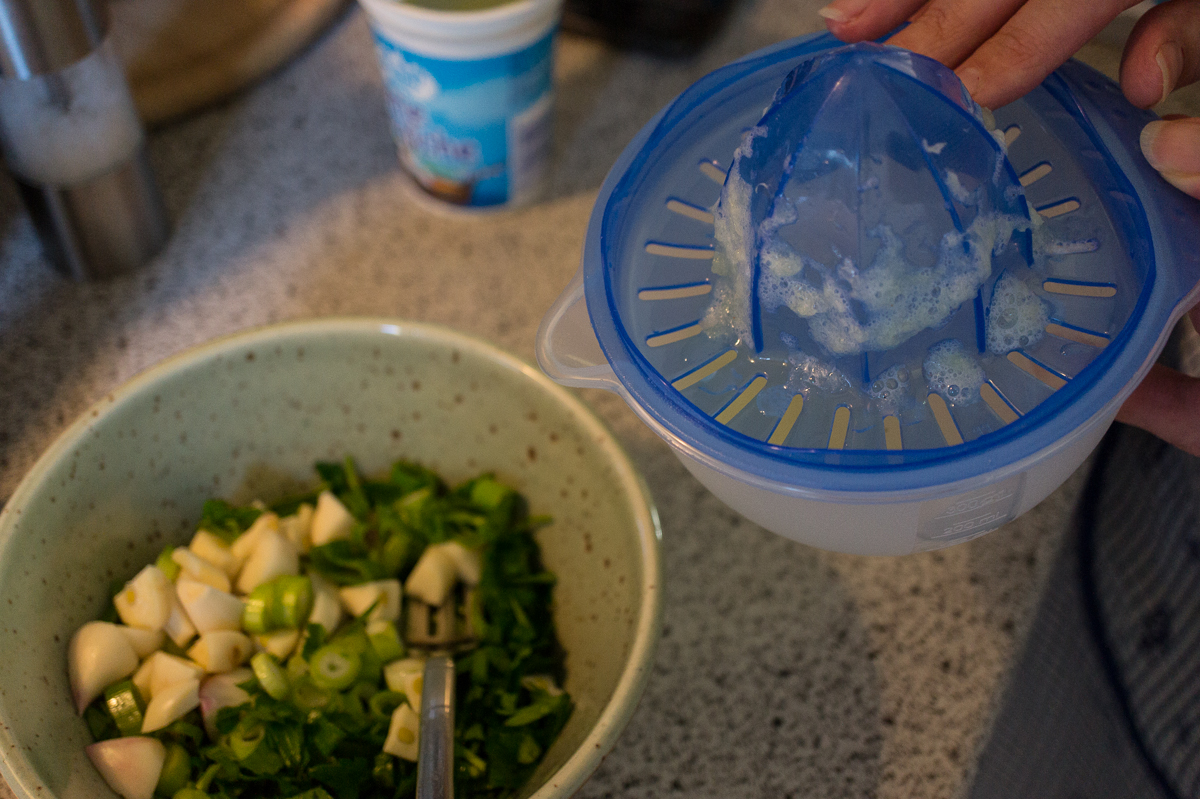
  4. then squeeze the lemon (half was enough for us) and mix the juice with the garlic, parsley, and green onion
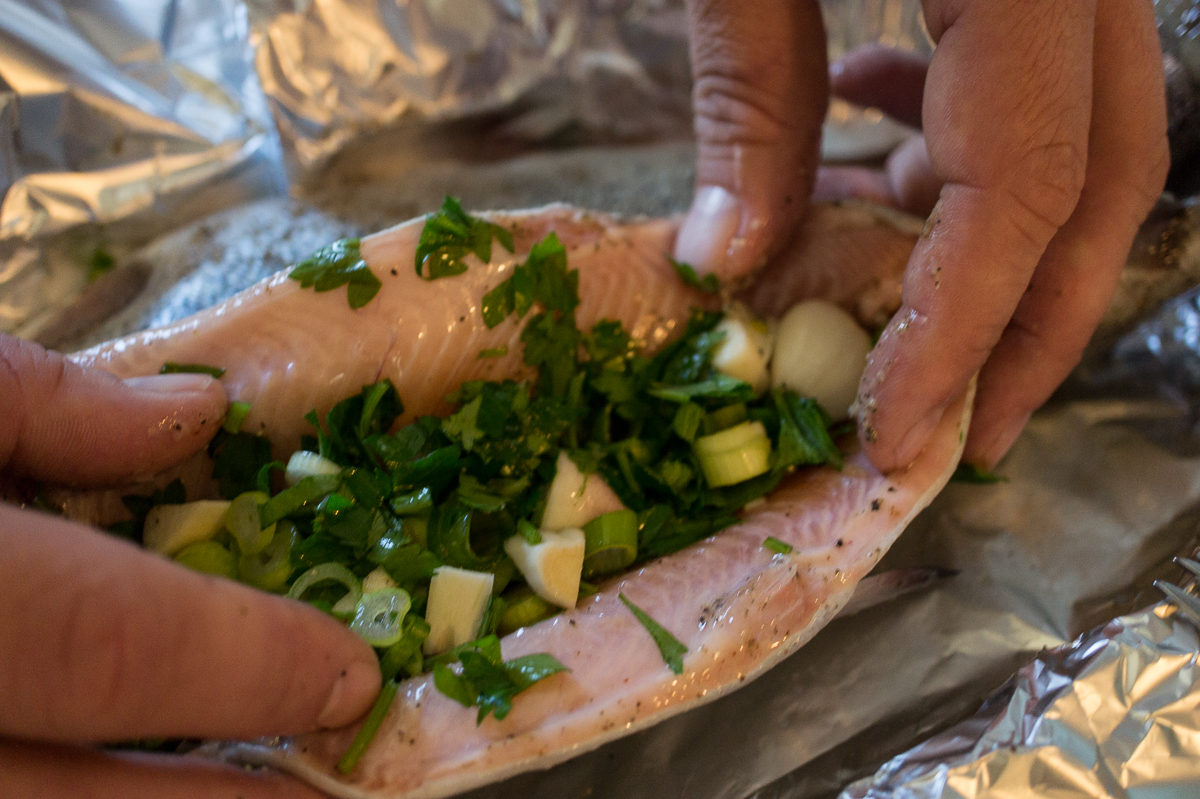
  5. fill the two trout generously and drizzle the remaining lemon juice in.
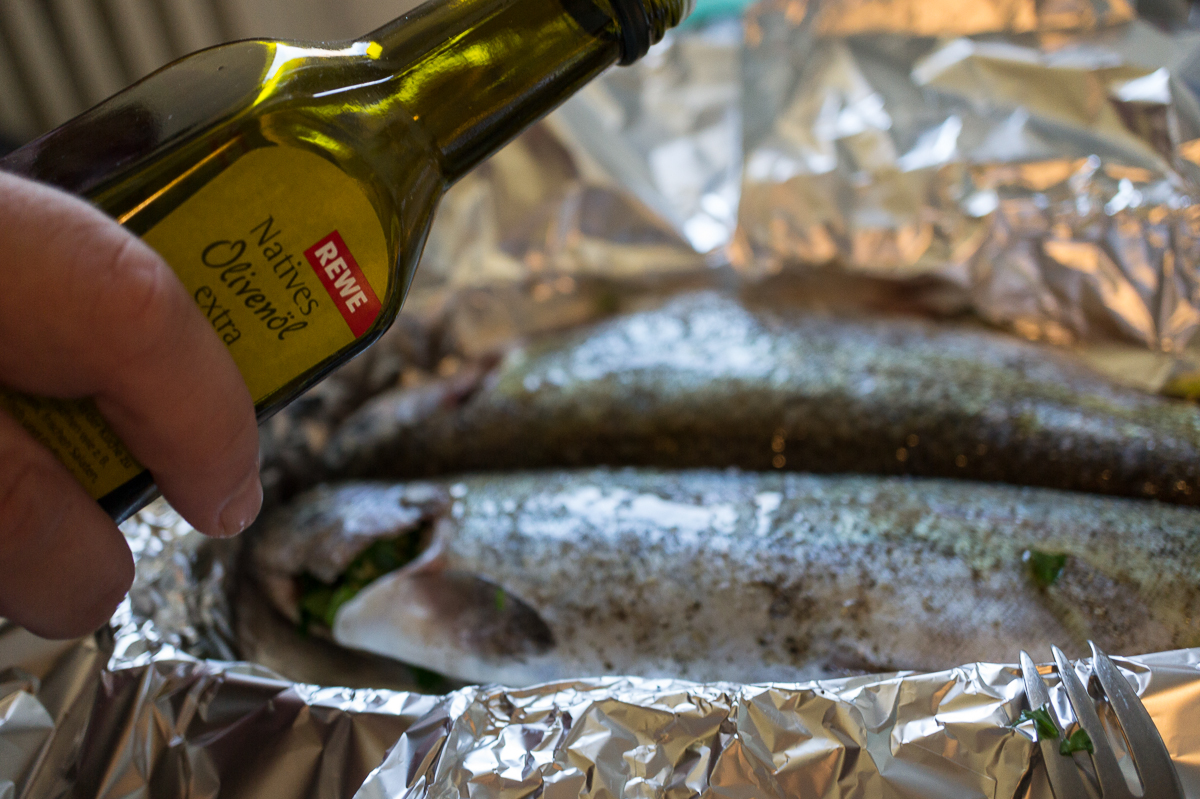
  6. place the trout in an oven-safe dish wrapped in aluminum foil. So, line the dish with aluminum foil, put in the trout, and wrap it up.
  7. wrap the parsnip sticks in aluminum foil as well (thin layer of sticks so they all cook nicely)
  8. preheat the oven to 200 degrees and then put the trout and parsnips in the oven
  9. bake for 25 minutes
  10. arrange on the plate and serve

The whole thing was super delicious. As indicated above, baked potatoes were actually supposed to be included, and then a dip, but neither turned out quite right for us - the dip was too thin, more like a salad dressing, and the baked potatoes weren't done in time. But with the amount of fish, it was enough as it was.

Jerusalem Artichoke Salad and Lentil Salad

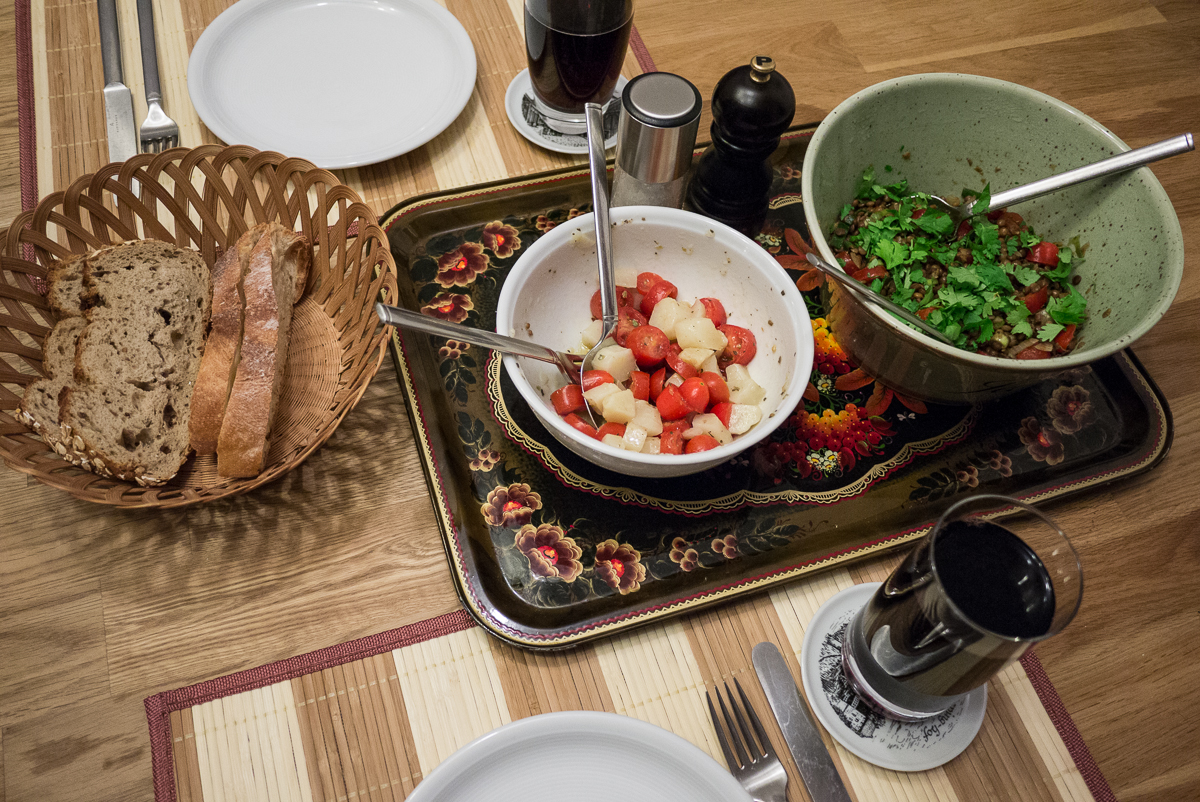
Today we had two rather exotic salads for our standards. Actually, it was just by chance because I got the idea for one salad (the lentil salad) while shopping for tomorrow and accidentally saw the ingredients for the other salad (Jerusalem artichoke) and got curious. Both salads are easy to prepare. Both require some cooking, but nothing complicated.

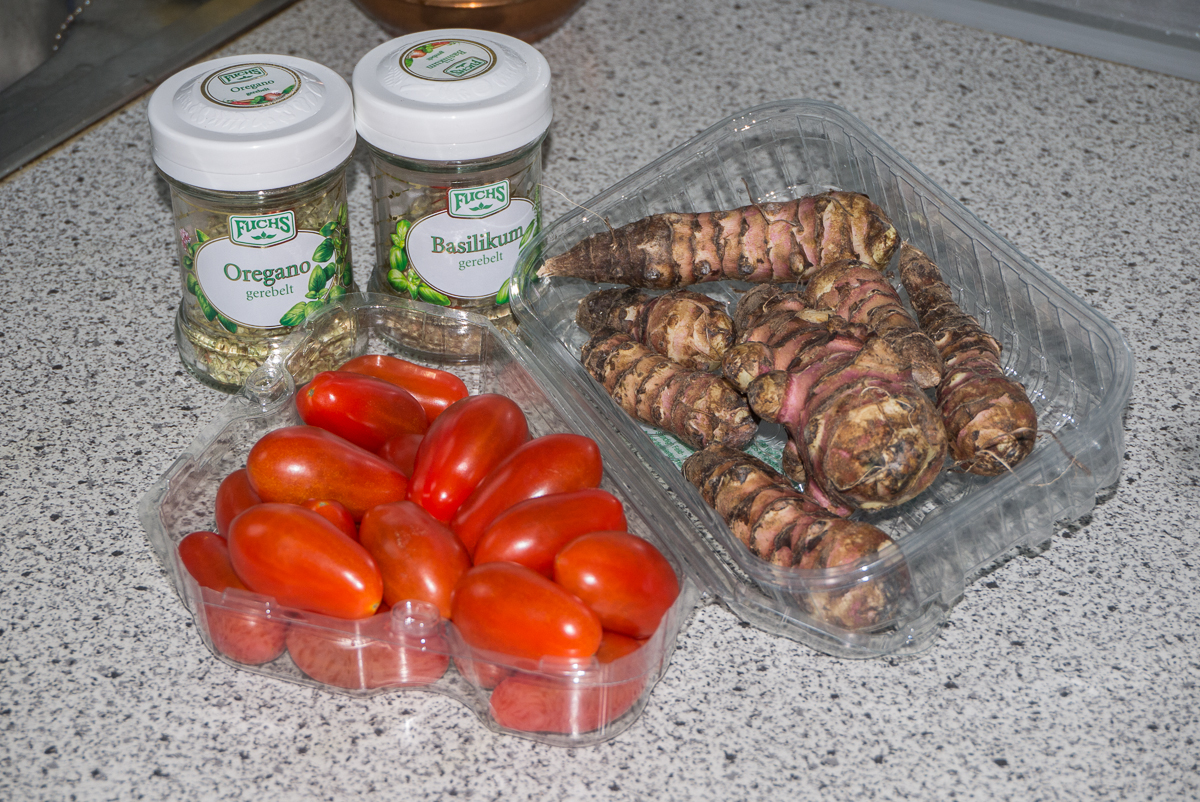
For the Jerusalem artichoke salad you need the following:

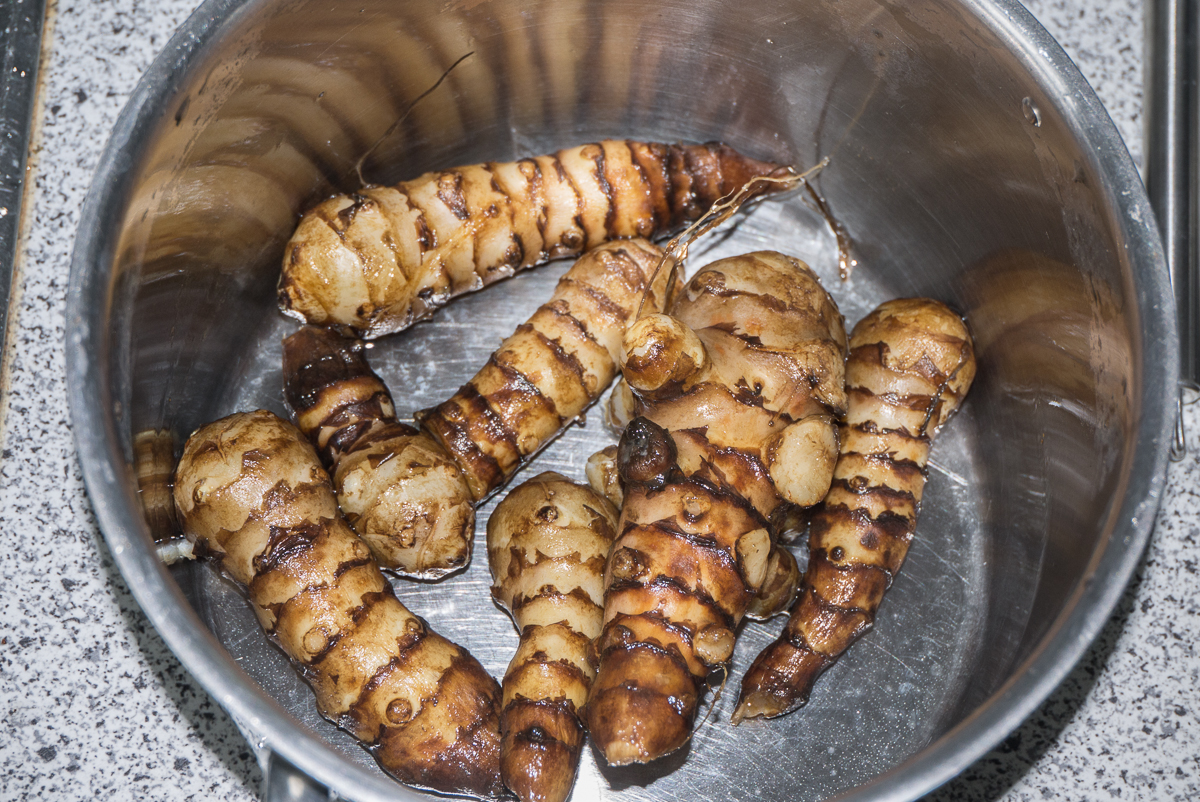
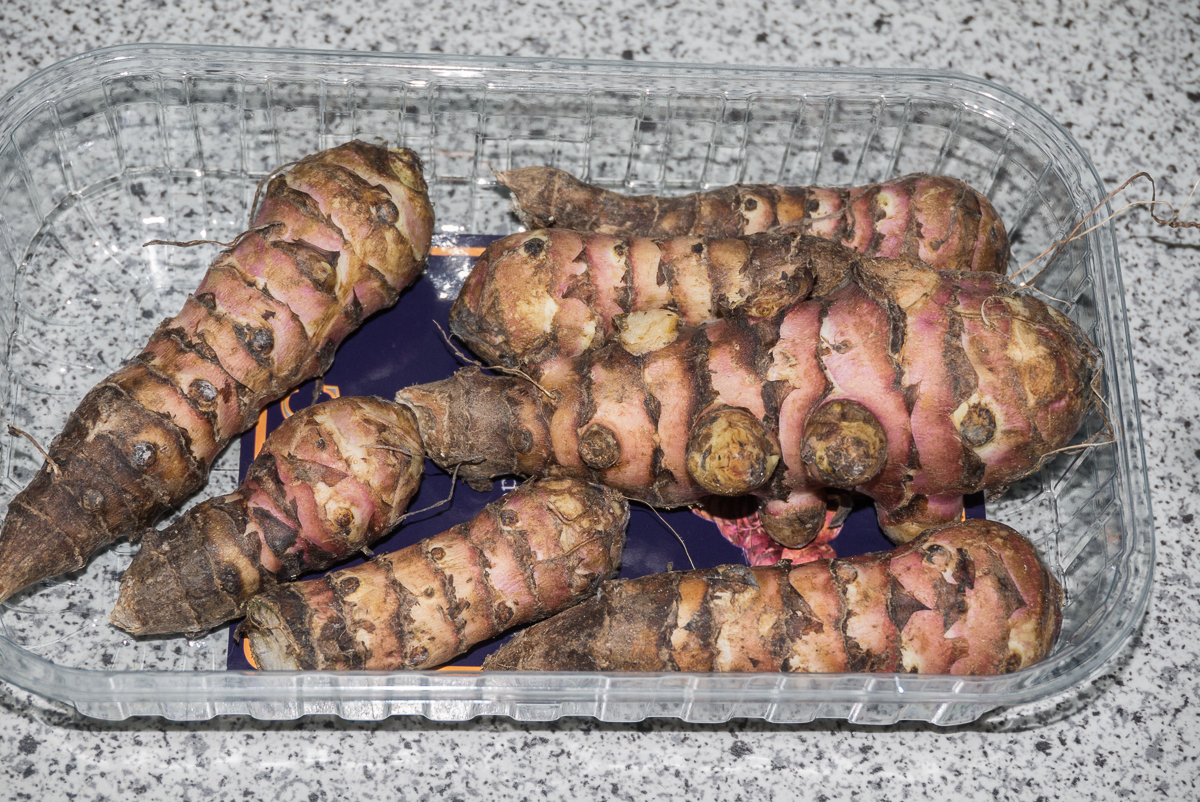
  1. Jerusalem artichokes of course
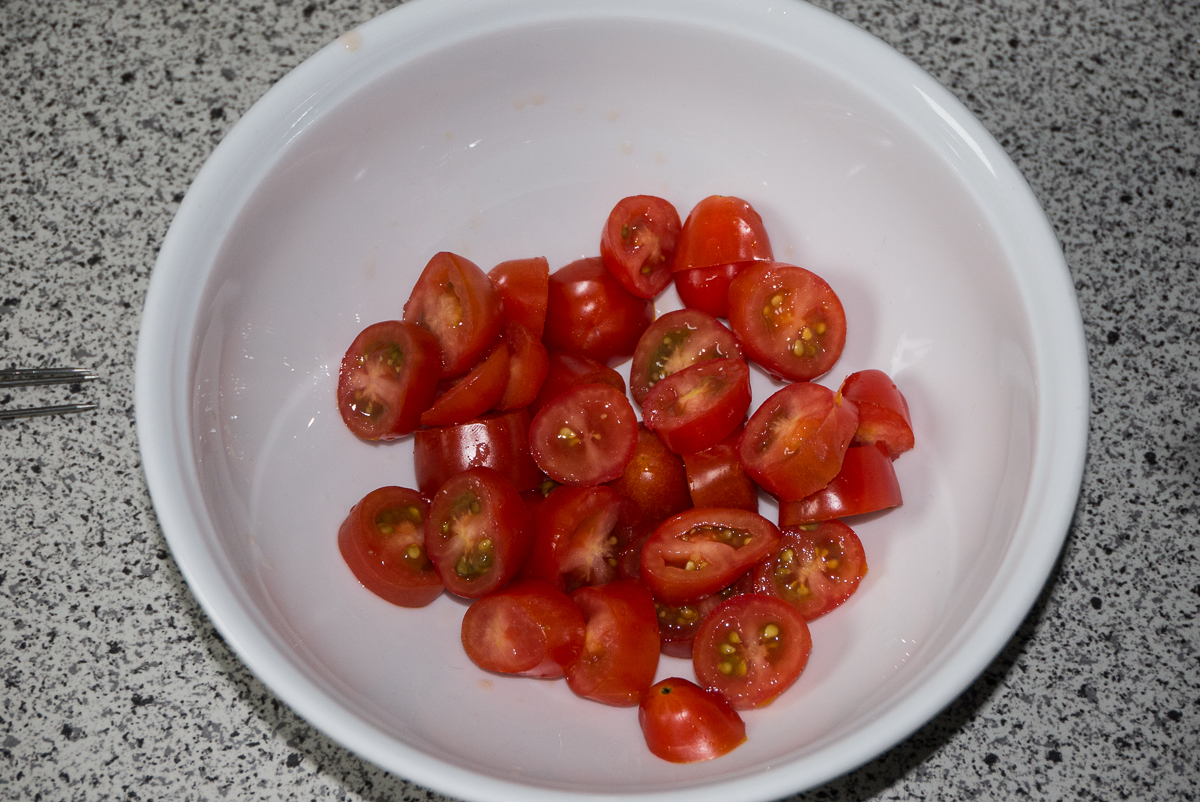
  2. Cherry tomatoes
  3. Lemon juice
  4. Olive oil
  5. Pepper, salt
  6. Basil, oregano

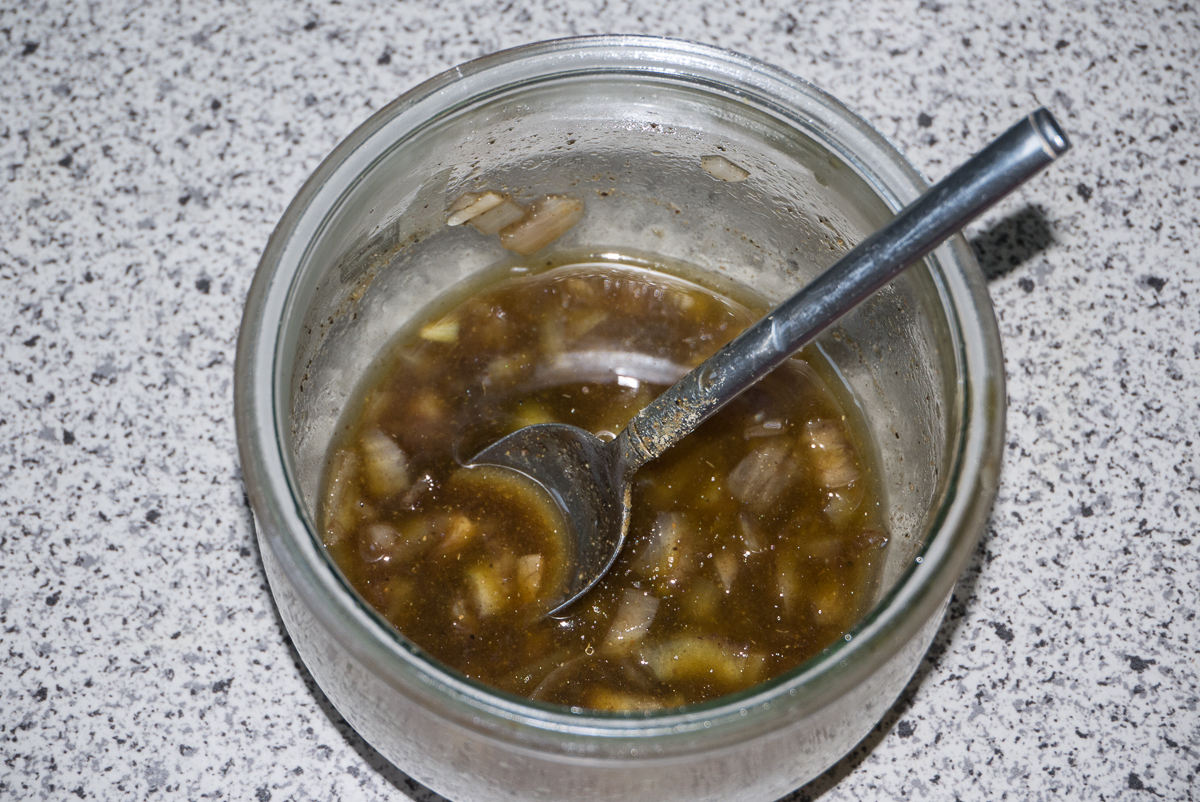
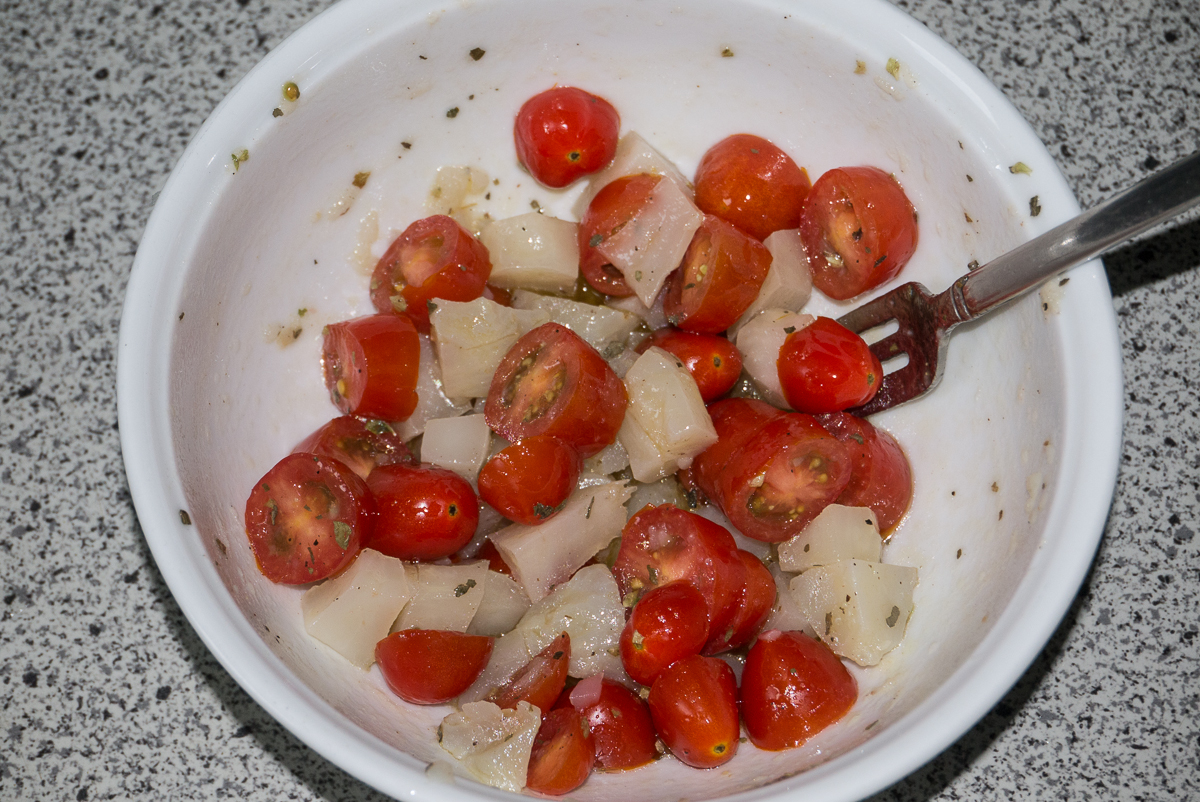
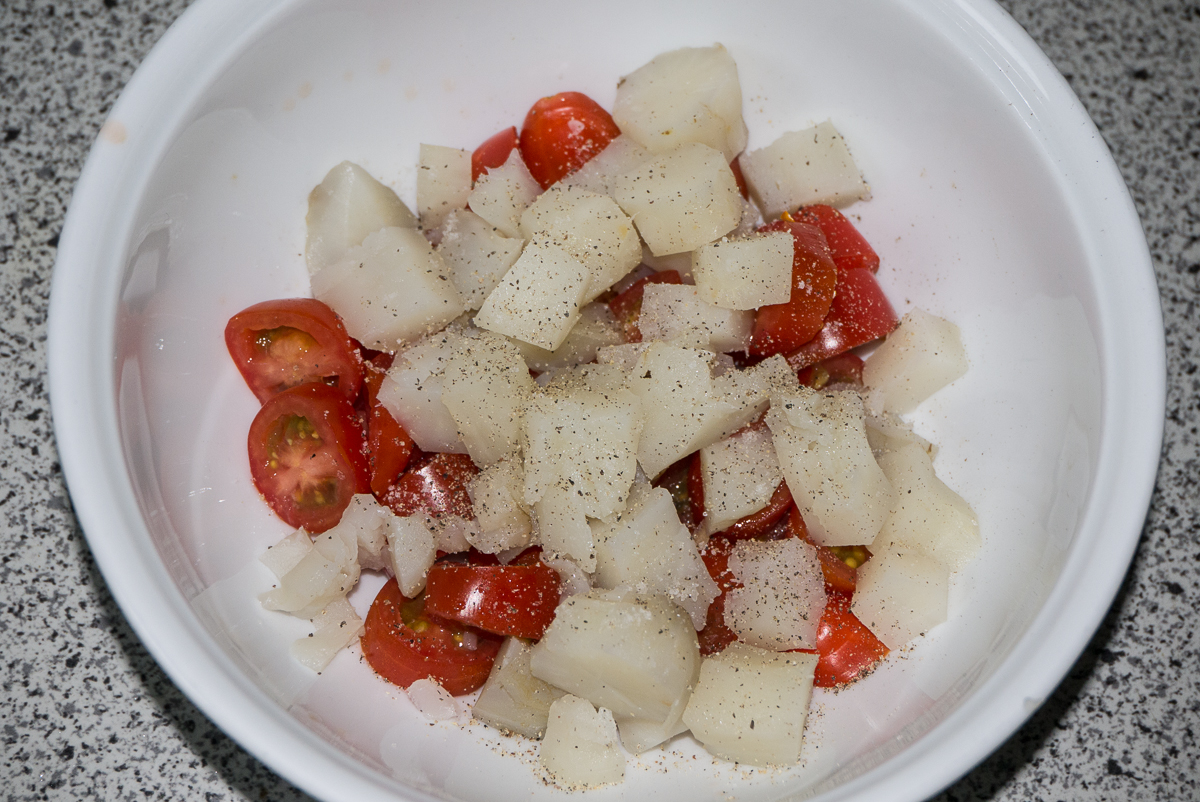
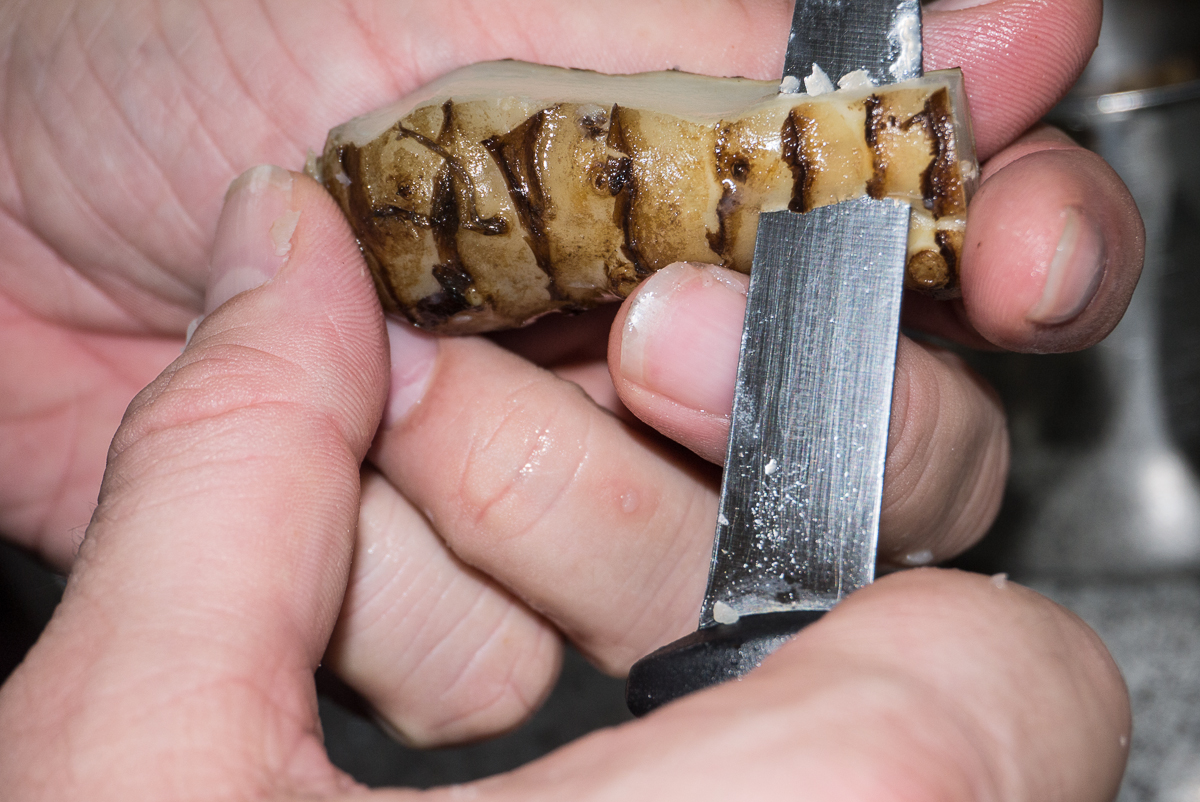
For the preparation, simply bring the Jerusalem artichokes to a boil covered with salted water and cook for 15 minutes until they are nice and soft. It's better not to take pieces of very different thicknesses like we did, but rather pay attention to the sizes of all roots being similar, just like with potatoes, then it works better. While the Jerusalem artichokes are cooking, chop the tomatoes. After cooking, rinse the Jerusalem artichokes with cold water. Chop and mix with the tomatoes. Add lemon juice, pepper, salt, basil, and oregano for seasoning. Mix well, add olive oil, and mix briefly again, then simply let it stand. It should marinate for a while (in our case it was about 2-3 hours).

For the lentil salad you need the following:

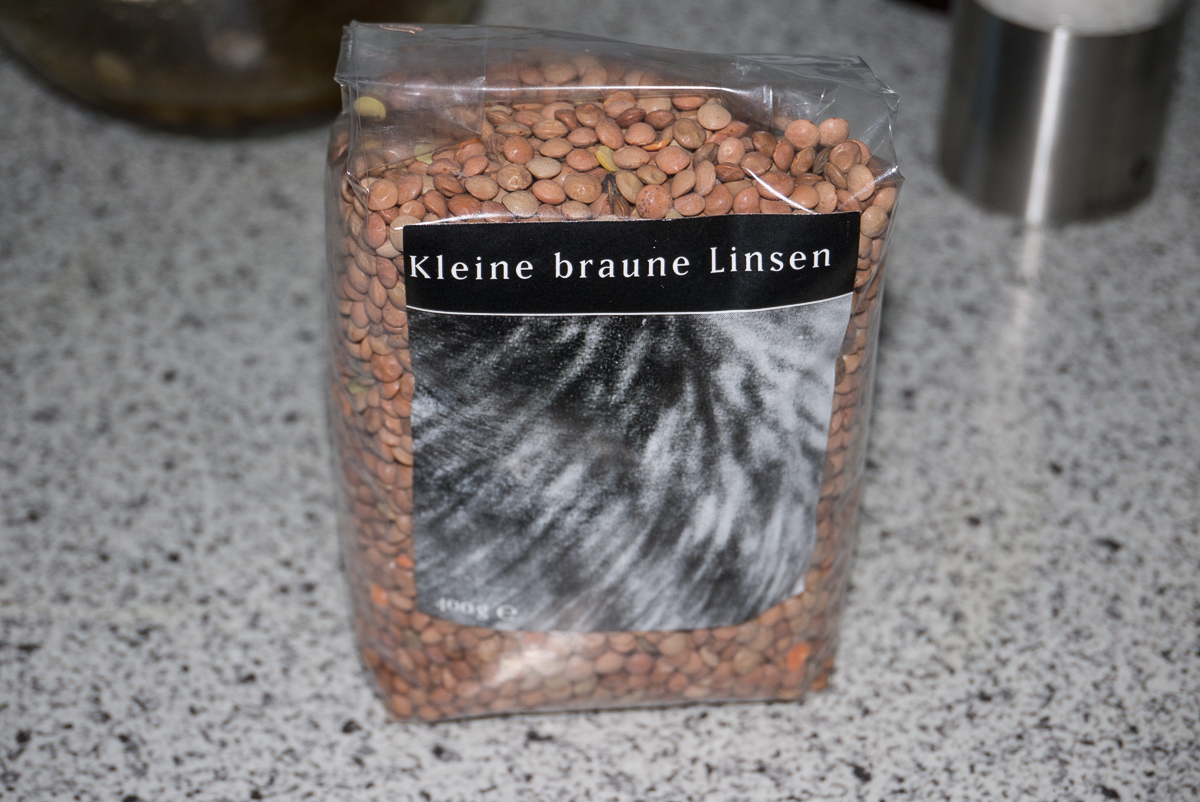
  1. Brown lentils
  2. Cherry tomatoes
  3. Green onions
  4. Lemon juice
  5. Olive oil
  6. Balsamic vinegar
  7. Vegetable broth
  8. Pepper, salt
  9. Turmeric, coriander, cumin, ginger, hot paprika powder

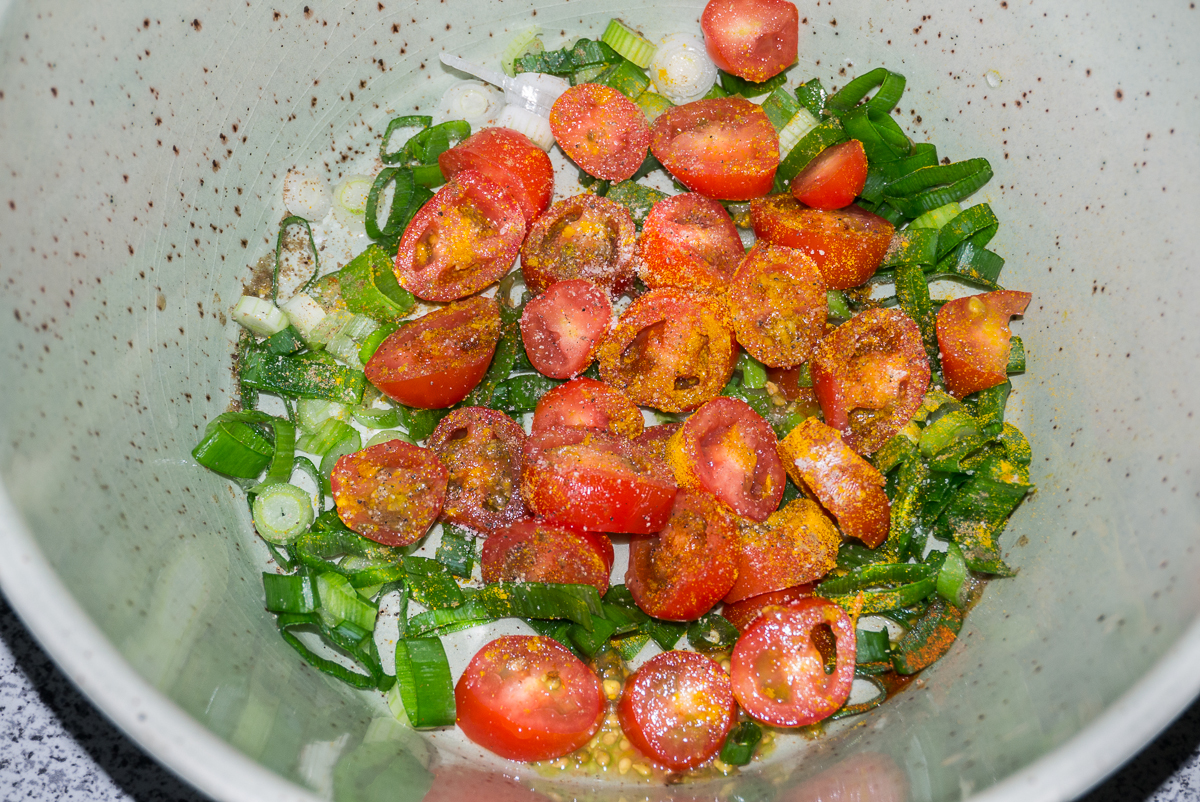
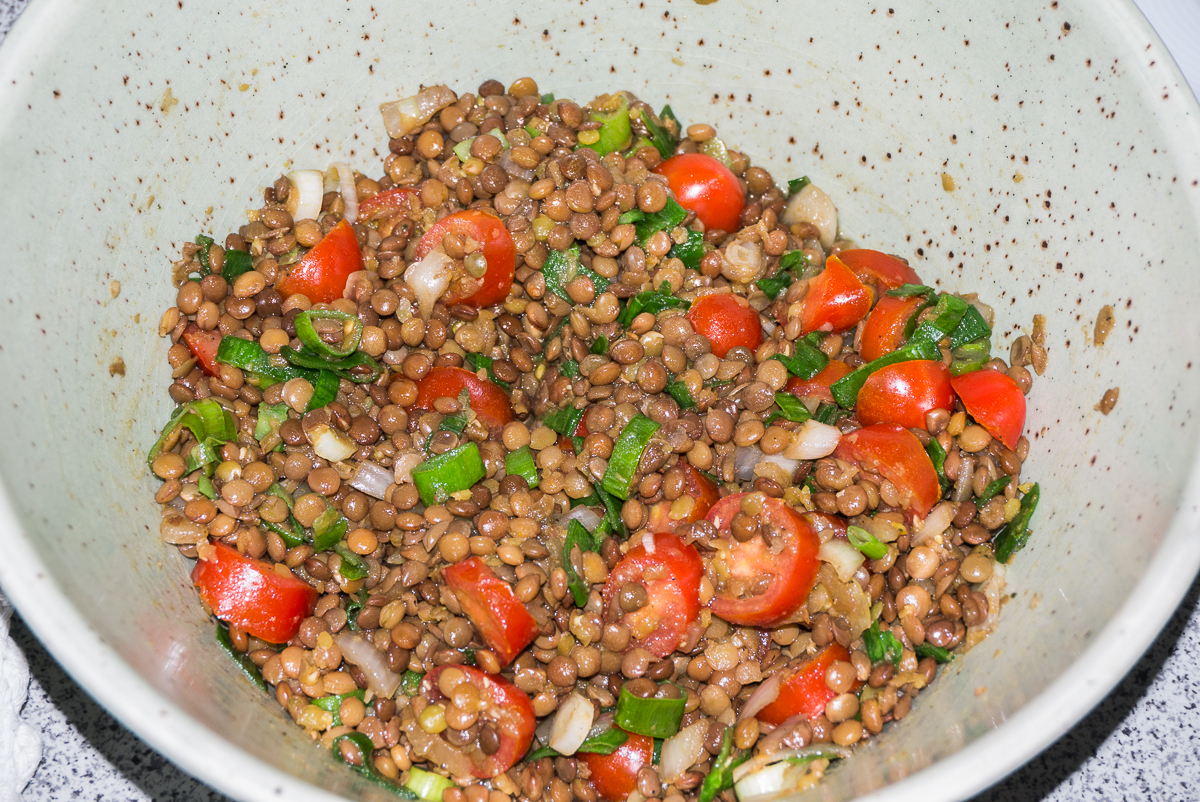
For the preparation, simply bring the lentils to a boil in vegetable broth and then cook for 30 minutes. We just used half a vegetable broth cube. While the lentils are cooking, chop the tomatoes and green onions. Make a vinaigrette from oil, vinegar, lemon juice, and spices. Additionally, add spices to the tomatoes and green onions. Our vinaigrette also contained regular onions. Mix the cooked lentils with the tomatoes and mix well. Then add the vinaigrette and mix again. Let it stand, here too it was 2-3 hours. Before eating, chop and distribute fresh coriander on the lentil salad.

Then serve with baguette. Juliana liked the Jerusalem artichoke salad better, I liked the lentil salad better, but both tasted good. Bon appétit!

Mushroom Salad with Chicken Strips

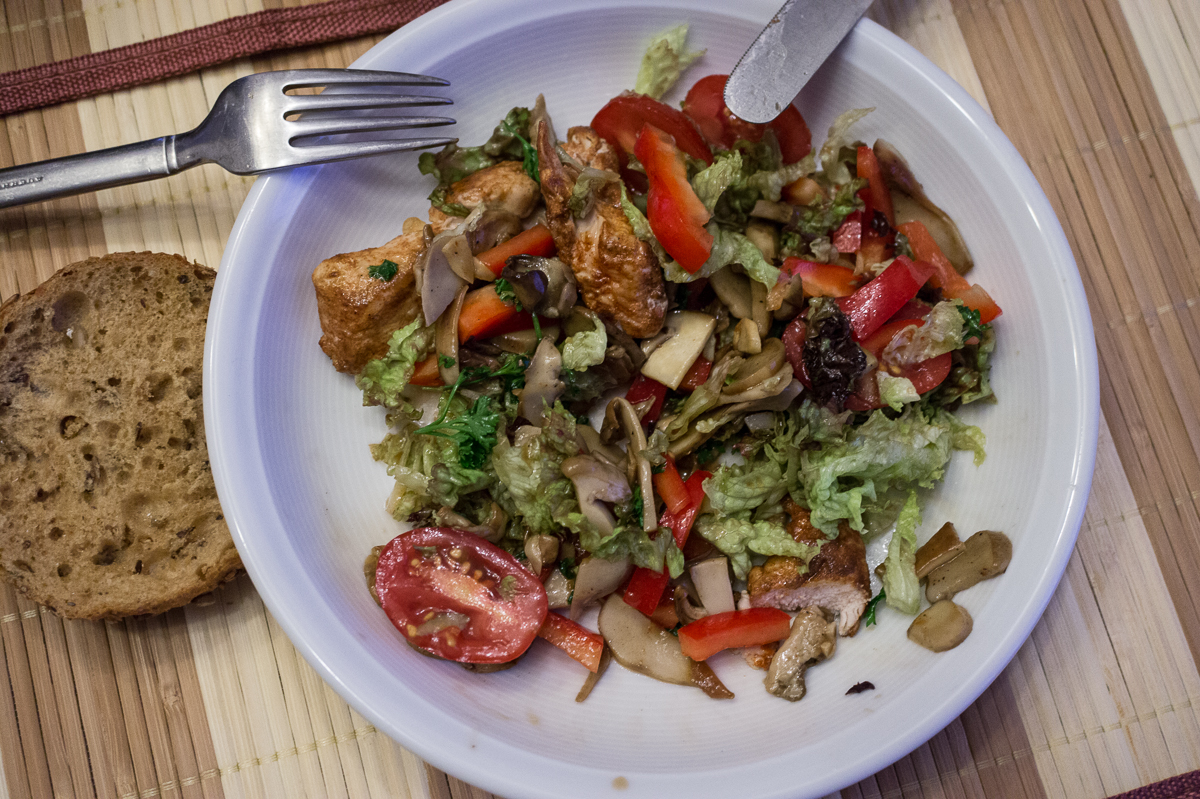
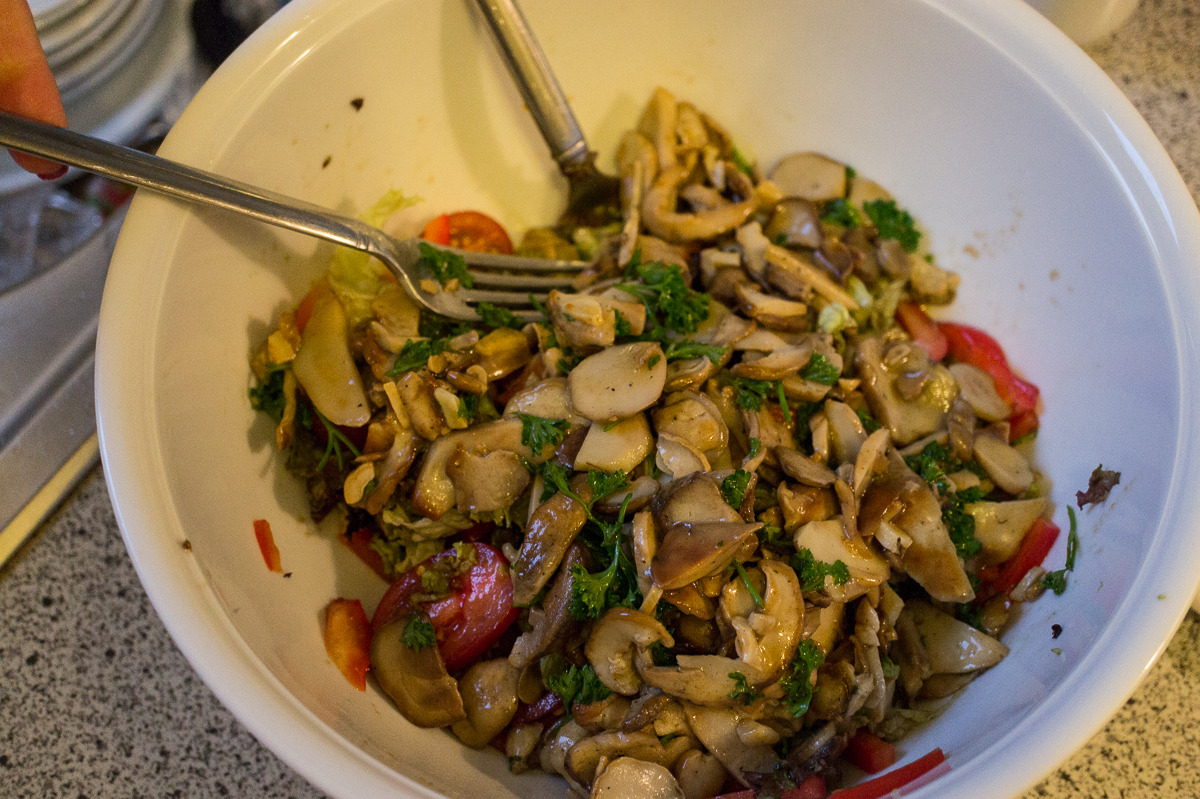
Another episode of "Cooking with rfc1437" - this time Juliana was the cook and I was just the photographer and assistant. And there was a salad with wild mushrooms, in our case porcini mushrooms, after all it is the right season for it. Our ingredients:

  • about 250g wild mushrooms (we actually had 500g porcini mushrooms, but only used half of them for the salad)
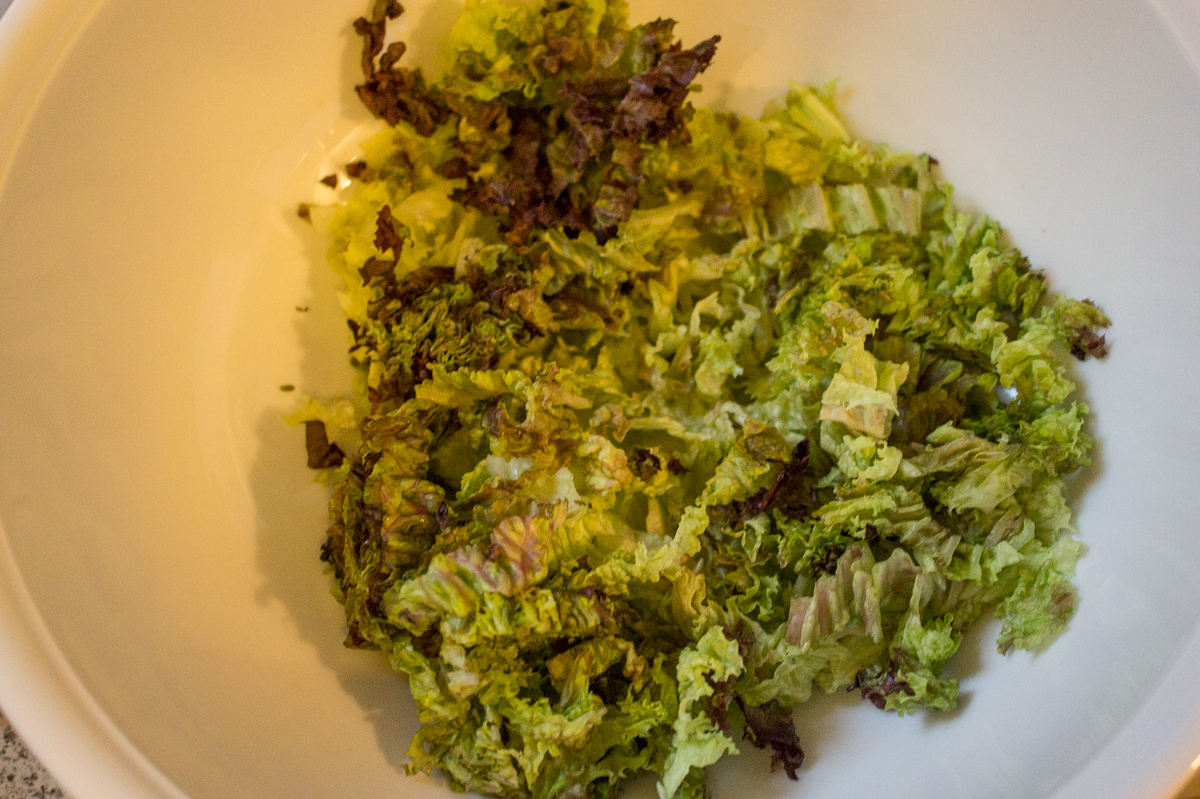
  • lettuce (we forgot to check how much we had beforehand, so there was definitely not enough)
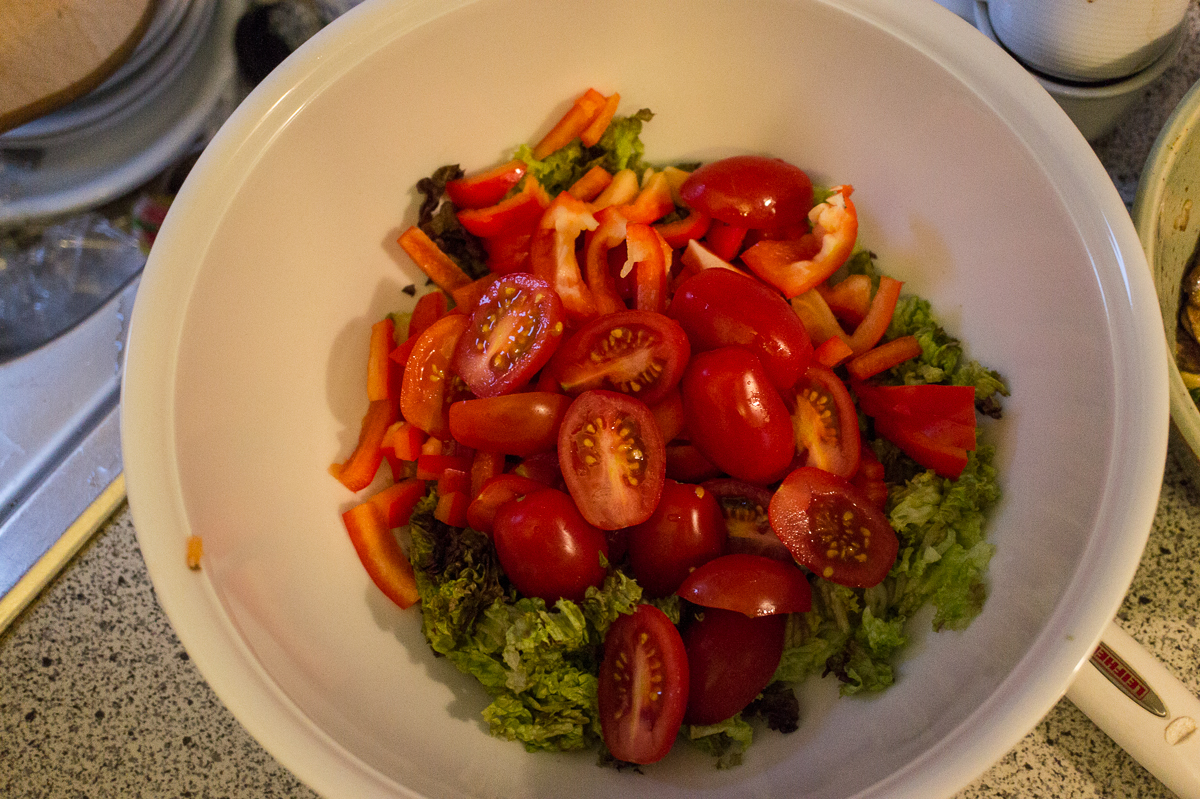
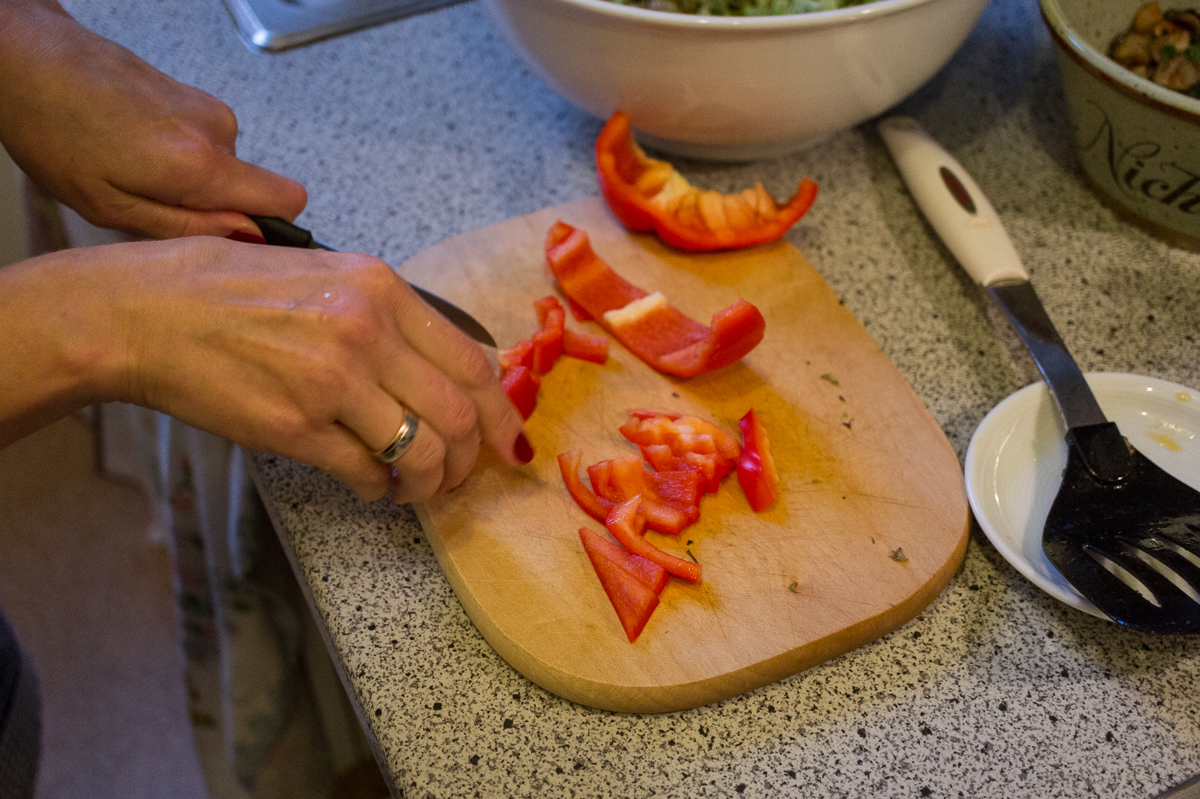
  • one bell pepper (which we added because otherwise there would have been too little salad)
  • cherry tomatoes or dwarf tomatoes (8-9 pieces)
  • 180g chicken breast fillet
  • a bit of parsley
  • 2-3 cloves of garlic
  • half a lemon
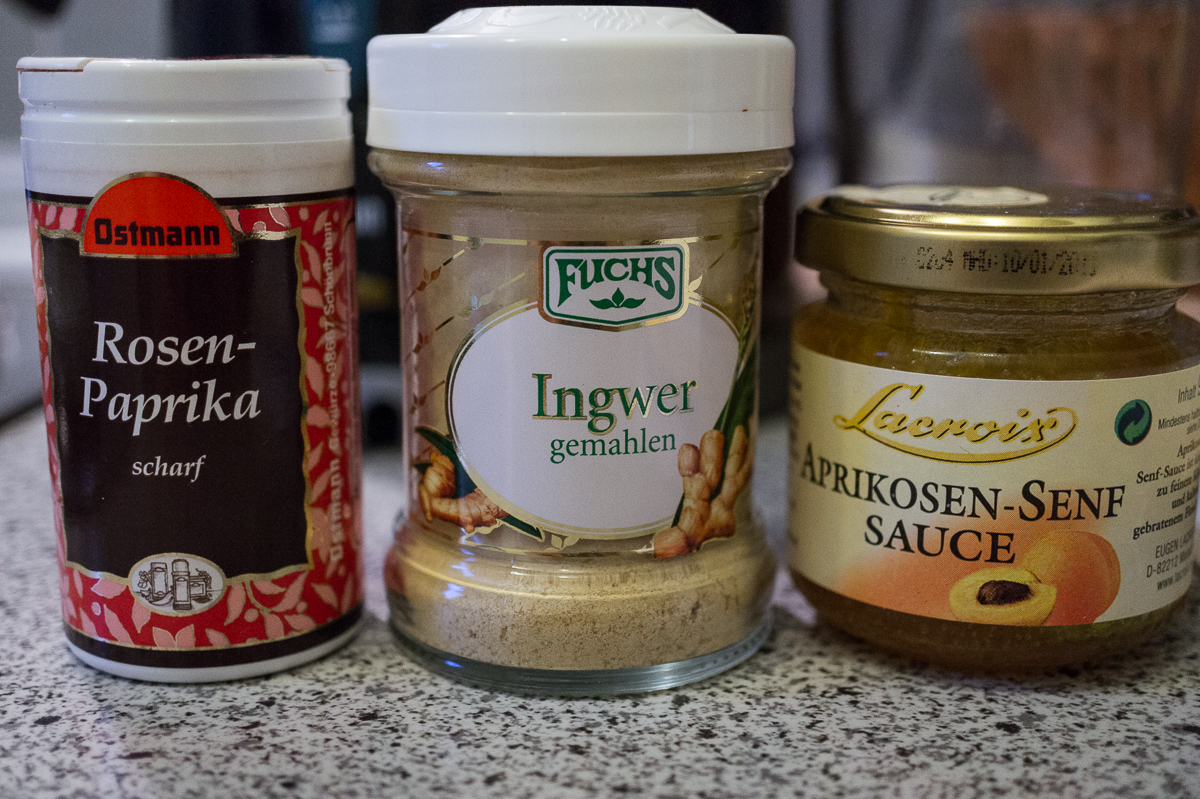
  • hot paprika powder and ginger to marinate the chicken
  • vinegar, oil and apricot-mustard sauce to make the salad dressing
  • pepper and salt for the mushrooms

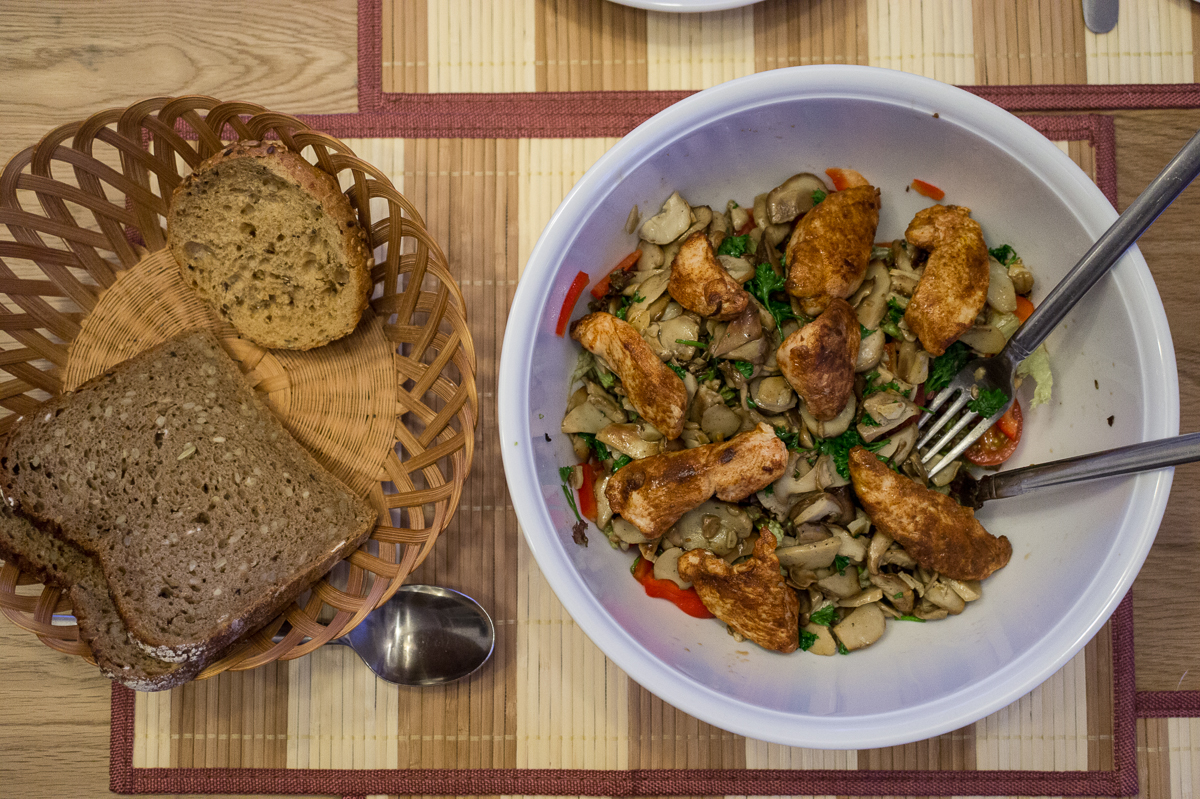
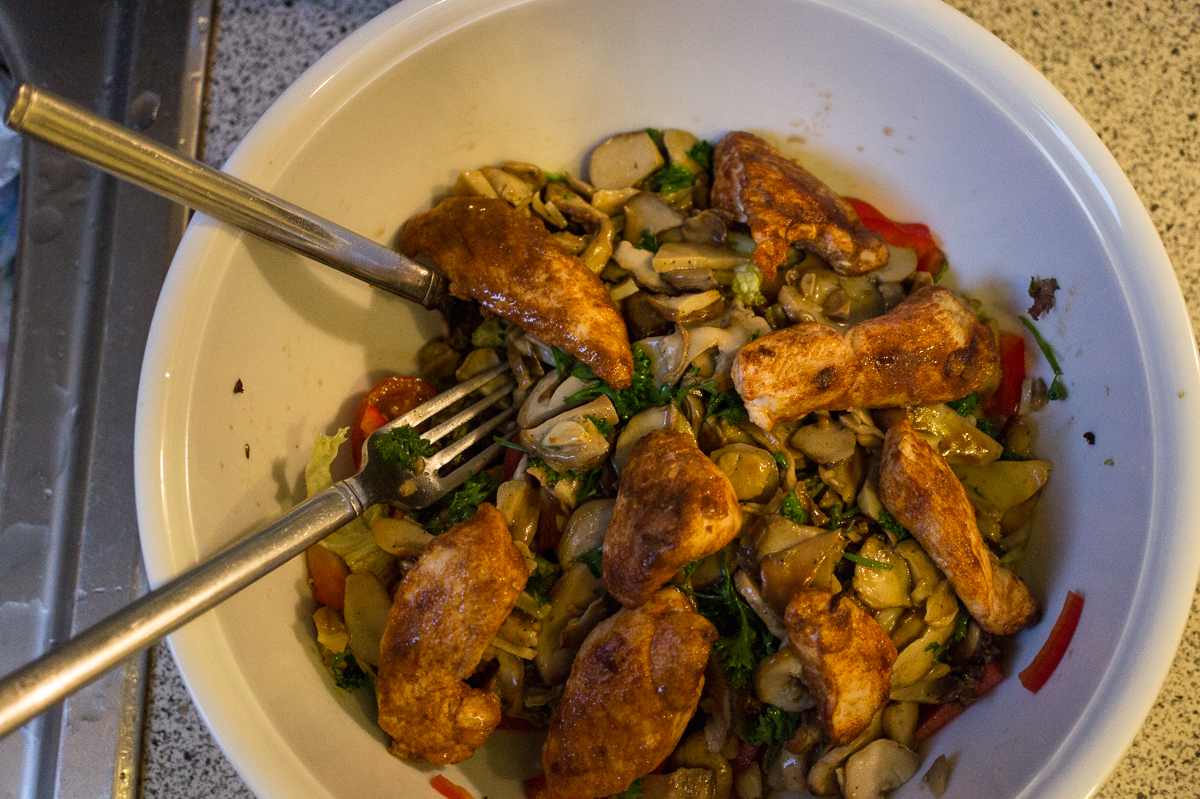
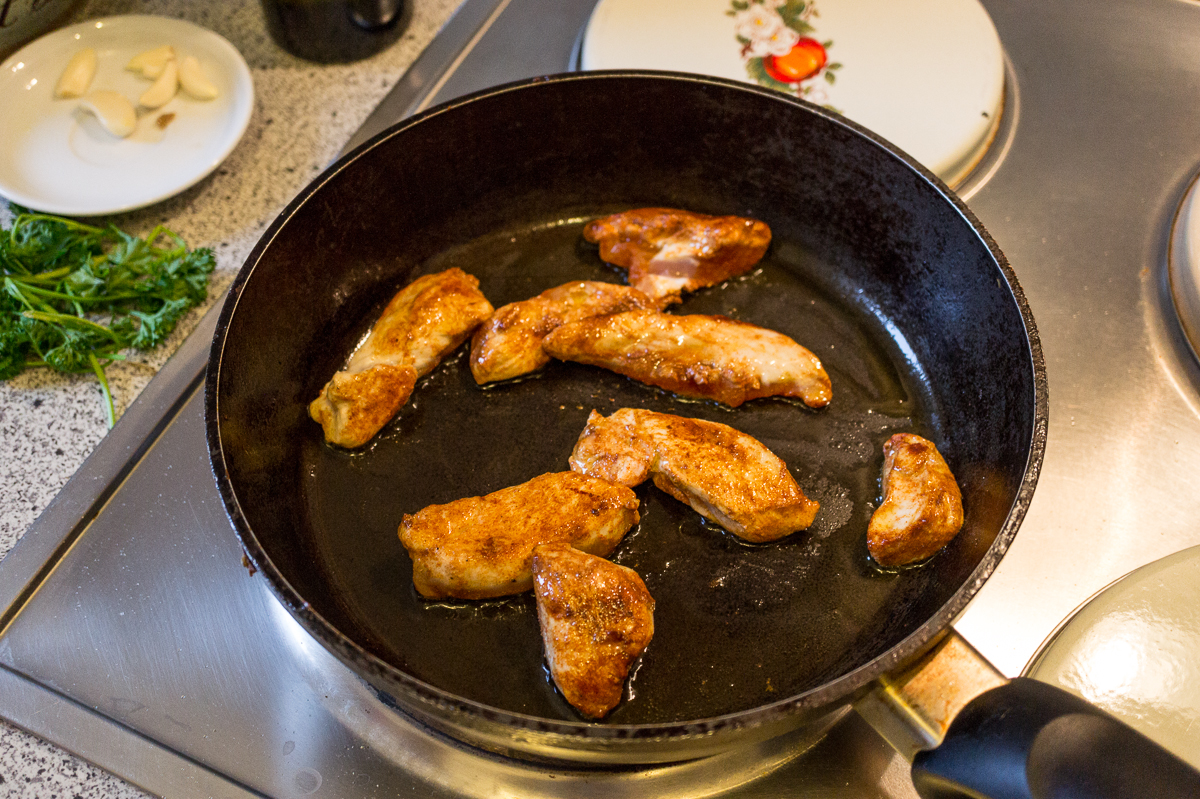
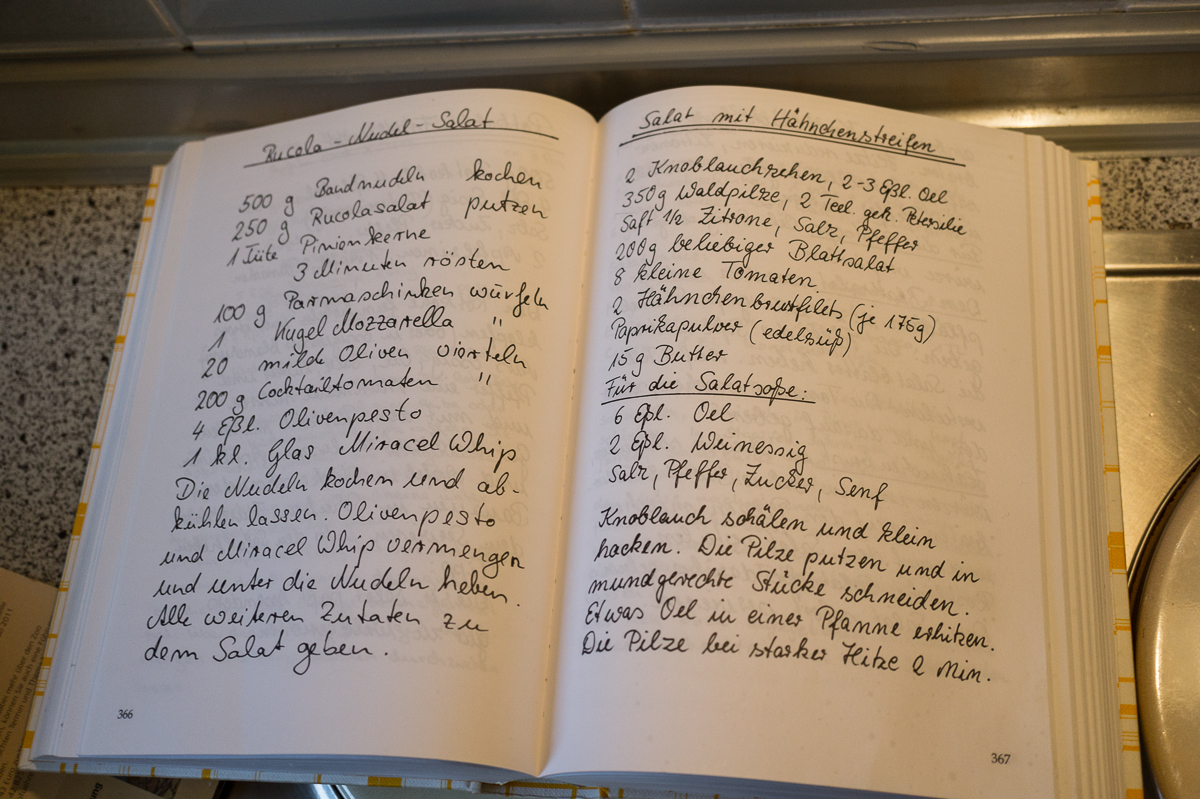
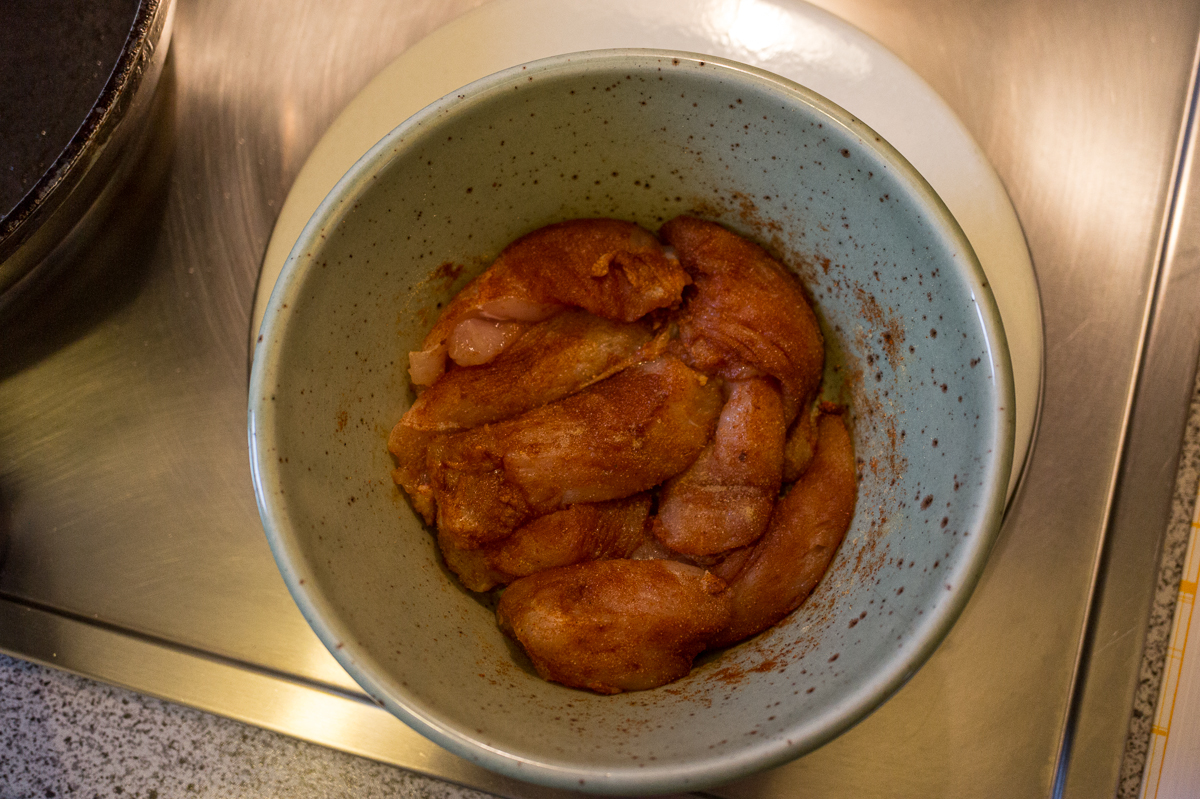
For the preparation, we took a lot of pictures again, so the points here are based on the pictures above.

  1. We used the recipe as a basis, but changed it significantly. It comes from a book that we received as a wedding gift and has already served us well several times.
  2. We had already cut the chicken into strips in the morning and marinated it with hot paprika powder and ginger.
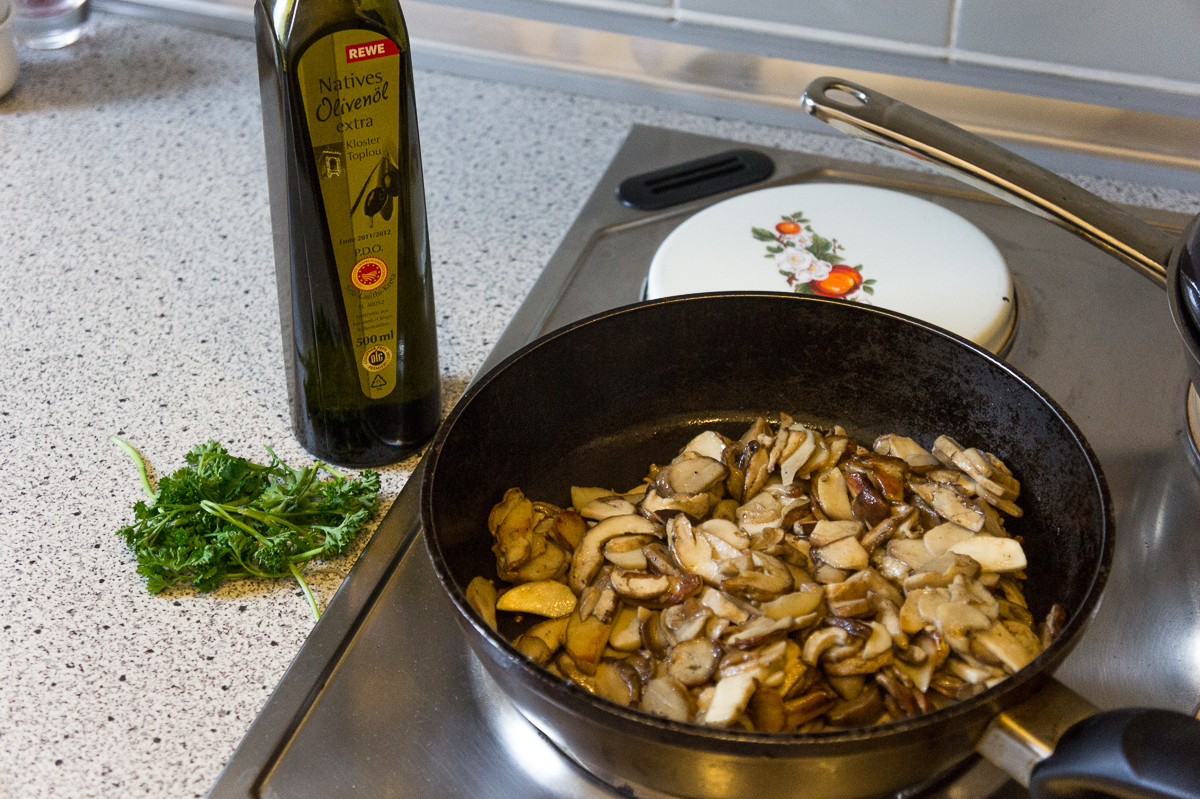
  3. Cut the porcini mushrooms into small pieces and fry them with olive oil. They need about 15 minutes to be done.
  4. Then fry the chicken strips thoroughly.
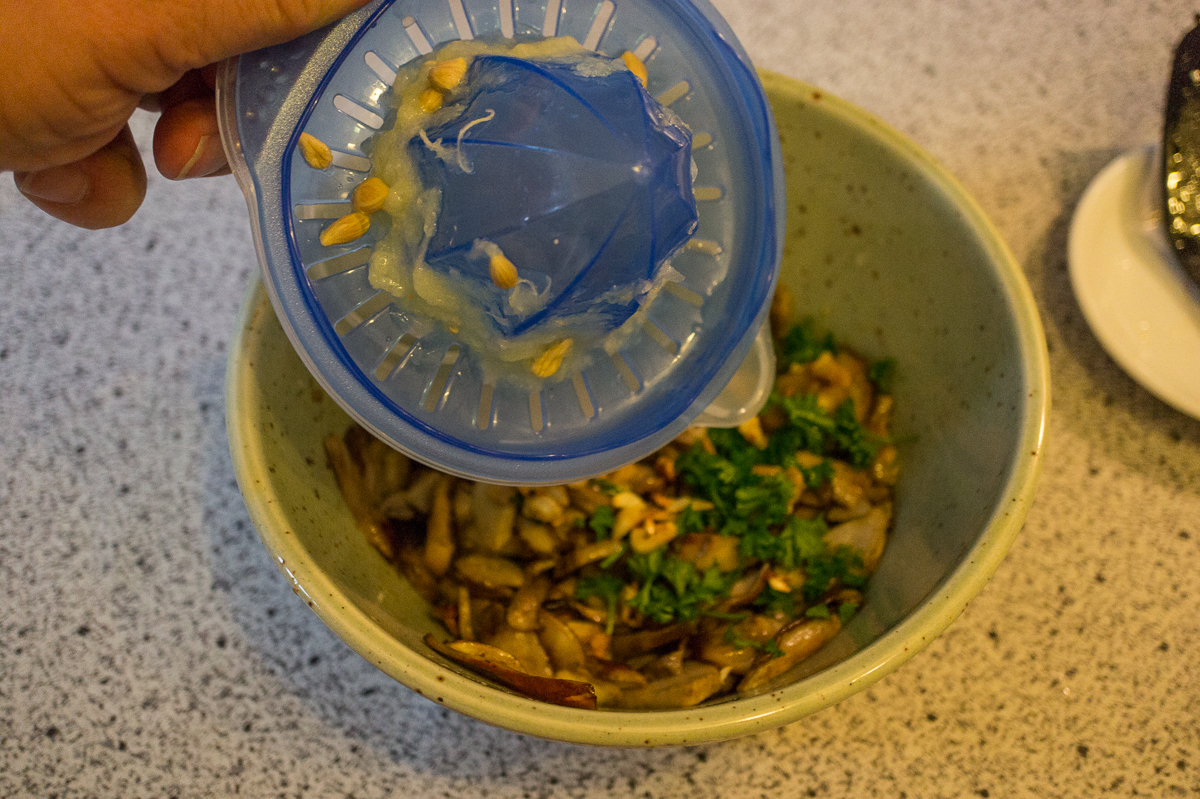
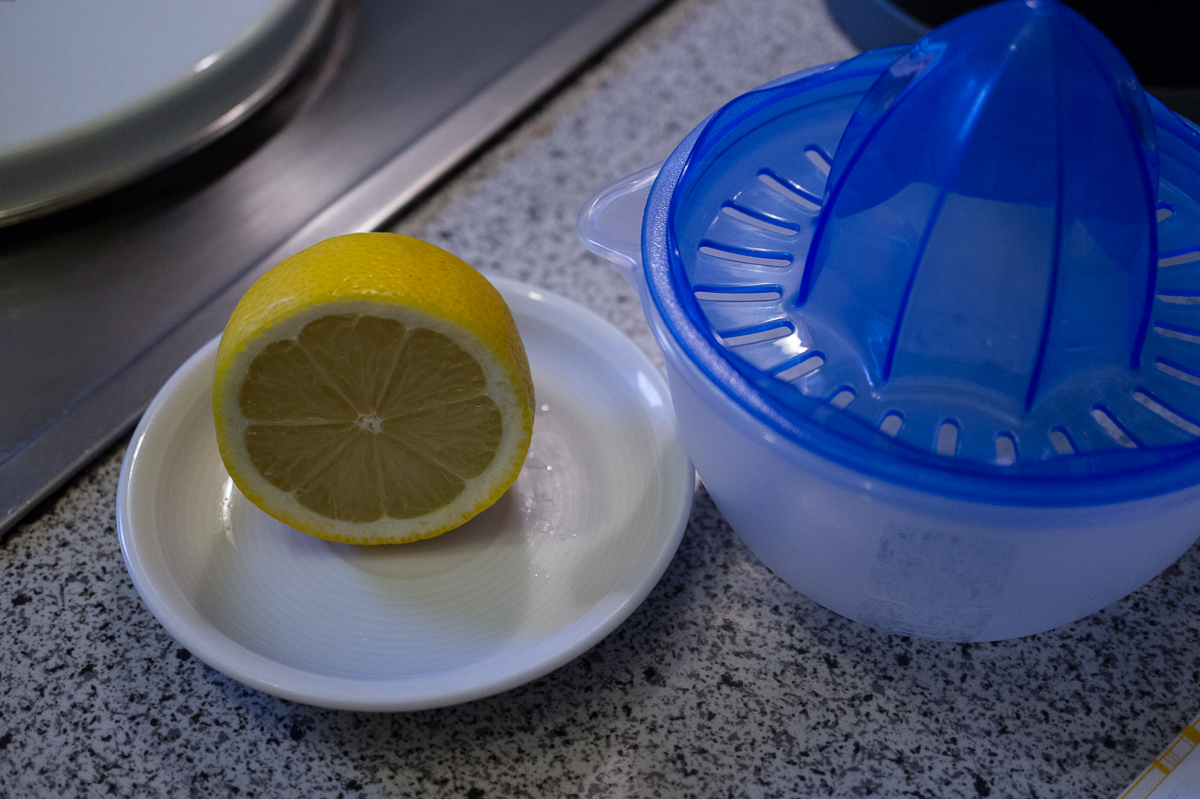
  5. Squeeze the lemon
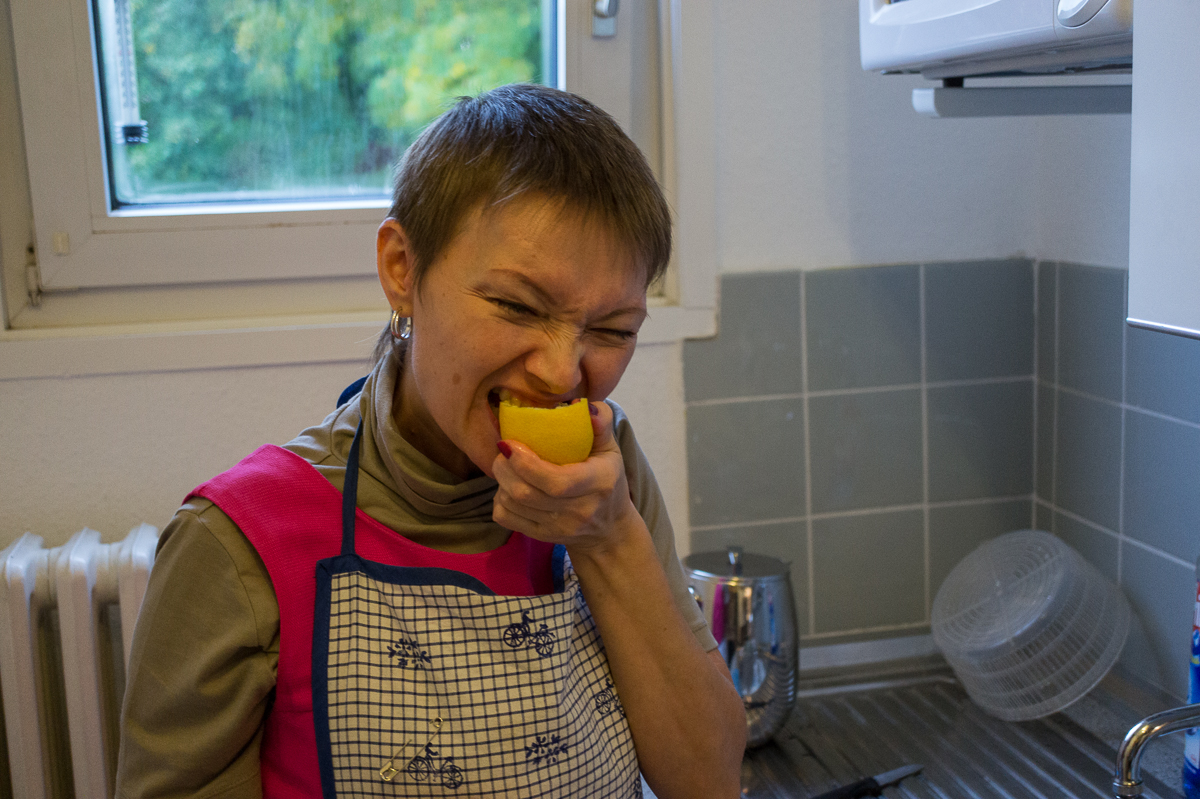
  6. optionally eat the lemon zest
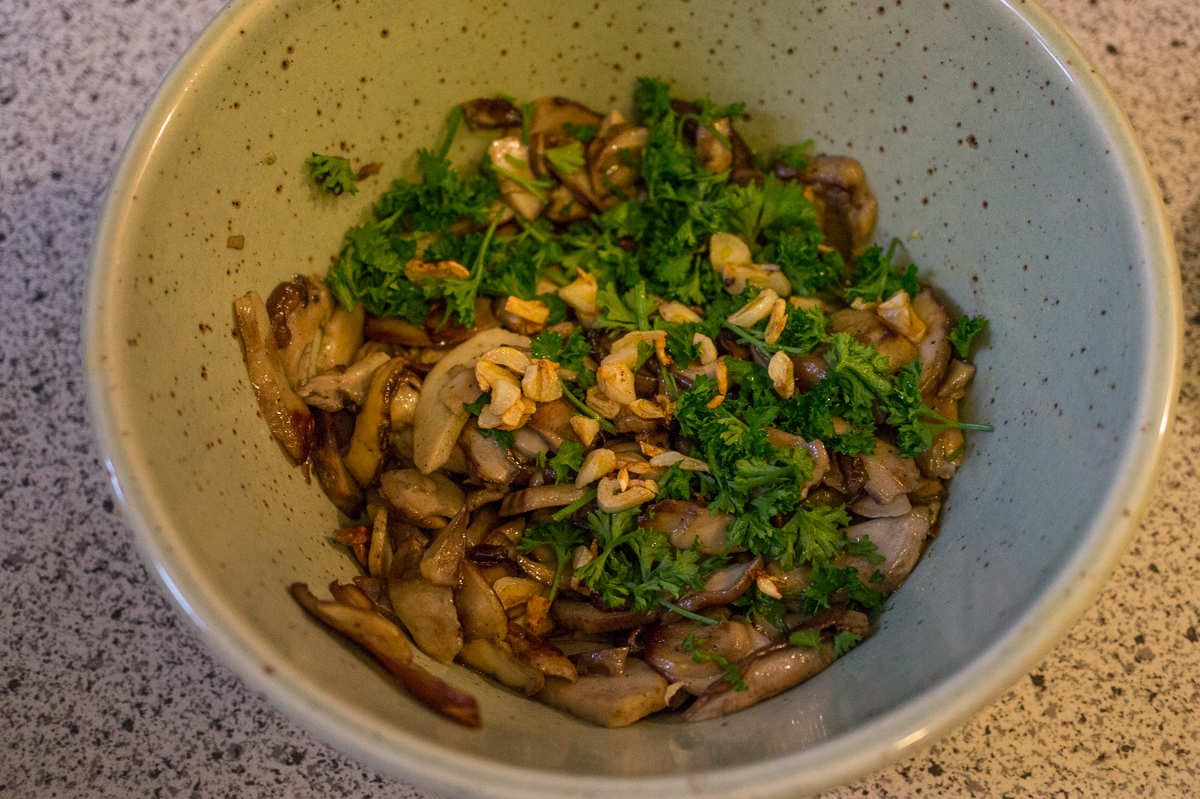
  7. Mix the mushrooms with the finely chopped parsley and the briefly fried garlic
  8. Pour the squeezed lemon over the mushrooms and mix everything well
  9. In between, ask the husband to mix a salad dressing from vinegar, oil and apricot-mustard sauce (the apricot-mustard sauce is actually something like jam or chutney, we just had it in the fridge, of course any other variant would work too)
  10. Cut the lettuce and put it in the bowl. And yes, that was really all we had, it was a bit little.
  11. Therefore, quickly chop a bell pepper
  12. Mix lettuce, bell pepper and the dwarf tomatoes with the salad dressing
  13. Put the mushrooms on the salad (do not mix anymore, it looks prettier)
  14. Arrange the chicken strips on the salad
  15. Once again the spices we used for chicken strips and salad dressing, the oil was already in the picture. The vinegar was simply balsamic vinegar.
  16. serve the whole thing with bread
  17. and then eat!

The result was very tasty, but for next time we plan to have a larger amount of lettuce and I think making the salad dressing with part of the lemon juice instead of vinegar would also be a good idea. But it was a very tasty salad that also fits perfectly with the season.

Beef Roulades with Parsnips

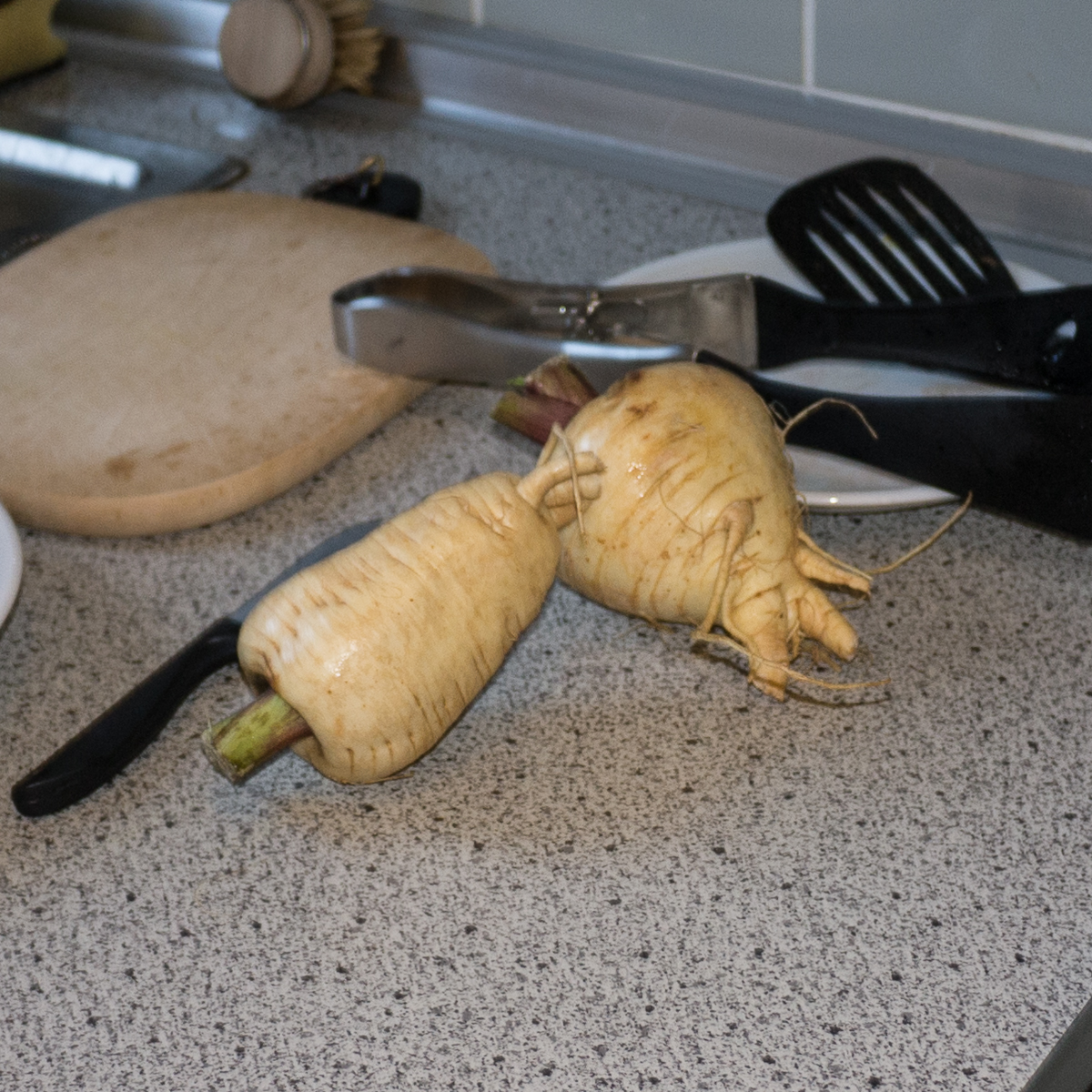
Something new - cooking with documentation! Juliana wanted to have the whole thing documented to show it off, so we took turns waving around the cooking utensils and the camera. And surprisingly, it all worked out - and it tasted great too!

So the ingredients for today's menu:

  • four beef roulades (about 850g of meat)
  • 3 parsnips
  • one carrot
  • some celery
  • green onions
  • spices (pepper, salt, ginger, hot paprika)
  • 250g bacon
  • a few cucumbers
  • a few cloves of garlic (feel free to use a few more)

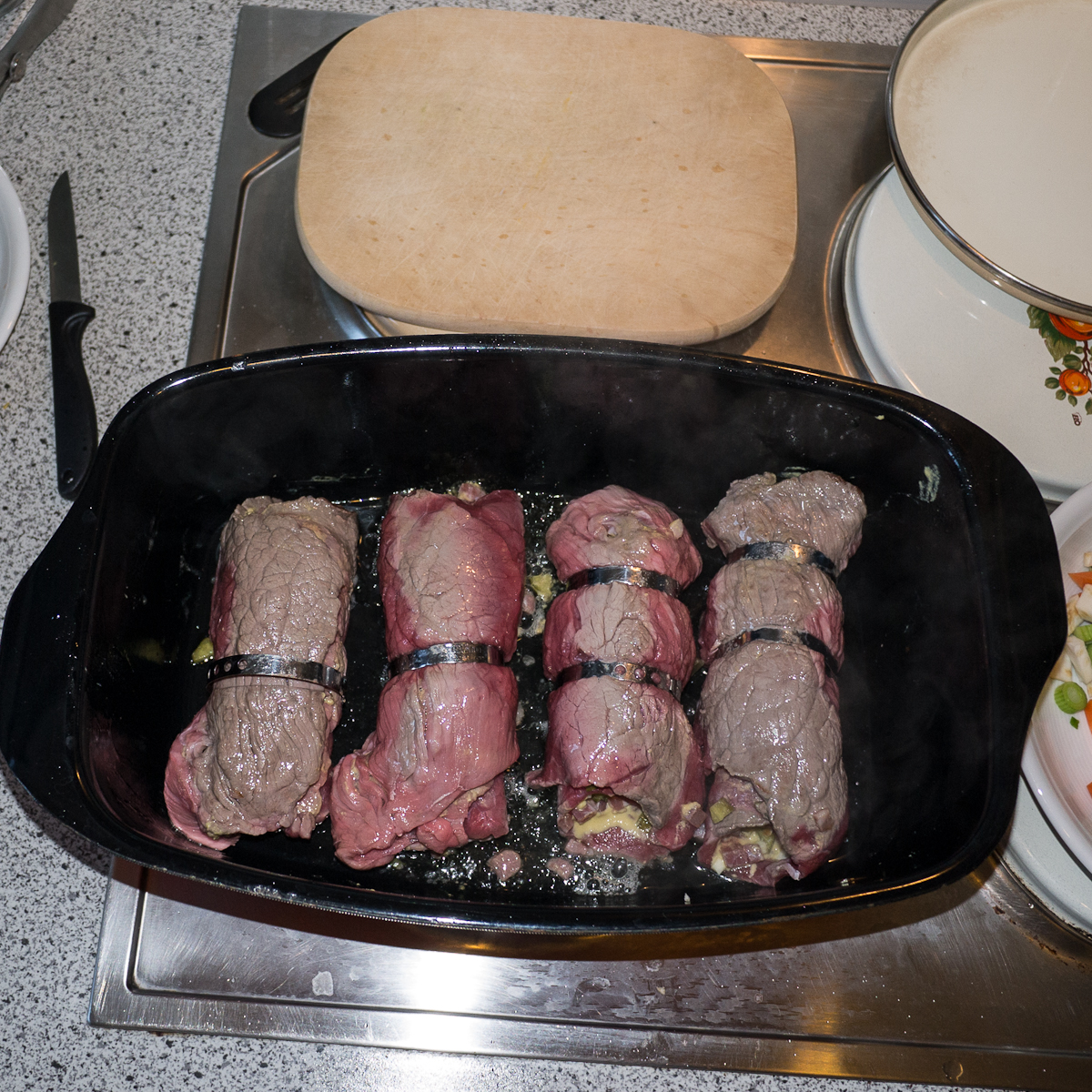
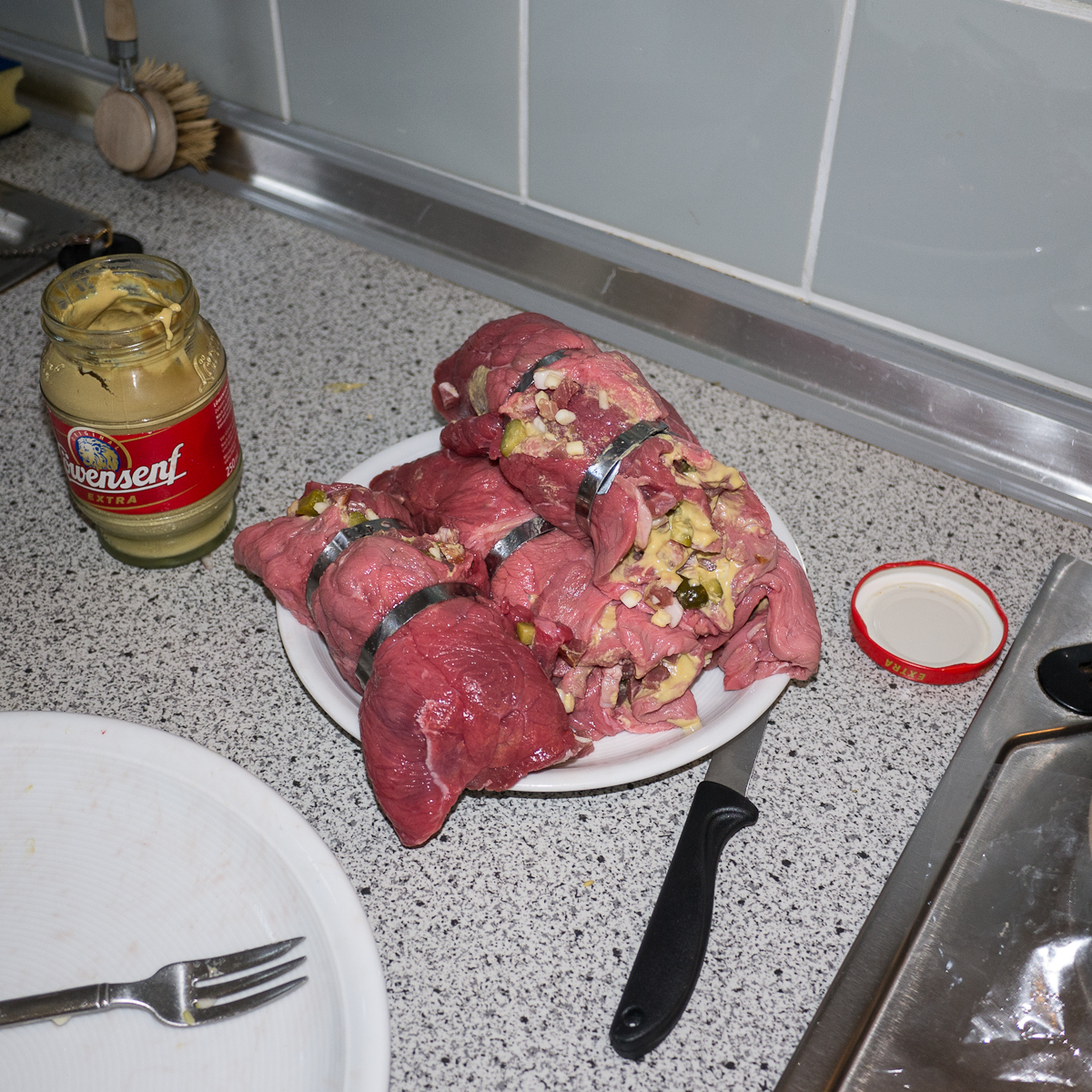
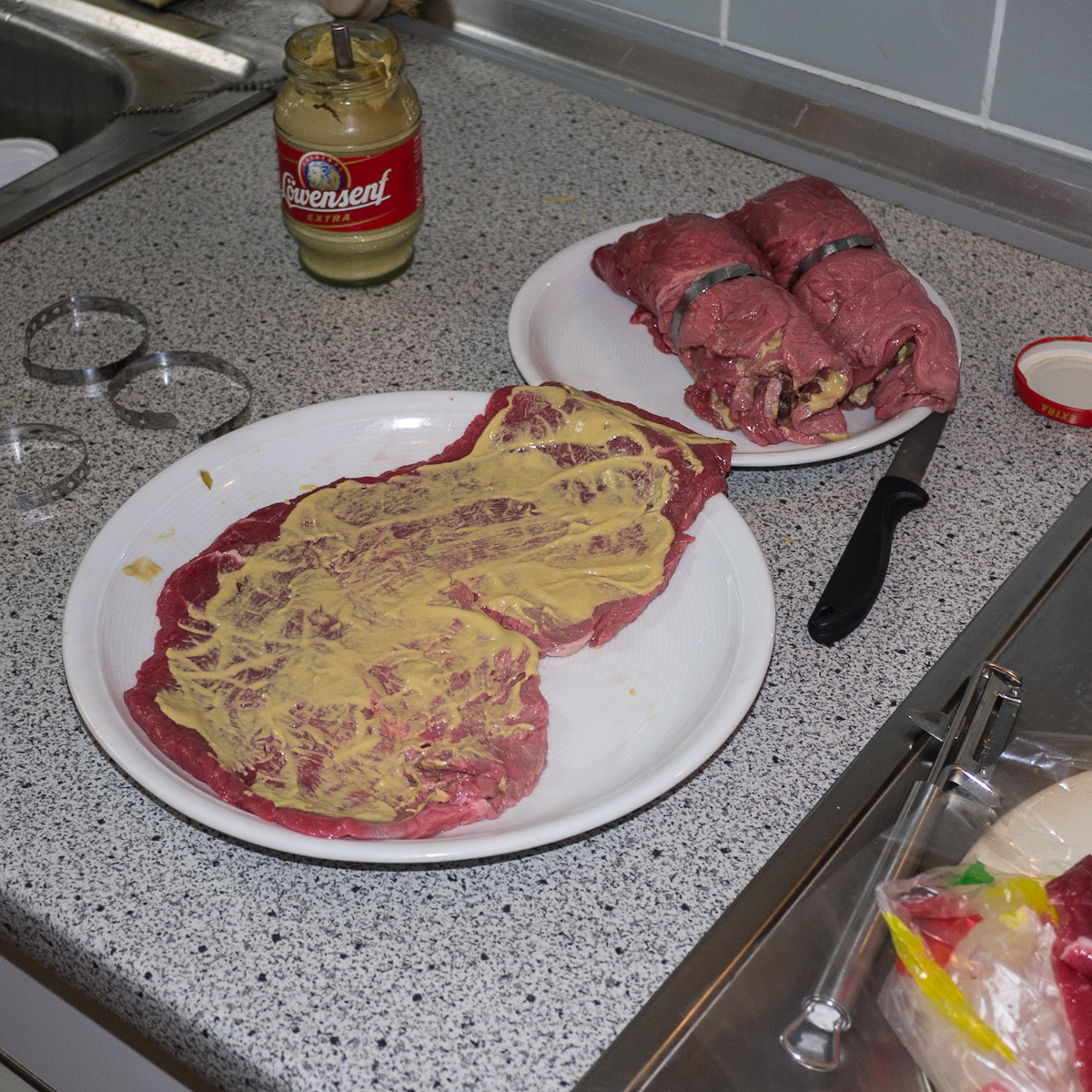
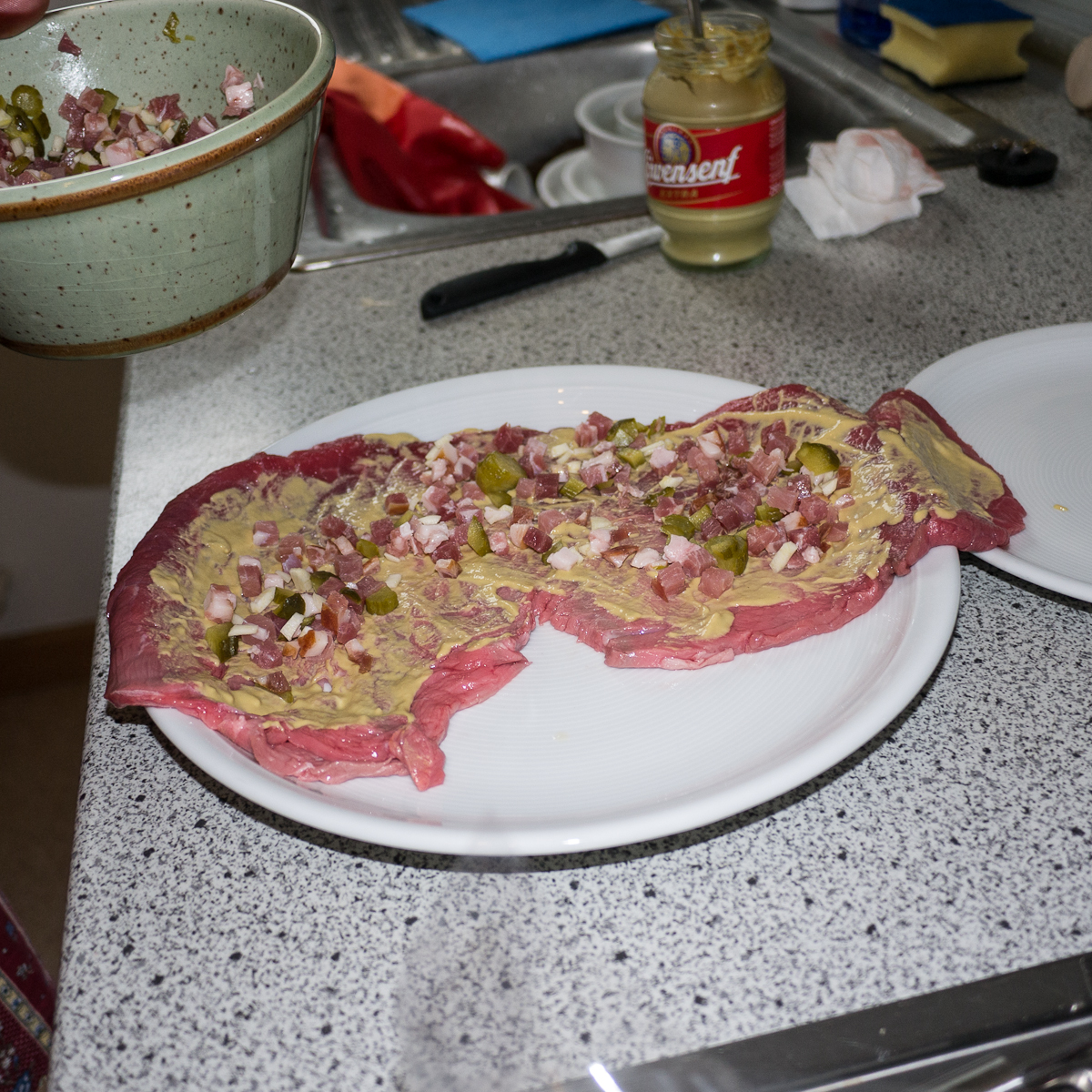
Preparation came in sections, as this is quite time-consuming, especially with the time. So here is the preparation including the breaks (the steps are oriented towards the pictures, so just look at the appropriate picture above for each step):

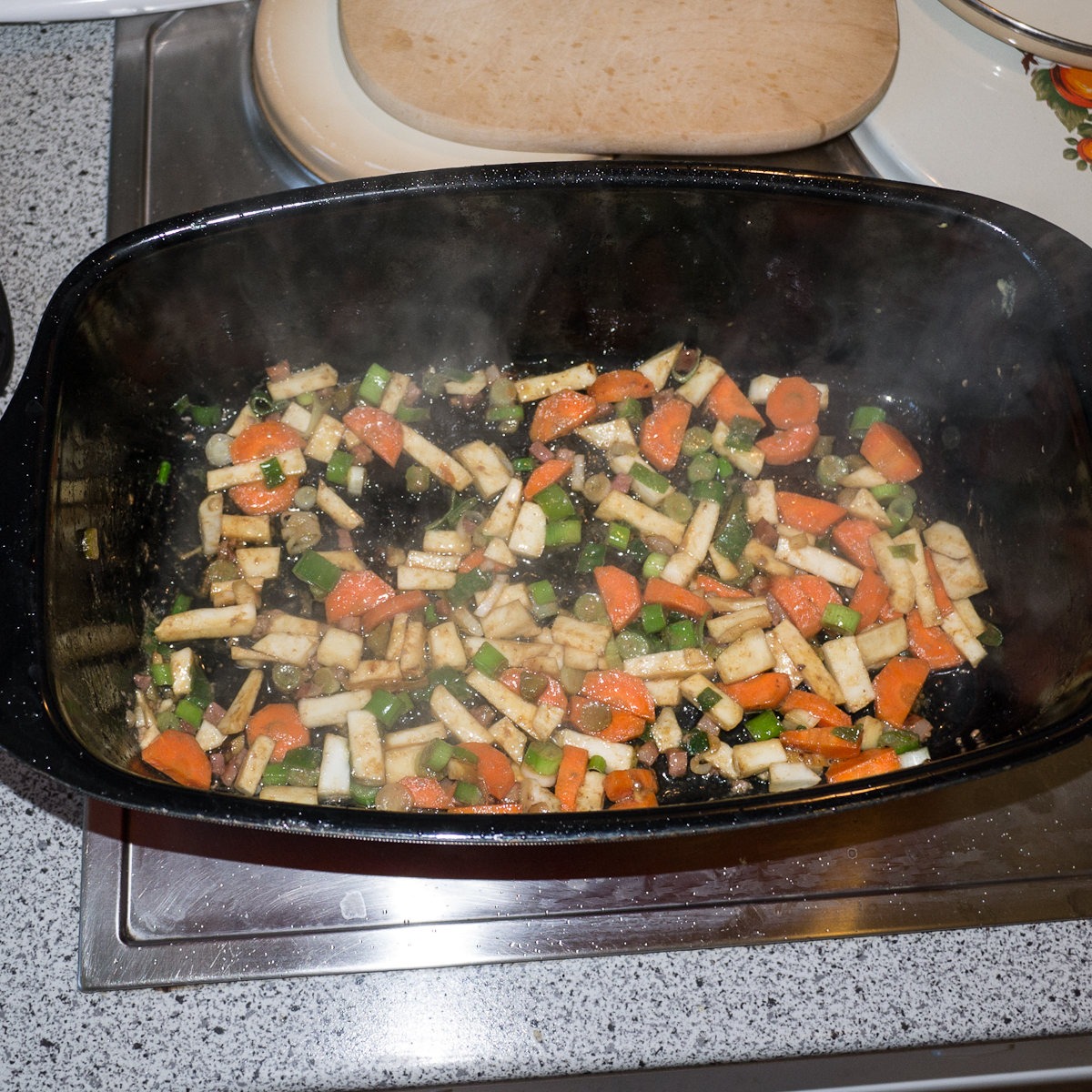
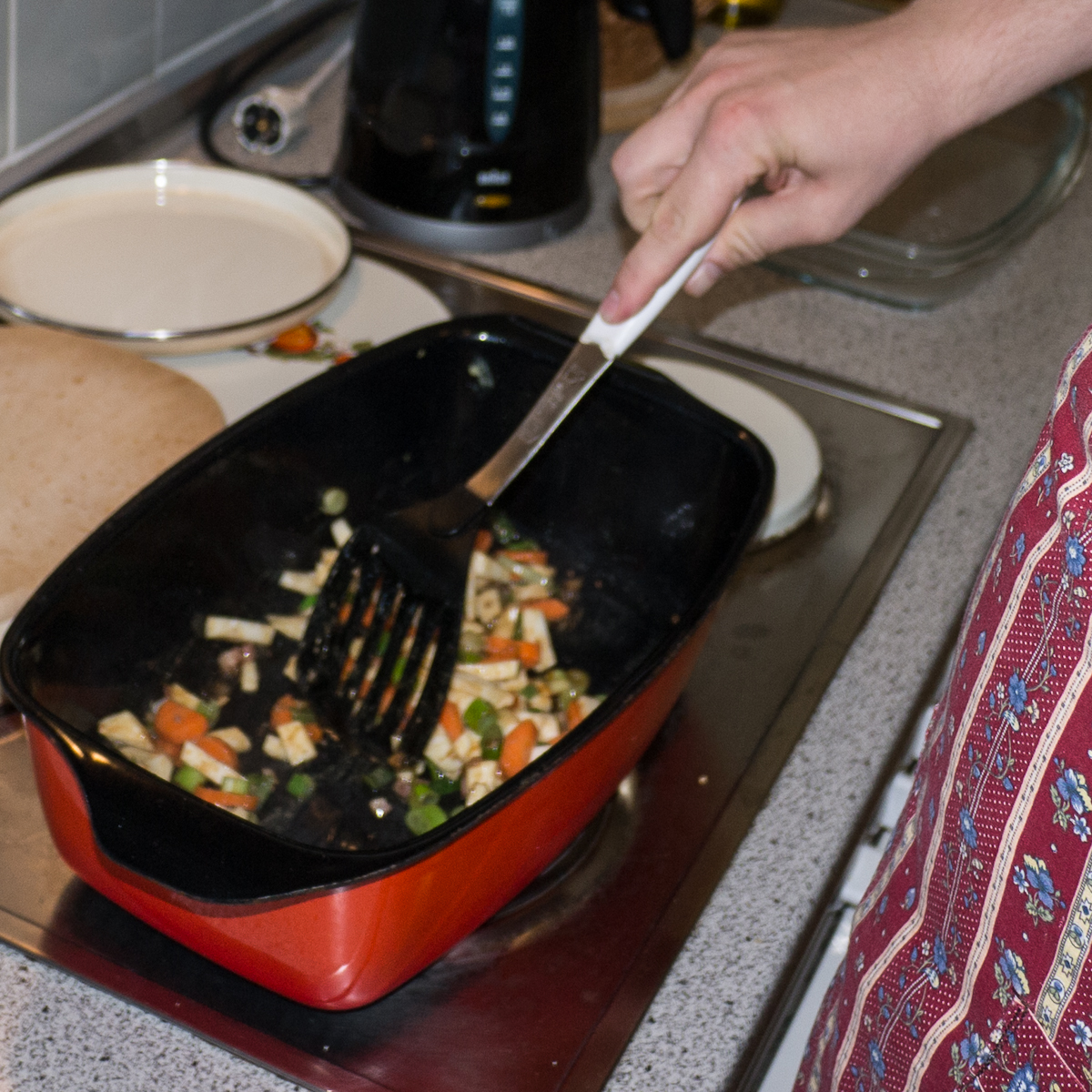
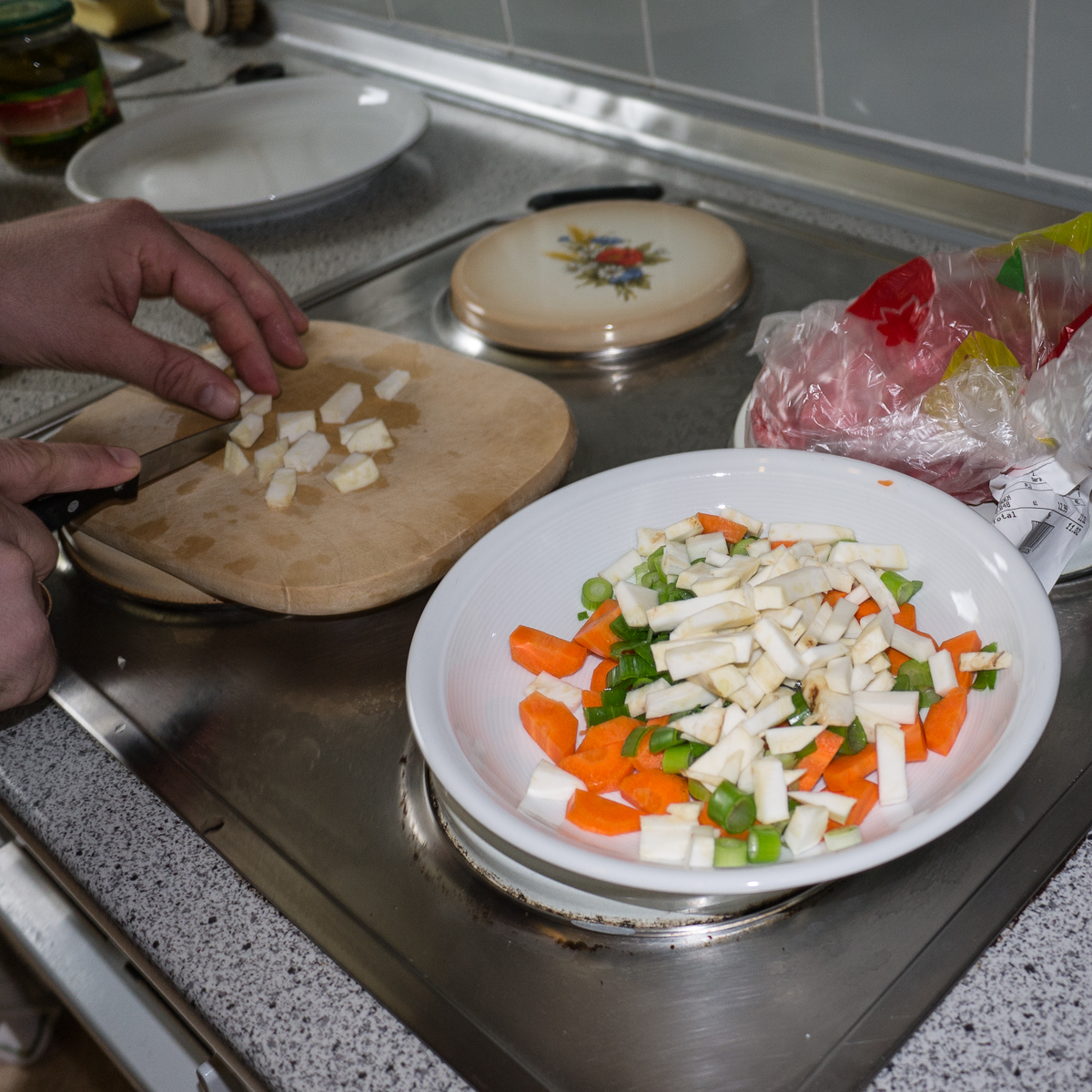
  1. Chop celery, carrots, and green onions finely and prepare them for the broth in which the roulades are braised
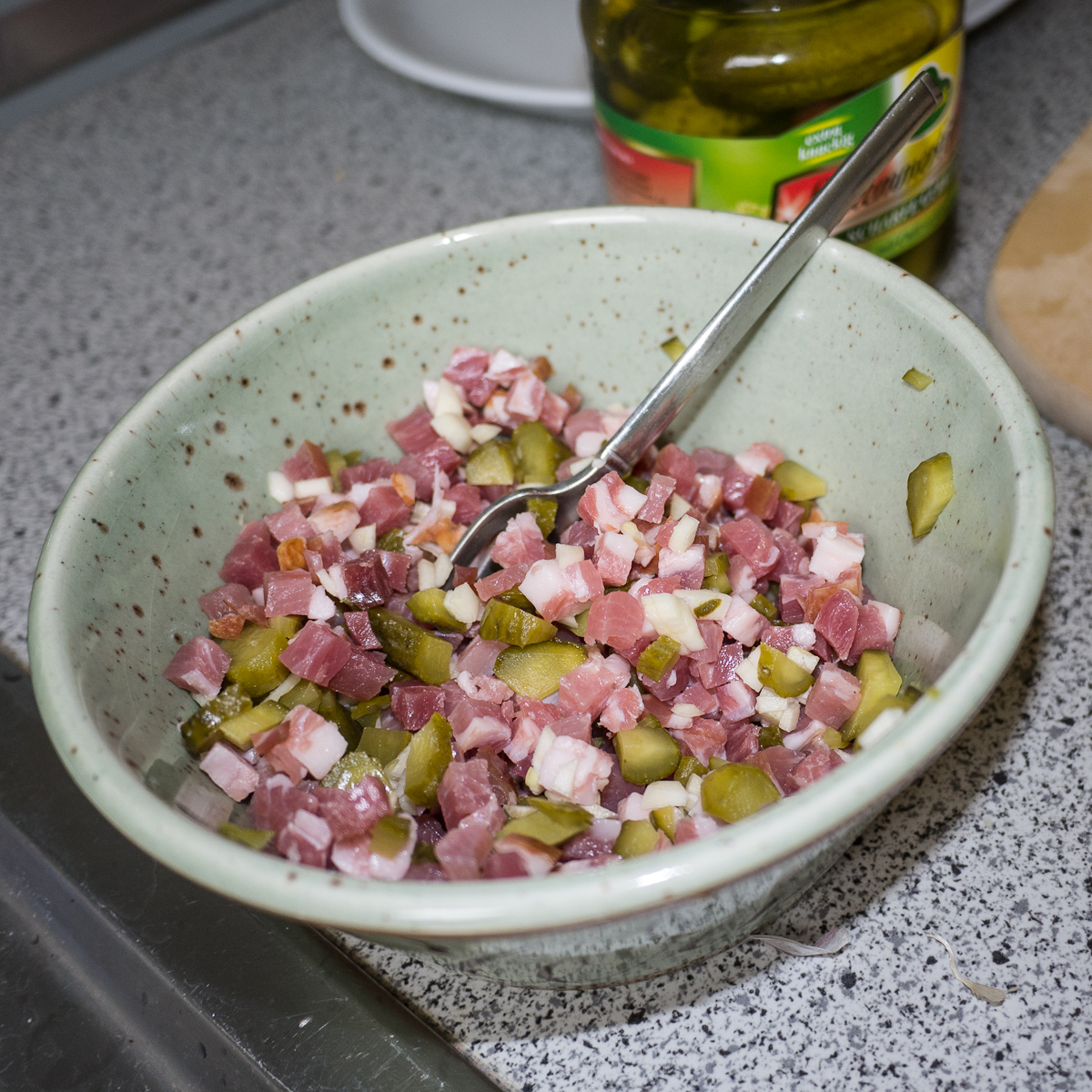
  2. Mix bacon, diced cucumbers, and finely chopped garlic and prepare them for the filling of the roulades
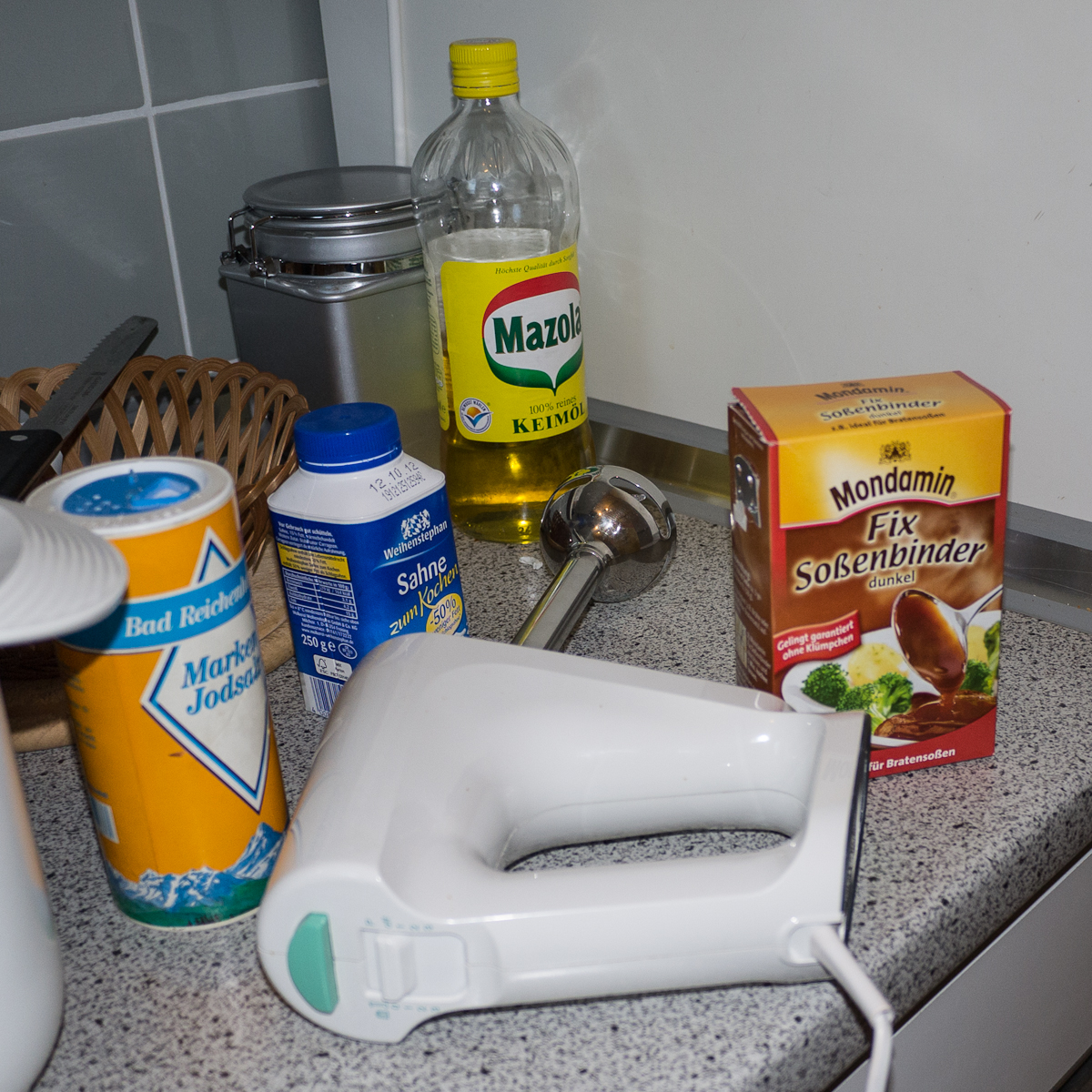
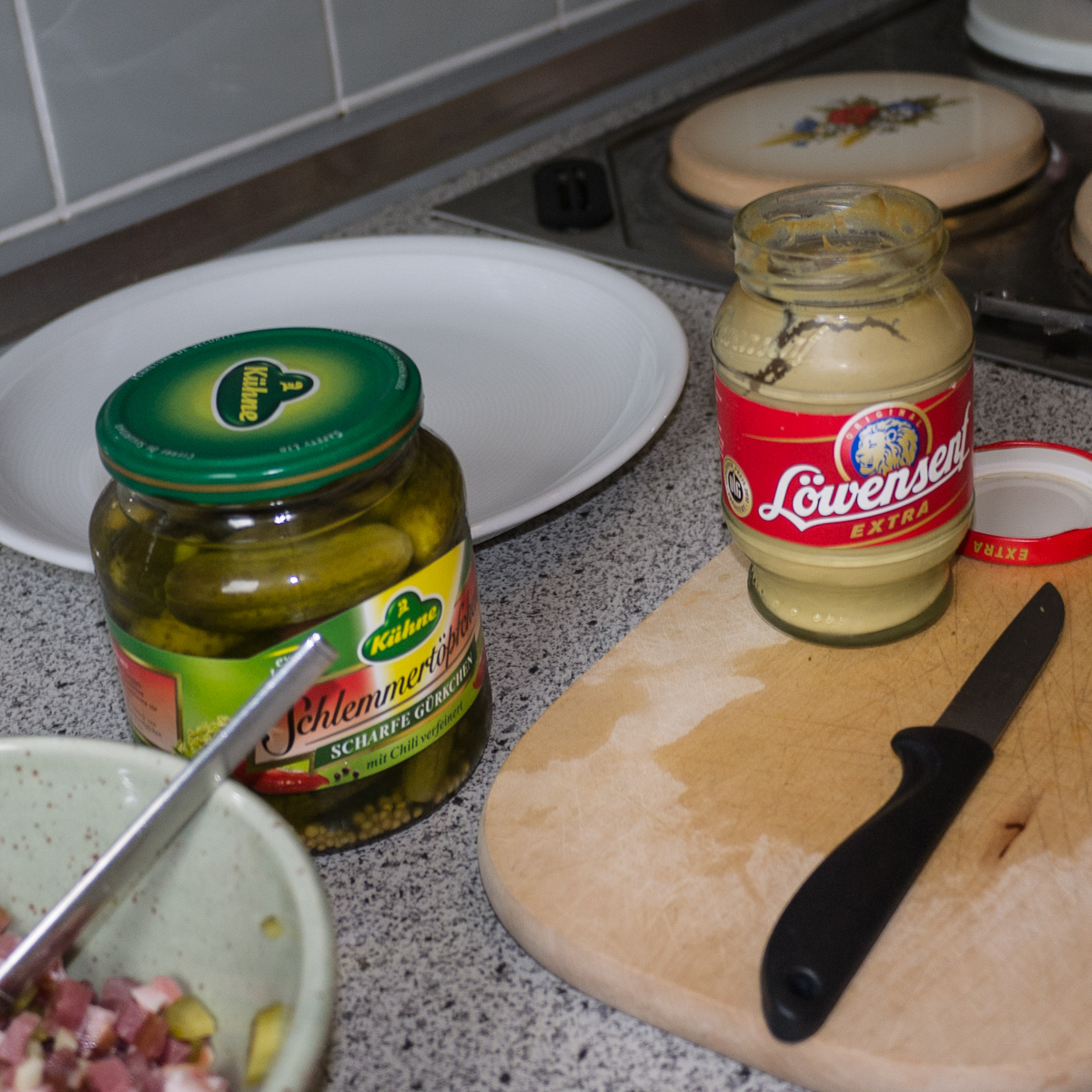
  3. You need sharp mustard to spread on the roulades. Also in the picture are the cucumbers - they were with chili on them, which are great for roulades.
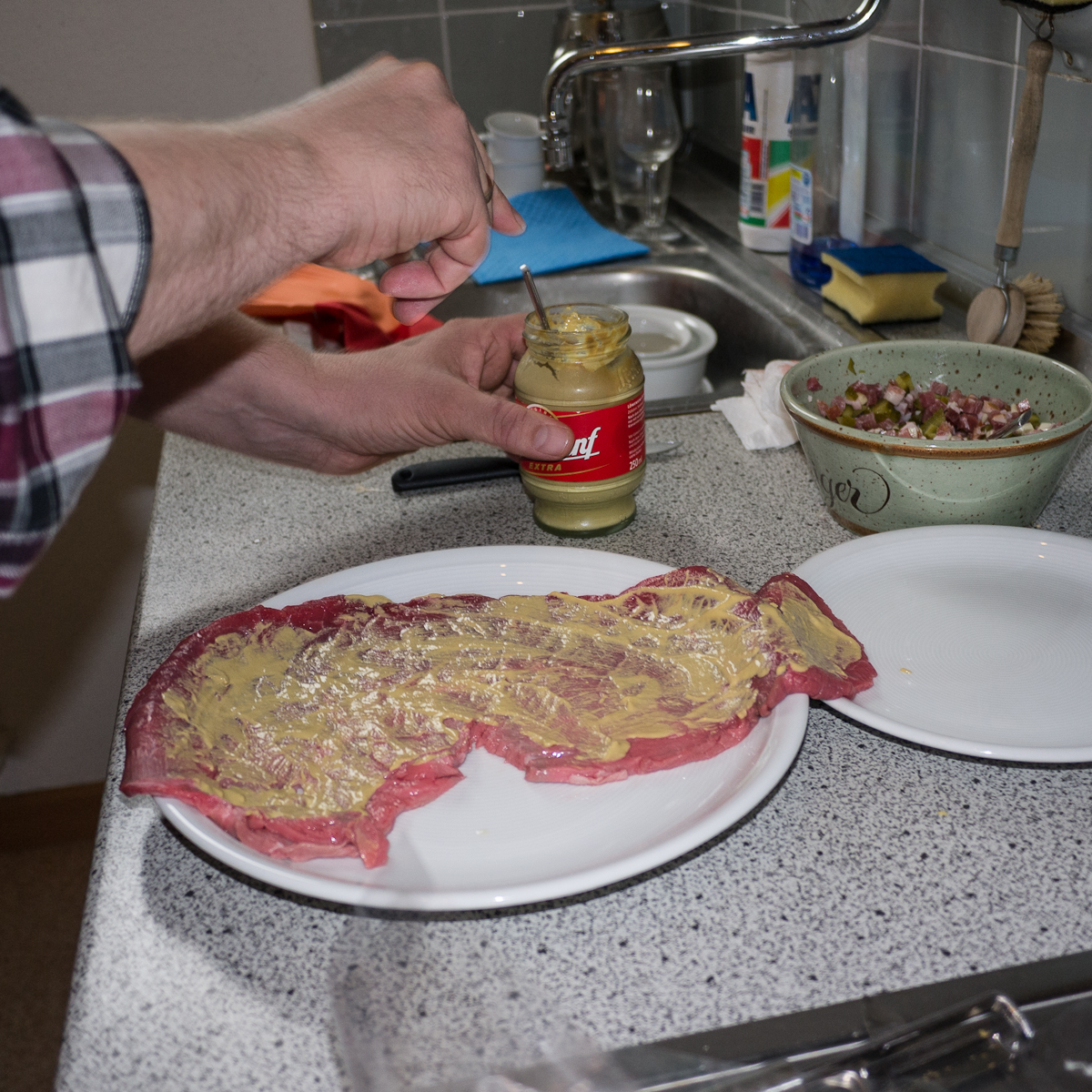
  4. Spread the mustard on the roulades, don't be too stingy.
  5. Distribute the filling on the roulades.
  6. Repeat the whole process with each roulade. Also visible are the roulade rings with which I hold the roulades together.
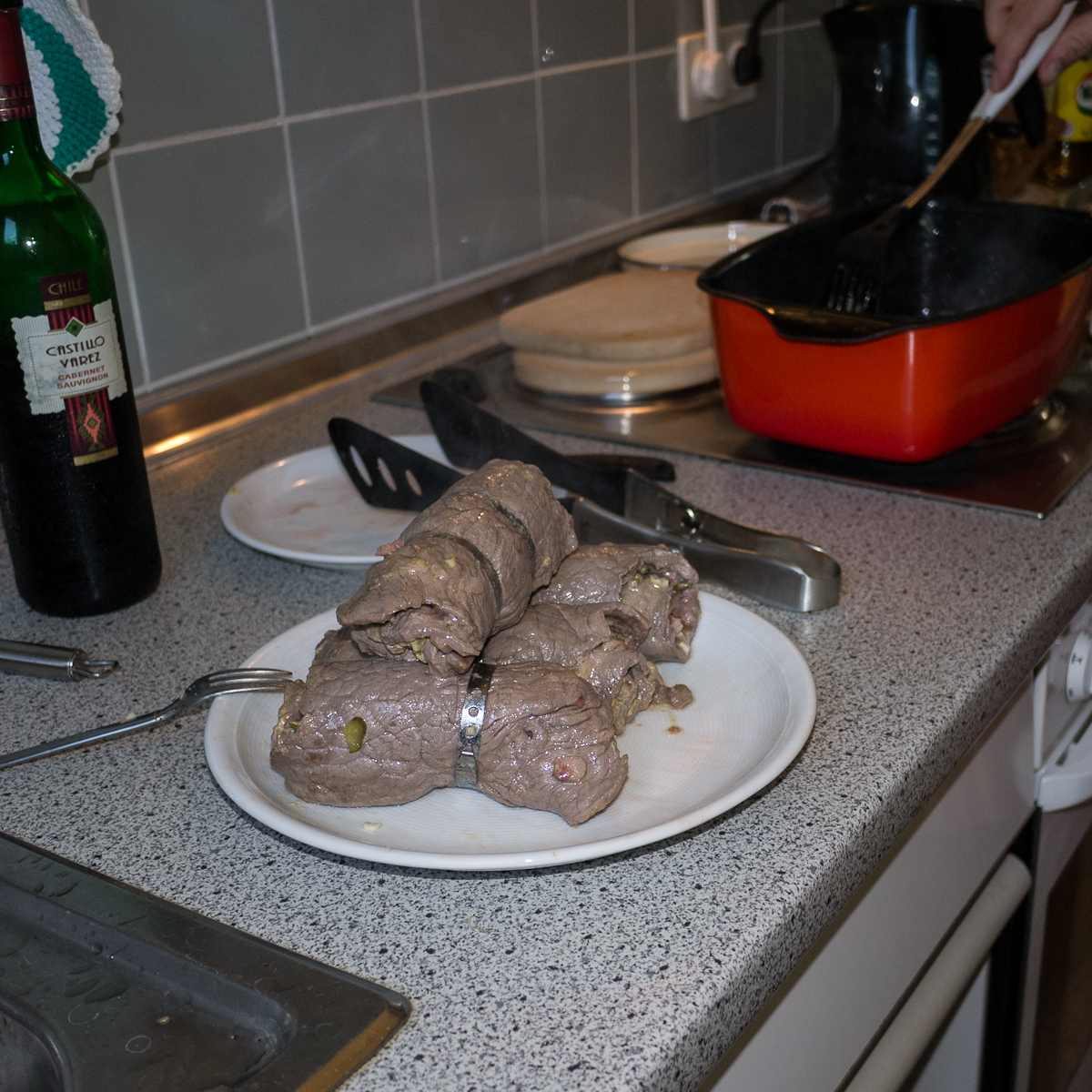
  7. Then all roulades are filled and rolled up.
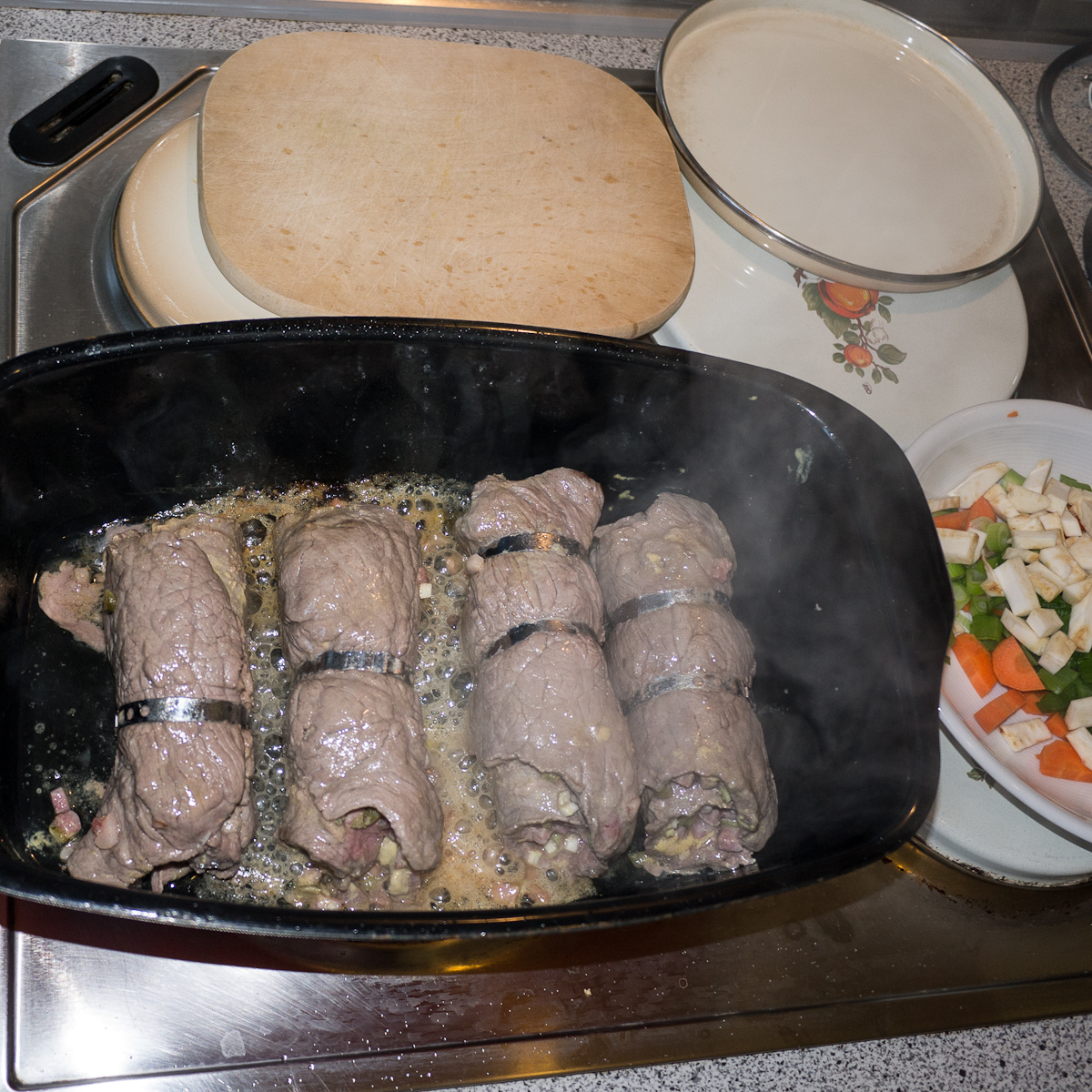
  8. Sear the roulades
  9. Until they are nicely browned all around.
  10. Remove the roulades from the pot
  11. And add the vegetables for the broth
  12. Sear and braise the vegetables thoroughly (for a few minutes)
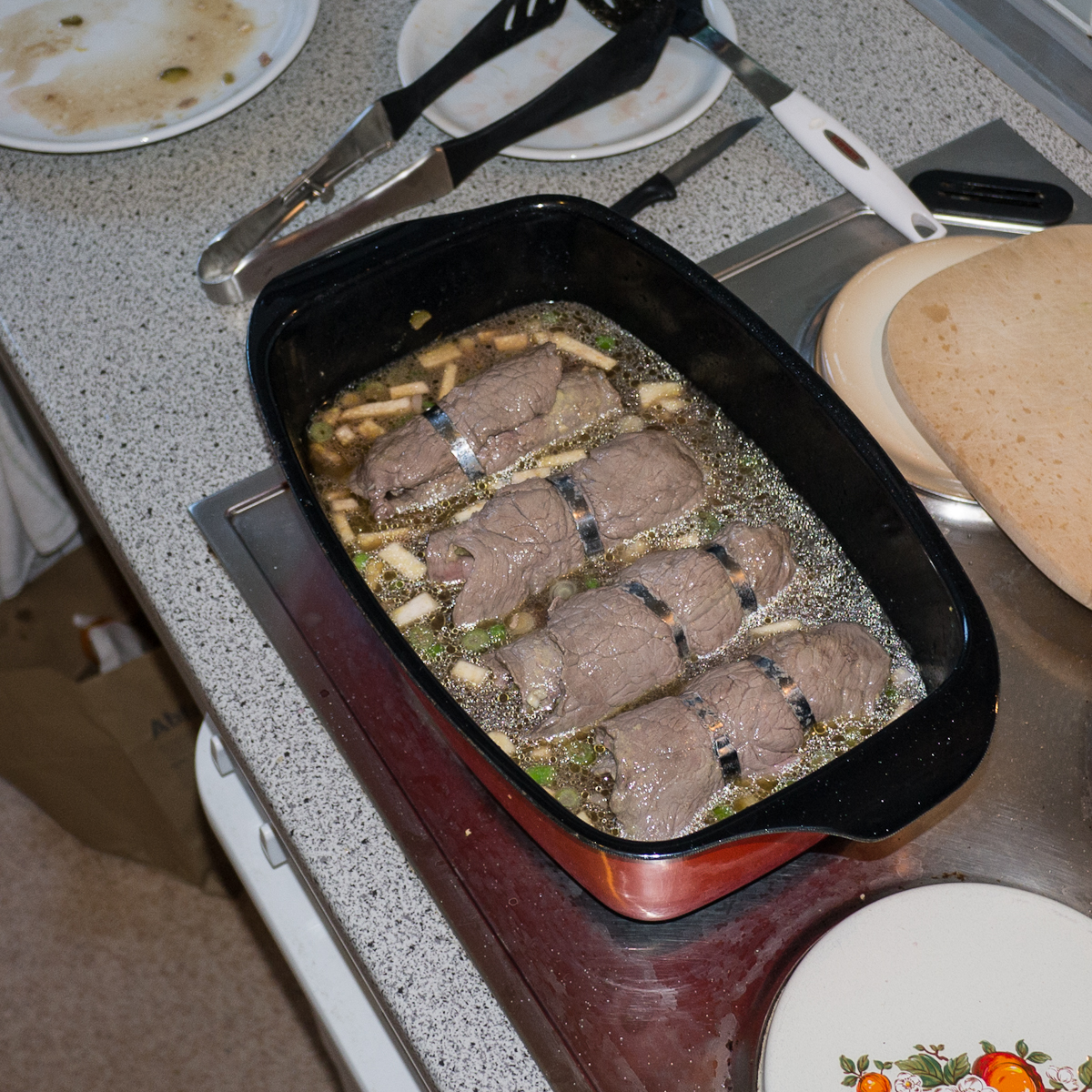
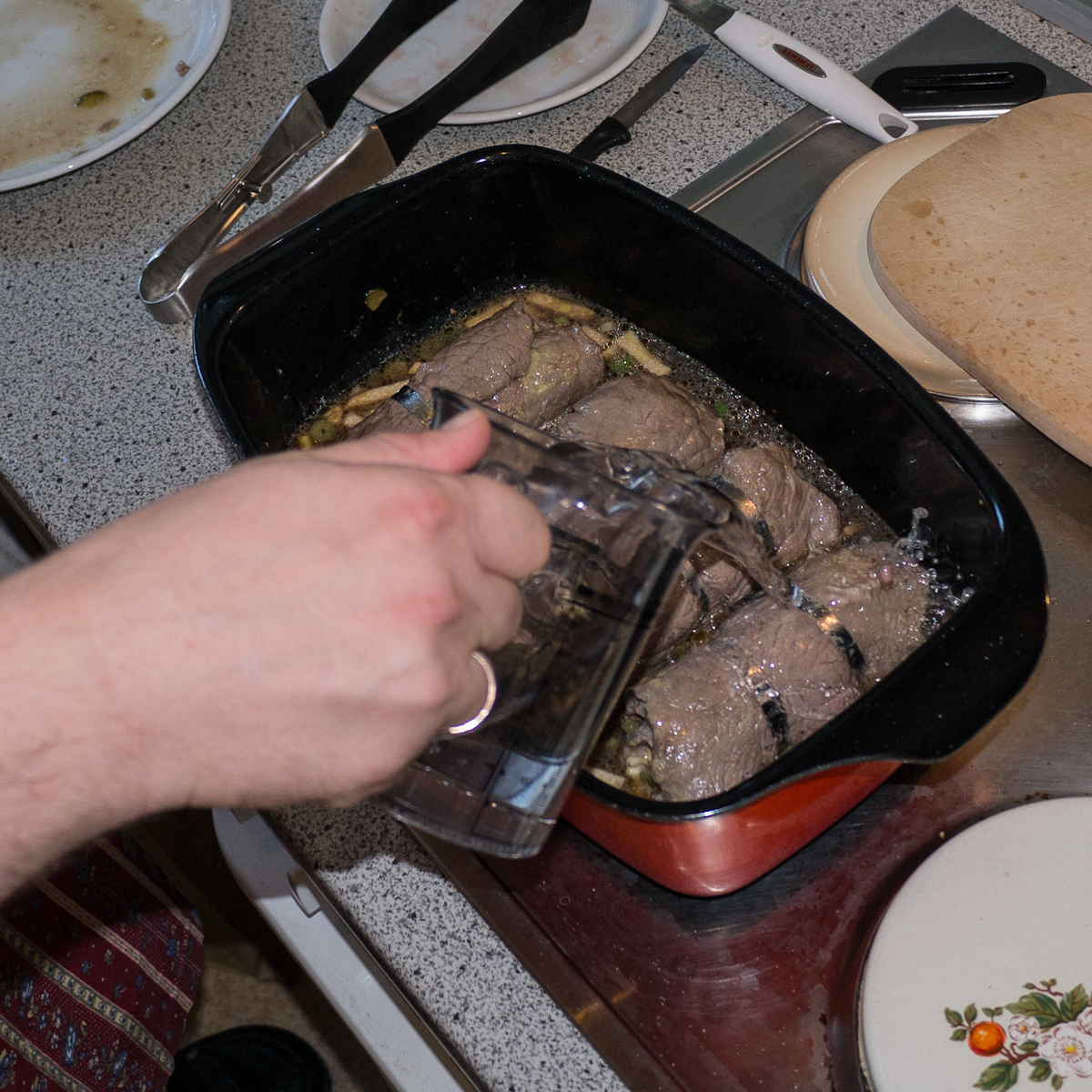
  13. Put the roulades back in the pot and fill with water and red wine so that the roulades are about 3/4 covered.
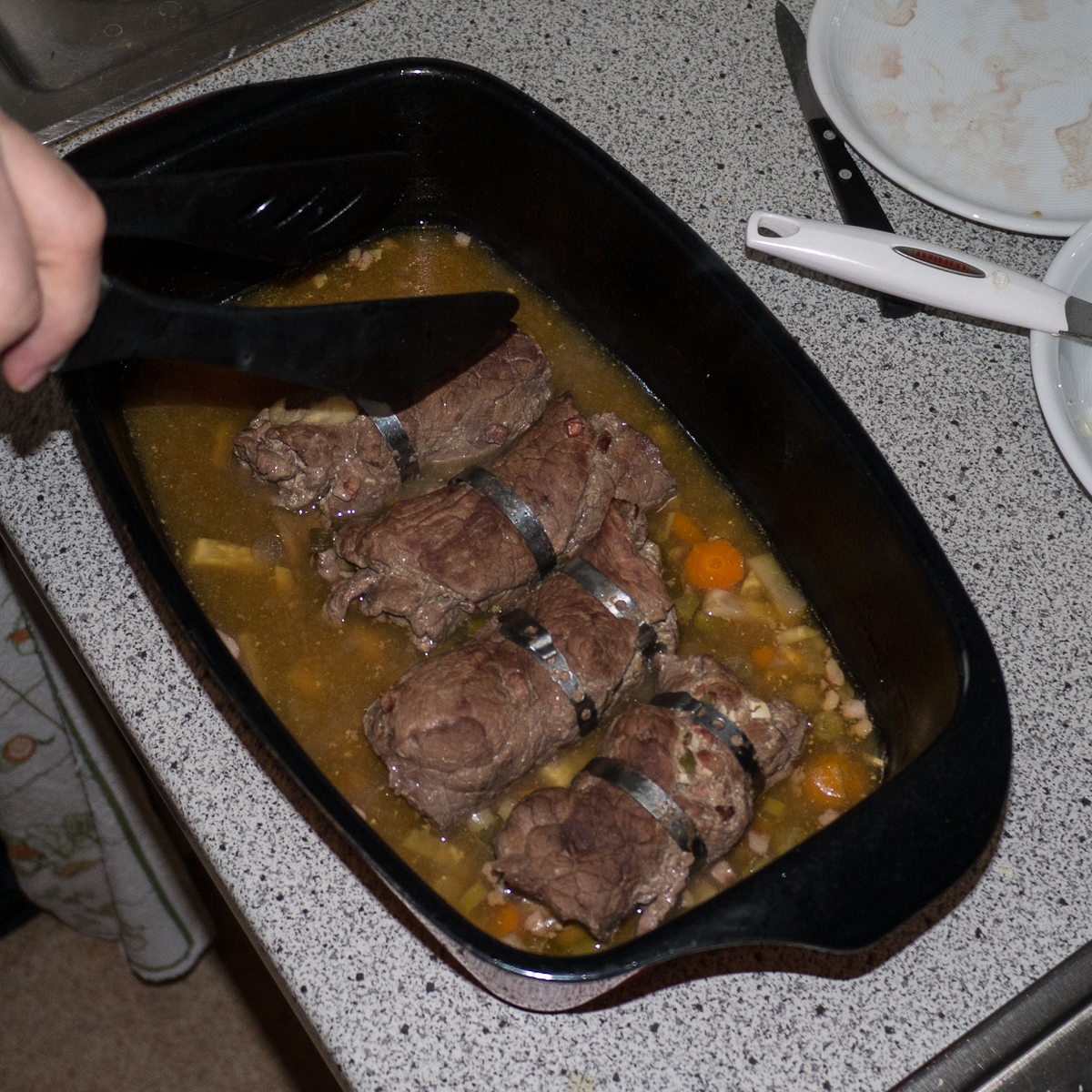
  14. Bring the broth to a boil and then braise the roulades for 2 hours at 190 degrees in the oven. The pot is hopefully oven-safe?
  15. Start with the parsnips about 1 hour before the end. (Well, it was more like 45 minutes before the end for us, but it was enough)
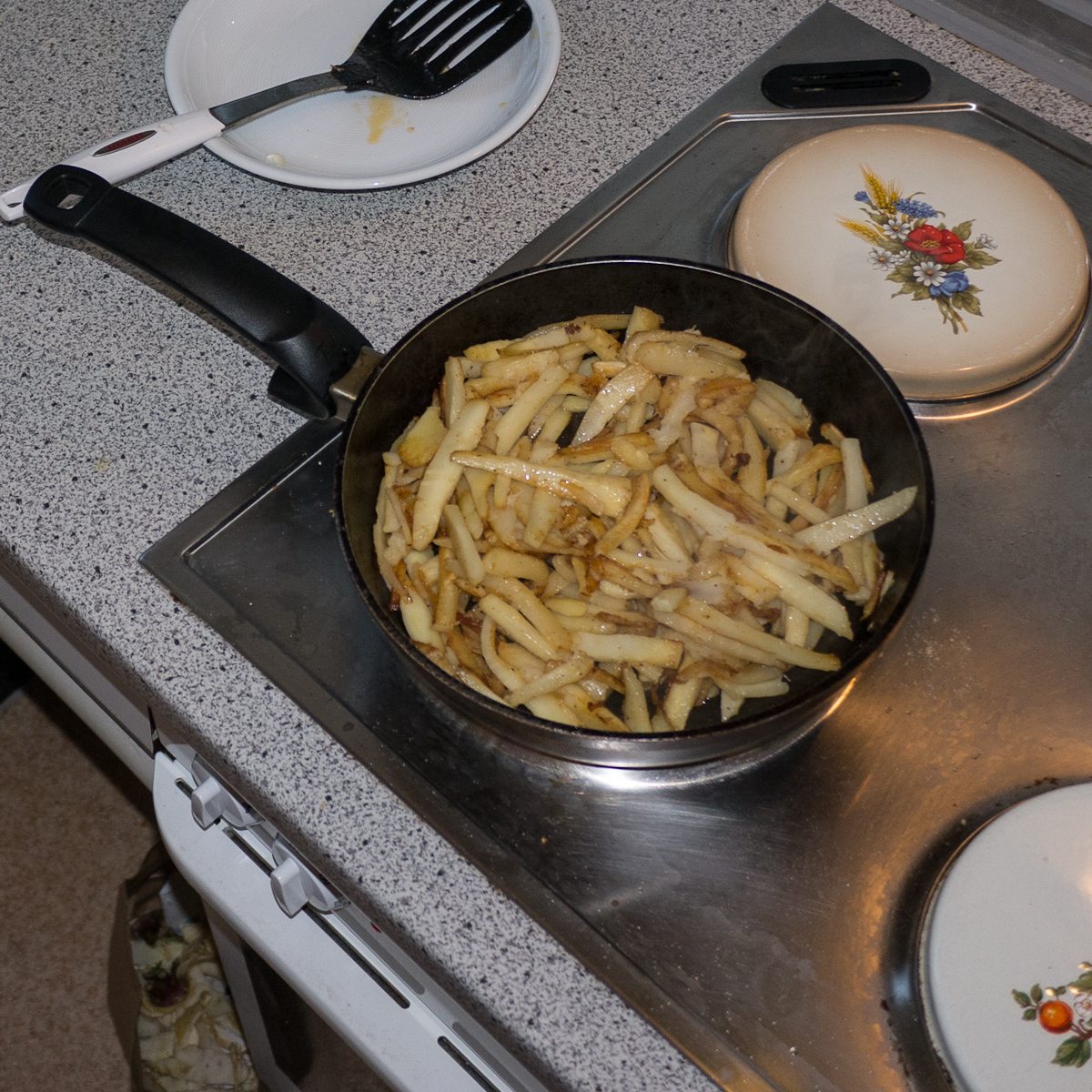
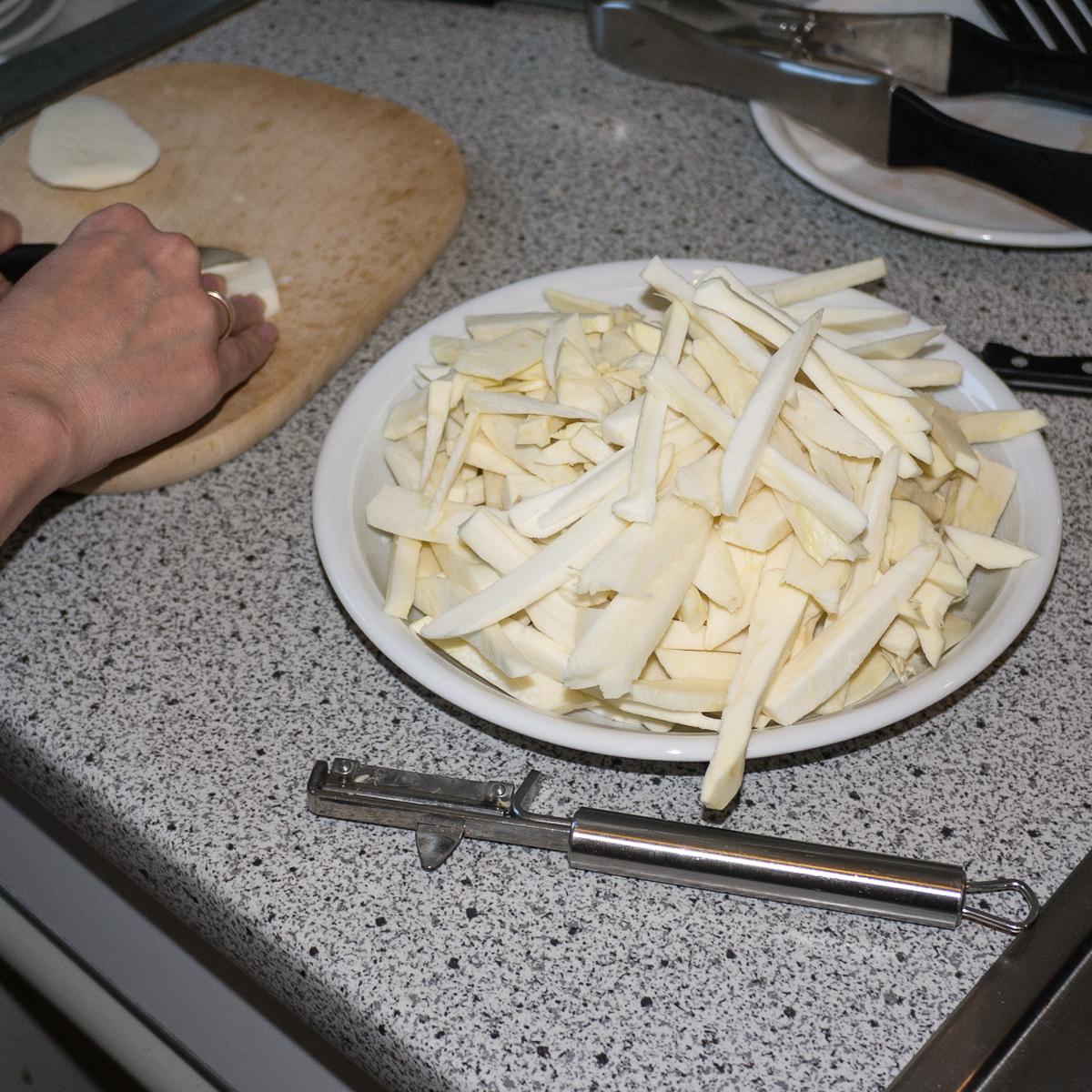
  16. Cut the parsnips into sticks
  17. Fry the parsnip sticks in the pan, season them with ginger, hot paprika, and pepper, braise them thoroughly until they are soft, then add some salt
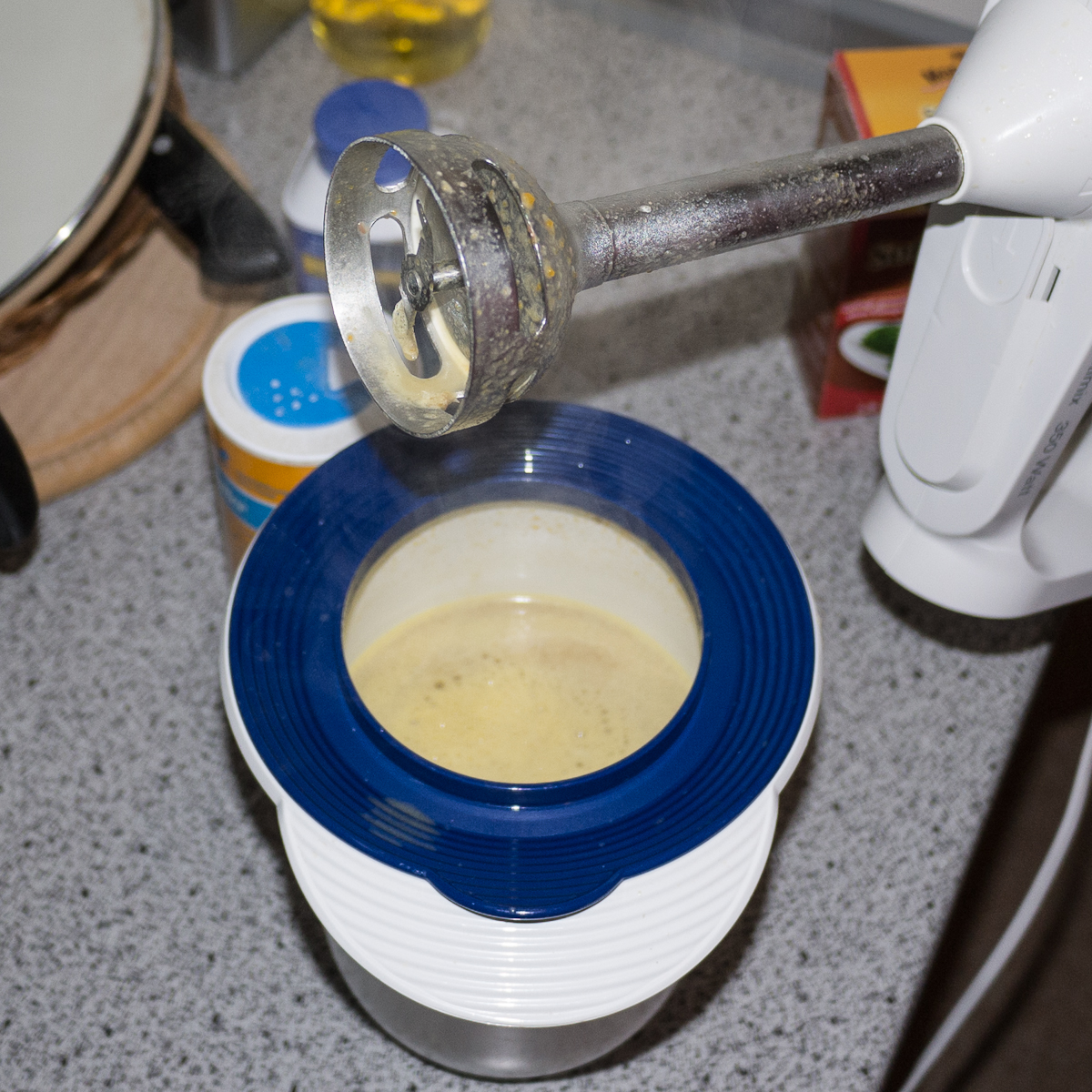
  18. The broth must be pureed and turned into a sauce with cream and sauce thickener
  19. When the roulades are done braising, remove them from the pot and puree the broth
  20. Mix the pureed broth with cream and then add the sauce thickener
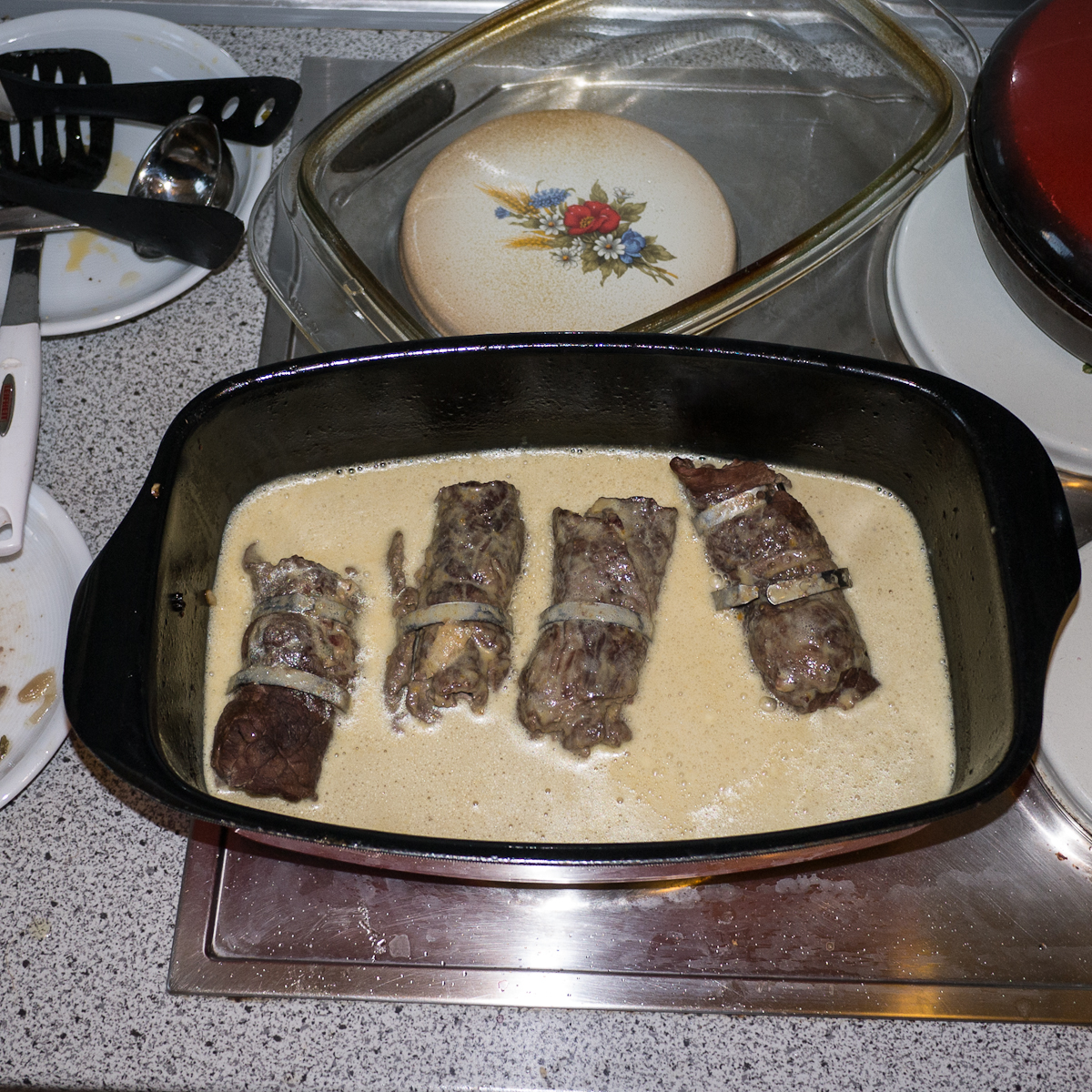
  21. Prepare the sauce back in the pot, bring to a boil, and add the roulades again so they lie nicely in the sauce. It just tastes better.
  22. Look forward to the meal
  23. And bon appétit!

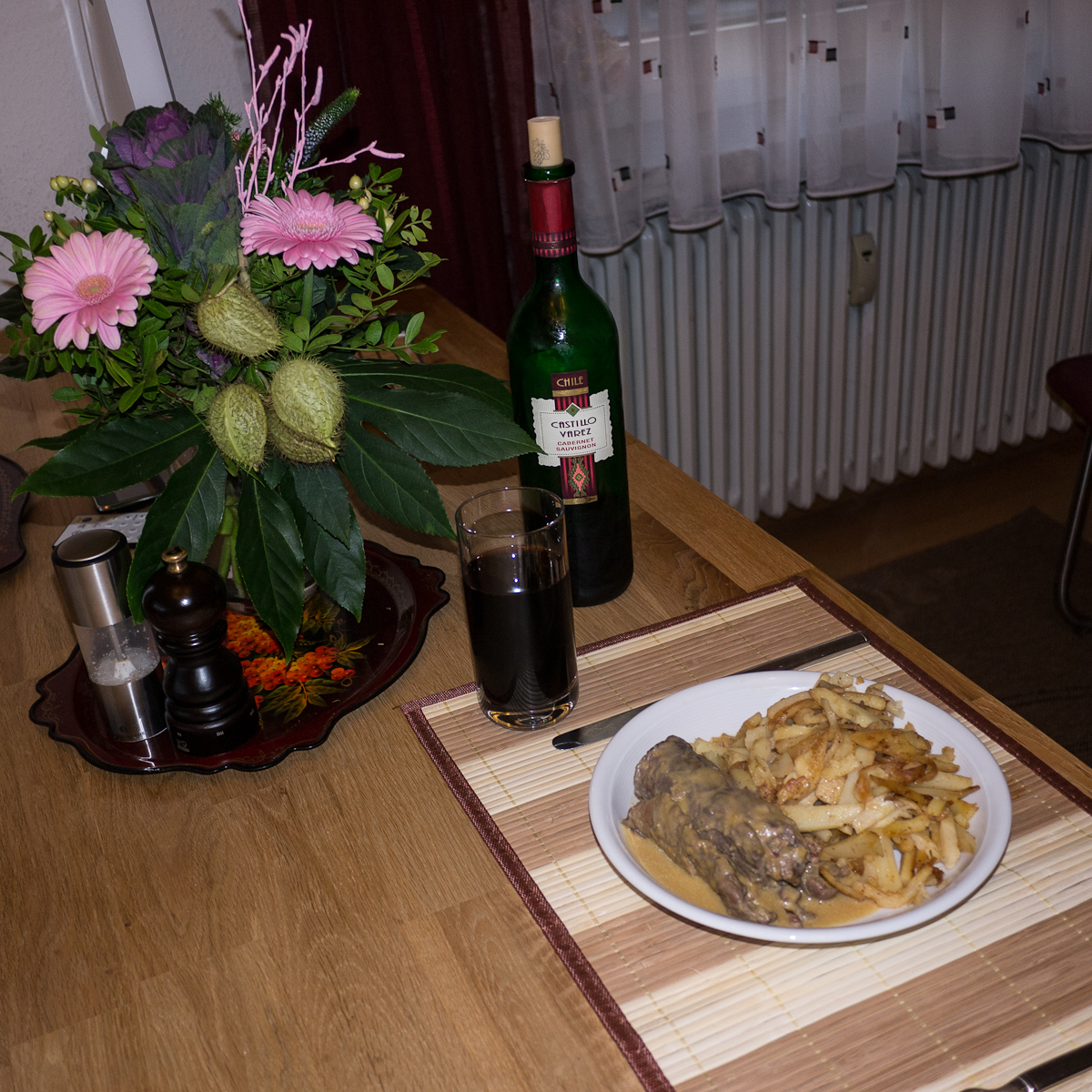
It was fun to cook and even more fun to eat. Very delicious. Parsnips are a bit like a mix of potatoes and carrots with a slight cinnamon note in the taste. It was the first time for us that we prepared and ate them, it was very delicious. And the roulades were absolutely the highlight this time.

Gumbo

Today something exotic - Gumbo. And then also a bit modified, because I felt like it. In principle, it's quite simple: Bacon cubes (250g), onions (we had two onions), garlic cloves (don't be stingy with them!) and a carrot cut into slices. Fry bacon in the pot, add meat (we had 300g beef goulash), fry well, add onions, garlic, carrot, and let it simmer. Then deglaze with a splash of red wine (not necessary, but I think a bit of red wine always belongs with goulash, even if it doesn't become goulash), add 1l of broth, bay leaf, ginger, and cumin as spices, let it cook for about an hour. Then prepare rice and while the rice is cooking, dice a bell pepper and add it to the soup, and also add a glass of okra pods (drain and rinse before using), let it cook for about 10 minutes (until the rice is ready). We also added some capers (soak them well and for a long time before using, otherwise they are too salty). Serve rice on the plate, pour stew over it. We had wine spritzer with it. So the ingredients summarized:

  • 250g diced bacon
  • 300g beef goulash
  • 1l beef broth
  • 1 carrot
  • 2 onions
  • 4-5 garlic cloves
  • 1 bell pepper
  • 1 glass of okra pods (approx. 400g, drain and rinse before use)
  • Ginger powder, cumin, salt, pepper
  • a few capers (soak well before use)

Beef Roulades

Yes, very simple, just beef roulades. With homemade filling, of course. The ingredients are quite simple, actually the hardest part is waiting for the long cooking time:

  • 4 beef roulades from the butcher (I don't know how to get the quantities for less, besides, 4 fit well in my pot)
  • 125g diced bacon
  • 5 small pickles (vinegar or even spicy seasoned, but better not the salty ones)
  • one thicker onion
  • two cloves of garlic
  • marjoram and rosemary as spices
  • sharp mustard
  • 500ml beef broth, red wine and tomato paste for the sauce (and the wine to drink with the meal)

The roulades are spread with mustard, then the filling (bacon, diced pickles, onions, garlic, spices) is placed on top, then rolled up and fixed with roulade clamps or kitchen string. Then the roulades are seared on all sides in the pot. Put the lid on the pot in between, because then more of the juice stays liquid and it doesn't splash all the time so terribly. Once the roulades are browned all around, remove them from the pot, set them aside somewhere, then stir the fond with the red wine, a little tomato paste and the broth. Bring the whole thing back to a boil, then put the roulades back into the soup and let it simmer for 1.5 hours. Remove the roulades and thicken the juice in the pot with Mondamin for the sauce. We also had leftovers from the vegetables last time, it also goes well with noodles or rice or potatoes or whatever you like with it.

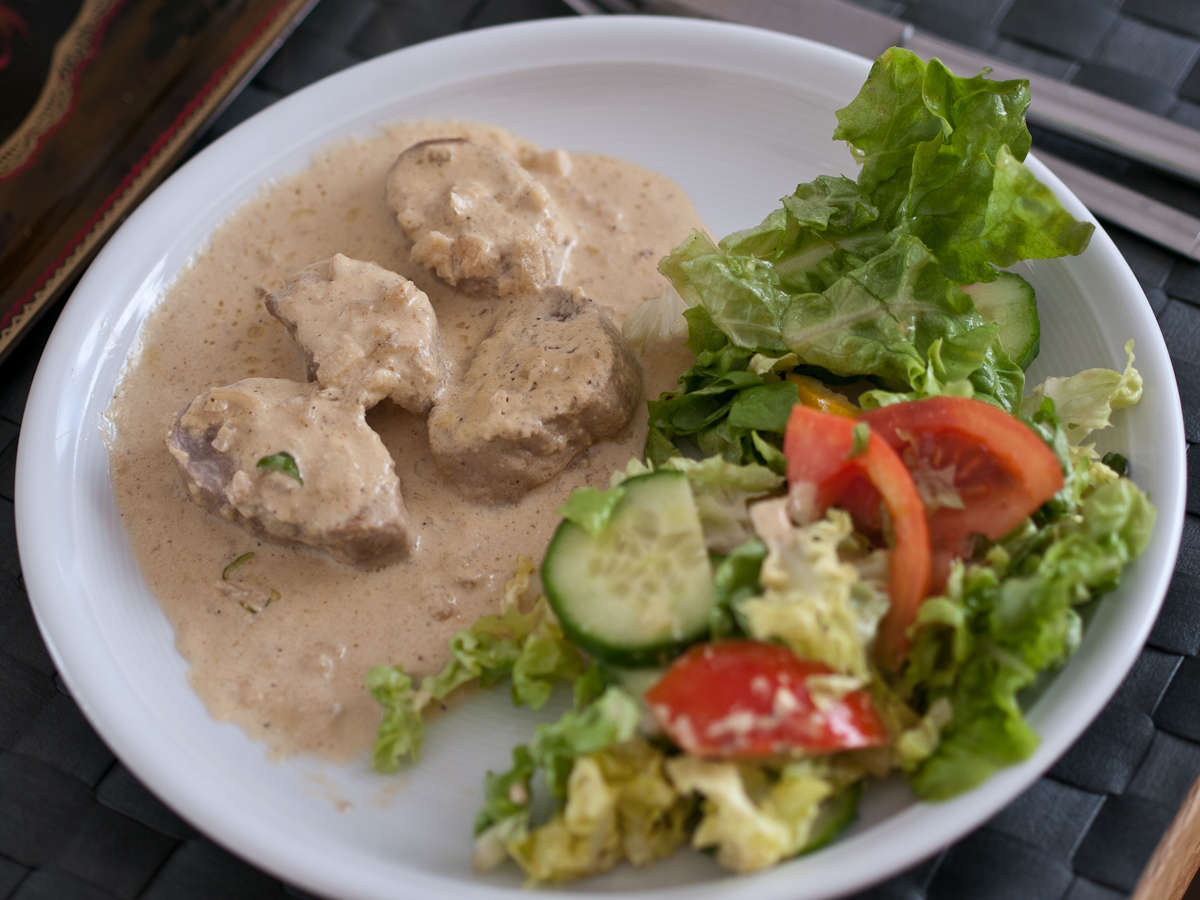
Pork tenderloin in mustard sauce

Pork tenderloin in mustard sauce This time it's quite simple and straightforward, so here's just a rough outline of how to prepare it. Two weeks later, I modified the recipe a bit, adding some extra spices (ginger, hot paprika, and coriander) to the sauce, which Juliana liked even better - a nice spicy sauce. So here's the preparation:

  • Cut the pork tenderloin (previously remove the skin and tendons) into 2-3 cm thick slices
  • Finely chop one onion and one large clove of garlic
  • Quickly and sharply sear the tenderloin pieces
  • Remove the tenderloin pieces and place them in a baking dish (or as I did, in an oven-safe pan)
  • Sauté the onions and garlic
  • Deglaze with white wine
  • Pour half a pot of cooking cream over it
  • Stir in 2-3 large teaspoons of mustard
  • Season with pepper and salt, add ginger, coriander, and hot paprika to taste
  • Pour the sauce over the tenderloin pieces in the baking dish
  • Bake in the oven preheated to 200 degrees for about 35 minutes

We had bread and salad with it. Delicious and not much effort.

Goulash in the Hungarian Style

Juliana had bought pork goulash but had no idea what to do with it - and then I suggested Hungarian goulash. After that, I had to go into the kitchen and cook. Goulash is quite simple, here just as a reminder for myself blogged:

  • 300g pork goulash
  • 1 onion
  • 2-3 cloves of garlic
  • 1 bell pepper
  • 1-2 tomatoes
  • 100ml red wine
  • 400ml water (colleague suggested using broth instead, gives more flavor)
  • Paprika powder (sweet and rose sharp)
  • 3 cloves, 3 bay leaves, 4 pimento seeds
  • Peppercorns, 1 tsp salt
  • Coriander, rosemary, thyme, marjoram, basil (or whatever spices you can think of, but these are relatively classic for it)
  • some tomato paste (mainly to balance the currently rather flavorless tomatoes)
  • 1/3 cup cream

The preparation is as follows:

  1. dice the bell pepper, tomatoes, onion, and garlic cloves (put on separate plates)
  2. sauté the onion and garlic cloves in a pot until translucent
  3. put the meat in the pot and sear it well
  4. add paprika powder (season generously!) to the meat and onions, stir quickly
  5. deglaze with red wine
  6. fill up with water
  7. put the diced bell pepper into the pot
  8. put in all the spices (especially cloves, bay leaves, pimento seeds, and peppercorns must simmer with the whole meat and broth, otherwise they do nothing)
  9. let everything simmer together for 45 minutes
  10. put in the tomatoes, let it simmer for 20 minutes
  11. add some tomato paste, simmer for another 10 minutes
  12. carefully stir in the cream just before the end

Goes well with pasta or maybe rice (but I prefer pasta). Or just with bread and some vegetables.

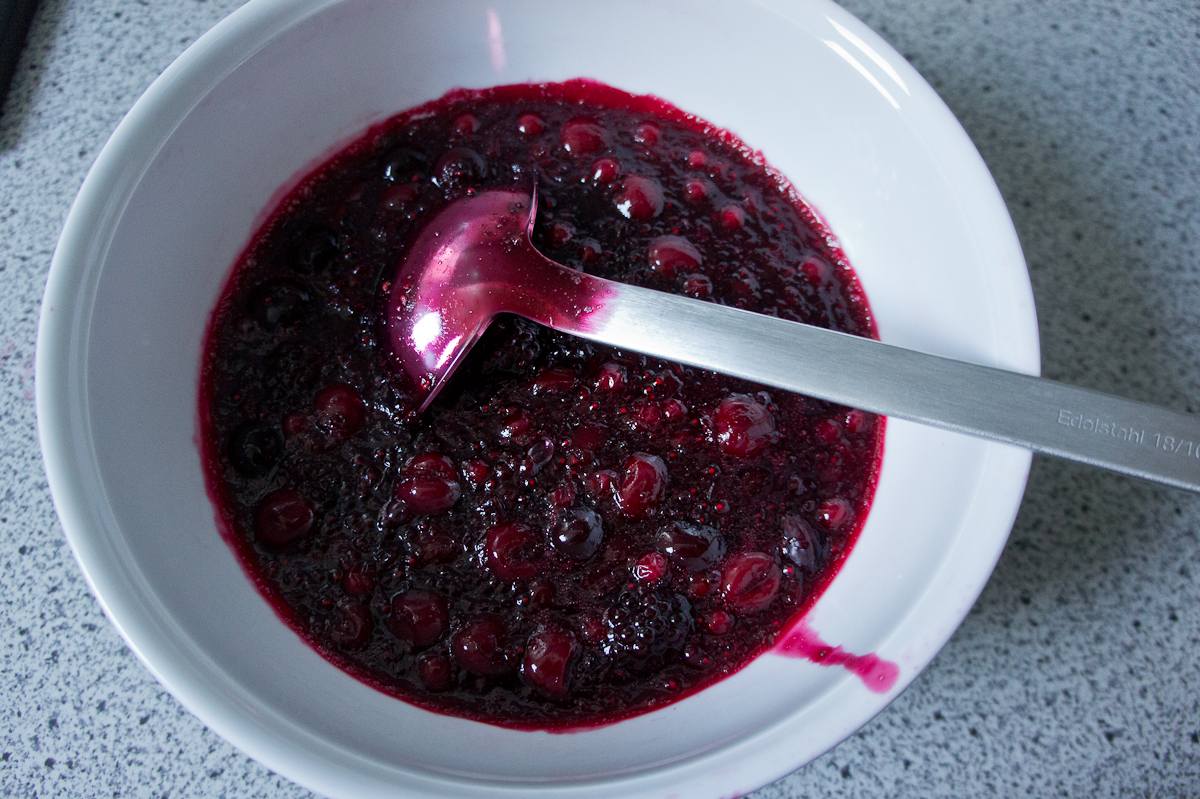
Red Berry Pudding

Red Berry Pudding Recently, Juliana and I ate Rote Grütze - and I had an urgent desire to make Rote Grütze myself afterwards. On Wednesday's market, we bought a lot of berries and this morning I stood at the stove.

The whole thing is quite simple actually. And it just tastes delicious. What goes in:

  • a jar of cherries (I had a 500ml jar, 375g fruit)
  • top up to 750g - 800g with fresh fruits (we had blackberries, blueberries, and red currants)
  • 50g sugar (those who prefer it sweeter can go up to 100g sugar)
  • we also had half a packet of vanilla sugar
  • the juice of half a lemon
  • about 50-60g sago (you can also use neutral starch)

The preparation itself is also quite simple:

  1. boil the juice from the cherries together with the lemon juice in a pot
  2. add about 1/3 of the fruits to the boiling juice and bring to a boil
  3. stir in the sugar and sago
  4. turn down the heat and let it simmer for about 30 minutes with frequent stirring (the sago grains should ideally all be clear and no longer stand out light - I stopped a bit too early, it might be easier with regular starch)
  5. when the pudding is nice and thick and the sago is clear, add the remaining fruits and simmer for 5 minutes
  6. then fill the pudding into bowls, let it cool, and put it in the fridge
  7. serve with vanilla ice cream (that's what we had today) or vanilla sauce, or cream, or even just some milk

The pudding becomes so firm and thick, just as I remember it, not as thin as you often get it - it's really more of a pudding and not a soup. And if you have a bottle of red wine open, you can also cook the red wine well with the pudding (but a glass of red wine is really enough).

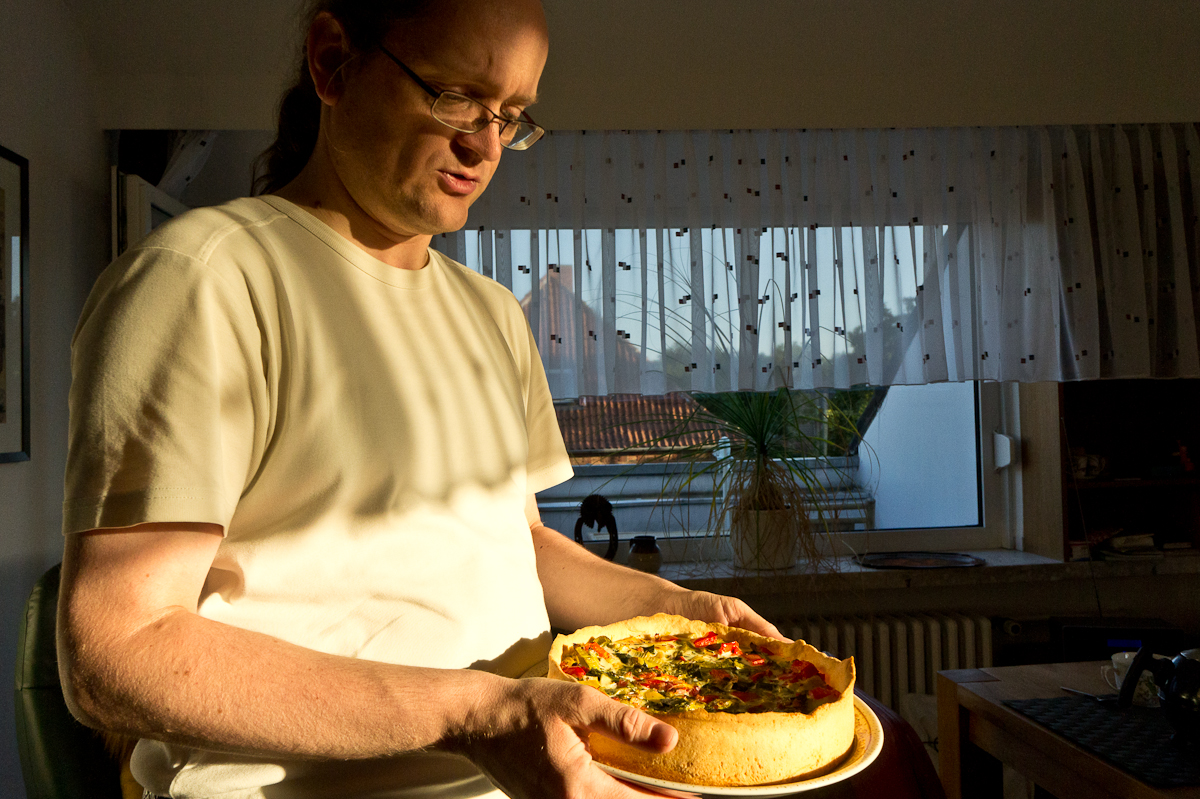
Operation Quiche successful

This time it was a quiche with bell peppers and leeks. I'll skip the explanation of how to make a quiche, as I've already done that here. So the dough and the egg mixture were the same as before. The vegetable filling was simply bacon, leeks, and later bell peppers in the pan. The egg mixture also contained fresh cilantro, and there was plenty of cumin in the vegetables. Since Juliana sautéed the bacon and vegetables this time, nothing was fried. And the dough was - thanks to a bit less milk - also much firmer and more stable. And somehow, we both ate way too much.

Piroggen (vegetarian, and not really Russian)

Piroggen Oh, that was quite a complicated task. Not because of the ingredients, that was rather simple. Nor was it difficult to prepare the filling, that was simple too. But then shaping and folding the pirogues and trying to get as much vegetable into these little beasts, that required some higher manual skill. Well, sometimes you have to tinker in the kitchen. By the way, these are not yeast dough pirogues - it's more like a kind of shortcrust pastry. The reason was that I thought it goes better with the filling. That was rather oriented towards a vegetable cake.

What goes in:

  • 225g flour
  • 145g margarine
  • 1/2 tsp salt
  • 2 eggs
  • 3 small peppers
  • a handful of black olives
  • 1 vegetable onion
  • a small bunch of spring onions
  • a few cloves of garlic (to taste)
  • basil and oregano, pepper, salt
  • another egg for the assembly

The preparation then yourself (the individual parts):

  1. Knead flour, eggs, salt and margarine into a dough
  2. Let the dough disappear in the refrigerator for an hour
  3. Chop onions and garlic finely
  4. Cut peppers into small pieces
  5. Cut olives into small pieces
  6. Preheat oven to 200C
  7. Fry onions and garlic in the pan
  8. Add peppers to the pan, simmer for 5 minutes
  9. Add olives to the pan, season, simmer together for a few more minutes
  10. Cover the pan and push it to the back (it will cook a bit more)
  11. Separate the third egg into egg white and yolk
  12. Take the dough out of the refrigerator and roll it out
  13. Cut round pieces with a large cup (mine were about 10cm in diameter)
  14. Brush the edges with egg white (as glue)
  15. Put the vegetables in the middle of the dough circle and fold it half together, press the edges together
  16. Do this until the dough and/or vegetables are all gone
  17. Then brush the folded pirogues with egg yolk from above
  18. And bake the whole thing for 20 minutes at 200C

The folding was quite complicated. The dough must be quite thin, otherwise you have more dough than filling afterwards, which is rather stupid, so the dough is sensitive and folding and folding more complicated. And the dough should stay - mine rose, I did not glue the sides well enough (I read as a tip to press with a fork afterwards - unfortunately only when mine were already in the oven).

If possible, you should prepare the vegetables early and then wait for the dough in the refrigerator, then the vegetables are not so warm anymore - makes wrapping easier. And the filling can of course be changed freely - for example, one with minced meat is great, cabbage is classic, but other vegetables also work - everything just has to be cut small enough so that you can fold.

Quiche Ratatouille

Well, I had a decent amount of ratatouille left over from yesterday - and I didn't want to eat pasta again (and there's no rice left). So I looked up what you need for a quiche and realized that I pretty much have everything. So I just brought the few missing things from the train station and got started. This went into the quiche:

  • 250g flour
  • 110g margarine
  • 1 tsp salt
  • 50ml water
  • 1+3 eggs (one for the dough and 3 for the topping)
  • 125ml milk
  • 200g sour cream
  • spices
  • ratatouille (I still had some from yesterday, but honestly - it works with any vegetable stir-fry)

The preparation is also quite simple:

  1. Mix 1 egg, flour, water, salt, margarine together and knead into a dough (a three-mix is really practical)
  2. Wrap the dough as a lump in foil and refrigerate for 30 minutes
  3. Preheat oven to 200 degrees
  4. Mix 3 eggs, milk, sour cream and season (taste what and how much spices should go in)
  5. When the dough comes out of the fridge, put it in a springform pan and distribute it (press with your hand) so that it covers the bottom and the edge - about halfway up the edge
  6. Poke holes in the dough at the bottom with a fork and pre-bake for about 15 minutes
  7. Take the cake out and add ratatouille and distribute
  8. Pour the egg mixture over it so that the vegetables are well covered and the cake is filled to the edge. Do not pour over it, otherwise there might be some mess in the oven (not every springform is tight).
  9. Bake for 30 - 40 minutes (it was 35 minutes for me)

The result was surprisingly good. A mistake I made: the dough was a bit thick in the corners and that doesn't taste so great, simply because the dough itself is quite bland. But you can get that right with a bit of practice and finesse. And I can season the egg mixture a bit more, that was also a bit little (ok, I'm rather a light seasoner, so it was ok for me, but Juliana would certainly complain). In any case, a brilliant second use for a vegetable stir-fry.

However, I still have a problem: from yesterday I only had one portion of ratatouille left. Now I have 3/4 quiche left ... (I think I know what I'll be eating this week in between)

Stuffed Peppers in a Tomato Bed

Sounds good, doesn't it? Tastes good too. This time, it wasn't terribly complicated to prepare the meal, although you do have to juggle several pots and pans (okay, one pot, one pan). In my case, the pot was a casserole because the peppers were really huge. Here's what I put in:

  • 2 large peppers
  • 250g mixed minced meat
  • 100g feta cheese
  • a handful of olives (black, natural, pitted)
  • 6 tomatoes
  • tomato paste
  • half a bunch of basil
  • 1 onion
  • 1 1/2 cloves of garlic

The preparation is quite simple; you should have a large pot or casserole ready, in which you can comfortably place the peppers. Otherwise, it went like this:

  1. Chop onions, chop garlic, put both on a plate
  2. Chop olives, put on a plate
  3. Chop tomatoes, put on a plate
  4. Chop basil, put on a plate
  5. Preheat the oven to 200° so it can preheat
  6. Heat the pan with olive oil
  7. Sauté onions and garlic in the pan until translucent
  8. Add the minced meat, fry until crumbly (just like for Bolognese - simply use the pan spatula to break up the clumps)
  9. Once the minced meat is nicely browned and mixed with the onions and garlic, add the olives
  10. Reduce heat and add some of the tomatoes (amount about 1-2 tomatoes), add some tomato paste, mix, cover, let it cook for 5 minutes, season with spices (in my case oregano, thyme, pepper, salt)
  11. Remove the lid, increase heat slightly, add the feta cheese and mix well, let it melt
  12. Once the feta cheese is well mixed with the minced meat, turn off the heat
  13. Cut the tops off two peppers, remove the core, remove the "ribs"
  14. Fill the peppers with the minced meat mixture, cover with the tops (previously also remove the core and stem there, basically only a ring remains)
  15. Distribute the remaining tomatoes and basil in the large pot, place the peppers in it
  16. Tip: if they don't want to stand up, make a tripod for the peppers with meat needles at the bottom, then it holds
  17. Put the whole thing in the preheated oven and let it simmer for 20 minutes
  18. After 20 minutes, take it out and serve on plates, blend the tomatoes and basil with a triple mix

For me, as usual with bread, but pasta or rice go wonderfully with it. This doesn't result in such a pudding-soft pepper, it should still have a bite. And the filling is not the usual concrete block, but rather comparable to a thick Bolognese. For me, there was still a beer with it, simply because the weather outside was shouting "beer" with all the sun today.

Minestrone for the whole family

Well, I simply refused to take less than a whole vegetable each, and suddenly there was quite a lot. So better have a large pot ready! But the minestrone tastes damn good. What I put in:

  • 1 bell pepper
  • 1 zucchini
  • 3 tomatoes
  • 3 celery stalks
  • 1 large carrot
  • 3 small potatoes
  • 100g streaky bacon
  • Parmesan with rind
  • 150g green beans
  • 2 purple onions
  • 2 cloves of garlic
  • 1/2 bunch basil (fresh)
  • 1 tablespoon tomato paste
  • a handful of olives (black, pitted, natural)
  • 1l vegetable broth
  • 50g butter
  • olive oil
  • approx. 50g spaghetti (broken into pieces)

The preparation is really hard work and in the first phase there is not much peace. And it's best to group the vegetables as indicated below, because they go into the pot one after the other - everything is first fried. But otherwise it's actually quite simple:

  1. Dice the bacon and put it on a plate
  2. Dice the onions and garlic and put them in a small bowl
  3. Dice the potatoes, celery, and carrots and put them in a bowl
  4. Chop the beans and put them in a bowl
  5. Dice the bell pepper and zucchini and put them in a bowl
  6. Heat the pot with olive oil and the butter
  7. Fry the bacon for 2 minutes in it (stir vigorously!)
  8. Put the onions with garlic in the pot and fry for 2 minutes (stir vigorously!)
  9. Put the potatoes, celery, and carrots in the pot and fry for 2 minutes (stir vigorously!)
  10. Put the beans in the pot and fry for 2 minutes (stir vigorously!)
  11. Put the zucchini and bell pepper in the pot and fry for 2 minutes (stir vigorously! if your arm feels like it's about to fall off: that's normal, keep stirring!)
  12. Put the lid on, turn down the heat and let the vegetables simmer for 15 minutes, stirring occasionally
  13. The arm can't rest unfortunately, because now the tomatoes are diced and if desired the olives are cut small (I always leave them whole in soups).
  14. Before the 15 minutes are up, throw in the olives (after about half the time)
  15. Chop the basil
  16. When the 15 minutes are up, put the vegetable broth in the pot, stir
  17. Put in the tomato paste, chopped tomatoes and basil, season with pepper and salt
  18. Throw in the parmesan rind (I tie it with kitchen string so it's easy to fish out again)
  19. Bring to a boil, turn down the heat and let it simmer gently for an hour (on my monster pot half a point on the electric stove is enough)
  20. Fish out the parmesan rind and throw it away
  21. Put in the spaghetti and cook for 10 minutes

I then eat the whole thing simply with bread. You can also put sour cream in the soup, or very Italian, grate parmesan on top. With a glass of wine.

Beef Rolls with Ratatouille

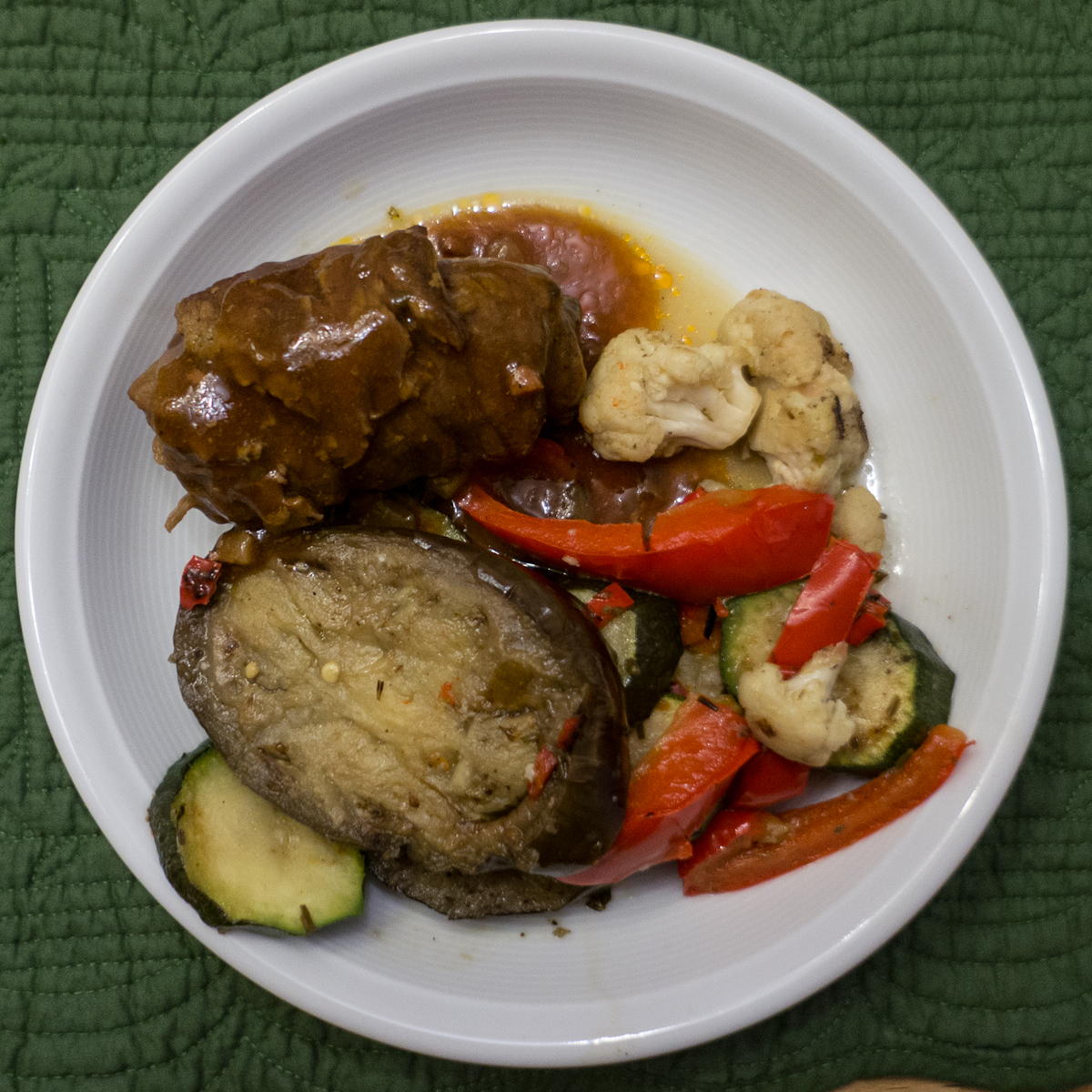
Well, that was today's cooking experiment. Partial success, because I completely miscalculated the quantities (no problem, there's a freezer and delicious rations for another day are also quite nice) and the ratatouille was somehow overcooked today. But that's what happens when you want to handle several pots at once, it doesn't work perfectly the first time. But the roulades were great - although gigantic. Only recommended if you're really hungry! I cooked some ahead of time (using a roasting pan for just one roulade would be silly), gives about 3 servings:

  • 3 horse meat roulades (careful, these things are rather XXL size, one is enough per person!)
  • 300g mixed minced meat
  • Pitted black olives "natural" (about 10-15 pieces, depends on the size - and the taste)
  • 1 onion
  • 3 cloves of garlic
  • Mustard (I had a nice spicy fig mustard, but a simpler medium-spicy one should also work), about 3 tablespoons
  • 1 carrot
  • half a celeriac
  • 1 bay leaf
  • 2 cloves
  • some peppercorns
  • 100ml red wine
  • 200ml broth (probably should have been more, the sauce was a bit meager)
  • 3 bell peppers
  • 1 eggplant
  • 1 zucchini
  • 1-2 tomatoes
  • Basil, oregano, thyme, or whatever spices you like
  • Pepper and salt as usual
  • Olive oil

For the preparation, it's best to start with the roulades and their filling - because that takes the longest and the roulades simmer in the oven, so you can then prepare the ratatouille in peace.

By the way, for the dish, it's advisable to have a roasting pan - those are these gigantic and very heavy pots in an oval shape that you know from your mother's roasts. Expensive, heavy, annoying, but with the size of the horse roulades, don't even think about a normal pot, take a roasting pan right away.

  1. Chop onion and garlic finely
  2. Chop olives finely
  3. While we're at it, chop eggplants finely and soak in salted water (sometimes they are bitter, so they need a bath before use)
  4. Mix minced meat, onions, garlic, and olives thoroughly. You can also add spices (thyme, oregano) here. Basically the distribution: meat spicy, vegetables rather mild, so here the slightly stronger things.
  5. Spread roulades flat (and wonder what you manage to do with them - the things are gigantic!)
  6. Spread each roulade with a tablespoon of mustard
  7. Then distribute the filling
  8. Roll up the roulades and secure with roulade rings or roulade needles (rings worked better for me - two per roulade, because of the size)
  9. Chop celeriac, carrot (and if desired another onion!) finely
  10. Preheat the oven to 170°
  11. Heat oil in the roasting pan, sear the roulades from all sides for a few minutes
  12. Remove roulades, set aside on a plate, add celeriac and carrot pieces to the roulade broth and fry
  13. Add cloves, bay leaf, and peppercorns
  14. Fry everything well, it should leave traces on the vegetables
  15. Deglaze with red wine (pour over)
  16. Bring everything back to a boil
  17. Pour in the broth
  18. Bring everything back to a boil
  19. Put the roulades back in the roasting pan
  20. The liquid should not be too little at the bottom, because some of it will still boil away and then the roulades will become dry, so if necessary, fill up with some water (or if you have any left, broth)
  21. Bring to a boil briefly
  22. Put the roasting pan with the roulades in the oven and let them simmer there for about 1.5 - 2 hours. In between, you should turn the roulades over (1-2 times).

Now that the roulades are simmering - and that takes time! - it's a good time to clean up in the kitchen and wash all the plates and bowls that you used in between because you panicked that there was no surface for the tongs, or the vegetables also had to wait somewhere for their destiny or something similar. Take a short break and relax, ratatouille is actually quite simple. About 30 minutes before the roulades are done, start with the rest:

  1. Chop bell peppers and zucchini into small pieces, keep eggplants separate, they need longer (optimal would be to keep all three vegetables separate)
  2. If desired, add an onion and some garlic - you can simply do this with the roulades above and take some for the ratatouille
  3. Chop tomatoes finely (if you want, you can pre-cook them in hot water and then peel - I don't have problems with tomato skin and save myself the trouble)
  4. Heat oil in the pan
  5. Add eggplants and pre-fry (here you would also add the onions and garlic)
  6. When the eggplants start to become translucent, add the zucchini
  7. When the zucchini starts to become translucent, add the bell peppers and tomatoes
  8. Fry everything thoroughly and season. The tomatoes should fall apart, but the other vegetables should still be recognizable in their shape.
  9. Put the lid on the pan (your pan has a lid, right? If not, it's difficult!) and let it simmer for 5 minutes (that was my mistake, too long, became too soft - the 5 minutes are an estimate from me, I had more)

When the ratatouille is ready, the roulades should also be ready. So take the roulades out of the oven and put them on the plates. If you want sauce: simply strain the vegetable-broth mixture from the roasting pan through a sieve and then add some water to dilute and make sauce with sauce thickener. Is currently still theoretical for me, as there wasn't enough at the bottom to bother, so I just put some of the roast residue on the roulade.

I ate the whole thing again as usual with bread. And with it - since I had it open anyway - a glass of wine. It was very tasty (ok, in a restaurant I would have commented on the very soft ratatouille, but with my own experiments I am quite tolerant with myself), just simply a much too large portion. And the time invested to produce the whole thing was not in proportion to the time in which I devoured the portion. But hey, the weather wasn't so great today, so you can also make such cooking excursions.
Paprika-Bohnen-Suppe mit Hack

And once again, a funny episode from "Cooking with RFC1437". Today, a real man's soup. Okay, for men who aren't too wild about spicy food. So, a little man's soup then.

  • two bell peppers
  • one onion (not too small)
  • 4 cloves of garlic
  • 2 mild peperoni
  • 300g ground meat
  • 400g kidney beans (from the can)
  • 500ml vegetable broth (for me it was only 450, the remaining 50 were in the previous cooking frenzy)
  • tomato paste
  • basil
  • cilantro
  • pepper and salt
  1. Chop or dice the onions (I dice, well, sort of like cubes - just small)
  2. Dice the garlic
  3. Dice the bell peppers
  4. Dice the peperoni and wonder when you'll buy a food processor
  5. Pan hot, add olive oil
  6. Fry the ground meat crumbly (just put in the ground meat and with the spatula keep dividing the clumps until you have nice small crumbly fried ground meat) - don't fry it completely, it will still be cooked in the soup
  7. When the ground meat is done, put it in the pot
  8. Put the onions and garlic in the pan and let them become translucent
  9. Put the bell peppers and peperoni in the pan and fry for a few minutes together with the onions
  10. Take everything out of the pan and put it in the pot
  11. Half a liter of vegetable broth in the pot
  12. The beans in the pot
  13. Basil and cilantro in the soup - I am quite generous with basil
  14. Let it boil, then simmer for 30 minutes (so just not too much bubbling in the pot - on my stove, half a point on full pot is enough for that), stir occasionally
  15. Taste and add pepper and salt

The whole thing then tastes a bit like a mild, slightly sweet chili con carne. I suspect that with chili spice and hot peperoni, the whole thing is also a usable spicy variant. And can certainly be varied cheerfully with the vegetables. The whole thing then yields approximately 4 normal soup bowls.
Cooking with rfc1437 - Mediterranean Pork Medallions

RFC1437 on the Road. If you've been wondering about the constant food photos in the sidebar lately - these are often things I've cooked myself. Since I can't really cook, it's quite a sensation for me when it actually tastes good!

Today: Mediterranean Pork Stir-Fry

  • Pork (cut into 2cm strips), amount depending on hunger
  • one bell pepper (it was a large one, otherwise take two)
  • 400g mushrooms
  • 50ml vegetable stock (for the sauce later)
  • 250ml cream (that was too much, next time I'll only take 200ml)
  • two cloves of garlic (I remove the heart, it smells less, tastes the same)
  • Oregano and sweet paprika (I put that on the meat before frying, it becomes more flavorful then)
  • Pepper, salt (well, that's always there)
  1. Cut meat into strips, dice bell pepper, chop garlic
  2. Pre-season the meat
  3. Heat pan with olive oil
  4. Add meat and fry until it gets a nice crust (not too long, otherwise it will be too dry later, it will still be simmered in the sauce) - for thin strips, 2 minutes seem enough
  5. Remove meat, add mushrooms and sweat (I had to google that, it just means frying until they sweat, so water comes out)
  6. Add vegetable broth, bring to a boil
  7. Add cream, bring to a boil
  8. Taste the sauce, season with oregano, pepper and salt to taste
  9. Add meat and bell pepper, cook in the sauce for 5 minutes
  10. optional: Let the food boil over (bah, uncooperative food won't wait when I'm not looking)

I just eat it with bread - that also helps if, like me, too much sauce is made. And no, I don't think this is particularly calorie-conscious eating. Presumably, the sauce can also be made with something other than cream, but hey, I can't cook, I have to stick to recipes! (that's why it's being blogged, then I can cook the things that taste good to me without having to search long)